

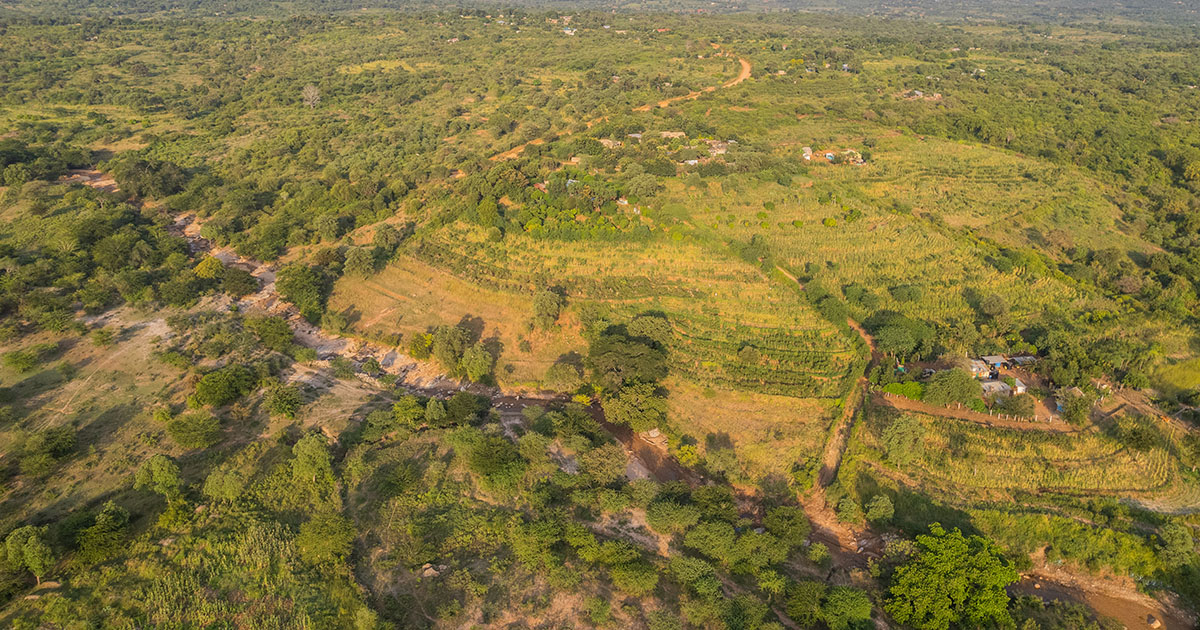
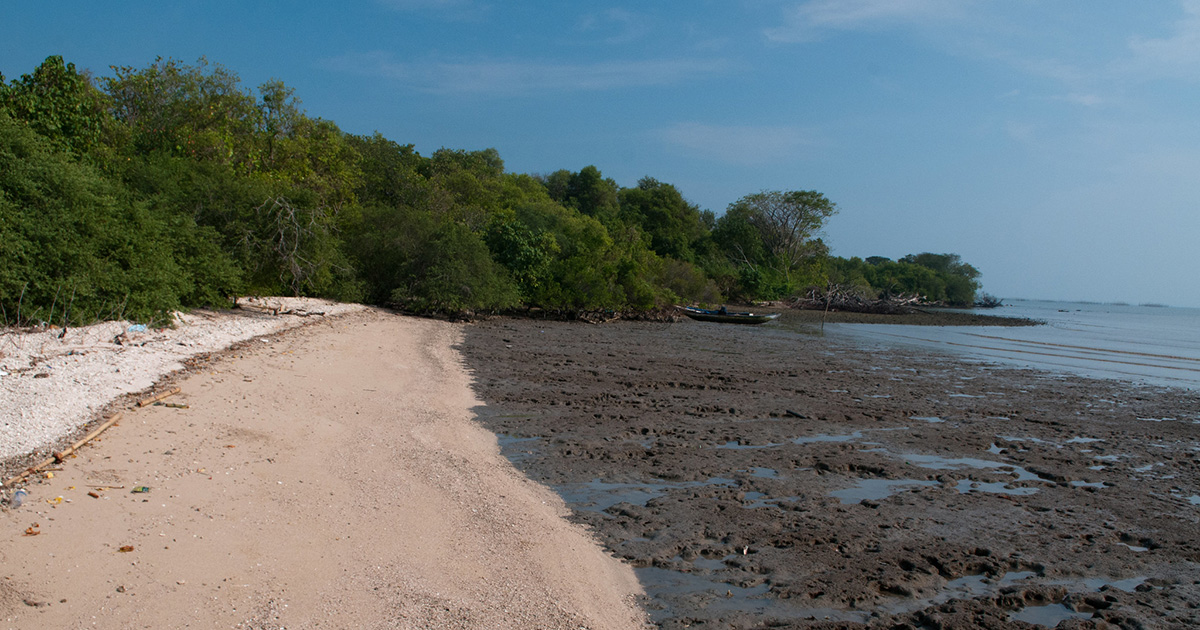






Peatlands store approximately 30% of global terrestrial carbon, and tropical peatlands contribute 10%–30% of the total peatland carbon storage. Indonesia holds approximately 15% of this resource. Given the rapid degradation of these ecosystems, the Indonesian government has promoted revegetation, identifying Calophyllum inophyllum L. (Tamanu) as a promising restoration species. However, long-term studies on Tamanu performance and optimal environmental conditions in actual peatland settings are lacking. This study aimed to identify the environmental characteristics conducive to Tamanu growth. We planted Tamanu at Perigi in South Sumatra and Buntoi in Central Kalimantan and monitored its growth over a five-year period. We assessed the soil properties and hydrological conditions at both sites. Results revealed that Tamanu trees at the Perigi site, with higher soil nutrient levels, initially exhibited greater root collar diameter, height, and stem volume compared to those at Buntoi. However, prolonged flooding in Perigi caused complete mortality at 60 months. In contrast, despite lower soil nutrient levels, the Buntoi site maintained a survival rate of 52% because of the more stable water levels. These findings suggest that hydrological management is more critical than soil nutrient conditions for the long-term survival of Tamanu in tropical peatlands, informing effective peatland restoration strategies.
This work is licensed under CC-BY 4.0

This work is licensed under CC-BY 4.0
DOI:
https://doi.org/10.3390/f16111740Altmetric score:
Dimensions Citation Count:
Export citation:
RIS (.ris)
TI  - Growth Performance of Tamanu (Calophyllum inophyllum L.) in Relation to Peatland Restoration in South Sumatra and Central Kalimantan, Indonesia
AU  - Yang, A.-R.
AU  - Choi, E.
AU  - Yang, H.
AU  - Cha, J.
AU  - Wahyuni, N.
AB  - Peatlands store approximately 30% of global terrestrial carbon, and tropical peatlands contribute 10%–30% of the total peatland carbon storage. Indonesia holds approximately 15% of this resource. Given the rapid degradation of these ecosystems, the Indonesian government has promoted revegetation, identifying Calophyllum inophyllum L. (Tamanu) as a promising restoration species. However, long-term studies on Tamanu performance and optimal environmental conditions in actual peatland settings are lacking. This study aimed to identify the environmental characteristics conducive to Tamanu growth. We planted Tamanu at Perigi in South Sumatra and Buntoi in Central Kalimantan and monitored its growth over a five-year period. We assessed the soil properties and hydrological conditions at both sites. Results revealed that Tamanu trees at the Perigi site, with higher soil nutrient levels, initially exhibited greater root collar diameter, height, and stem volume compared to those at Buntoi. However, prolonged flooding in Perigi caused complete mortality at 60 months. In contrast, despite lower soil nutrient levels, the Buntoi site maintained a survival rate of 52% because of the more stable water levels. These findings suggest that hydrological management is more critical than soil nutrient conditions for the long-term survival of Tamanu in tropical peatlands, informing effective peatland restoration strategies.
PY  - 2025
UR  - https://www.cifor-icraf.org/knowledge/publication/46320/
DO  - https://doi.org/10.3390/f16111740
KW  - angiosperm, assessment, carbon, environmental factors, floodings, peatlands, restoration, soil conservation, tree species, water conservation, wetlands
ER  -
Endnote (.ciw)
%T Growth Performance of Tamanu (Calophyllum inophyllum L.) in Relation to Peatland Restoration in South Sumatra and Central Kalimantan, Indonesia
%A Yang, A.-R.
%A Choi, E.
%A Yang, H.
%A Cha, J.
%A Wahyuni, N.
%D 2025
%U https://www.cifor-icraf.org/knowledge/publication/46320/
%R https://doi.org/10.3390/f16111740
%X Peatlands store approximately 30% of global terrestrial carbon, and tropical peatlands contribute 10%–30% of the total peatland carbon storage. Indonesia holds approximately 15% of this resource. Given the rapid degradation of these ecosystems, the Indonesian government has promoted revegetation, identifying Calophyllum inophyllum L. (Tamanu) as a promising restoration species. However, long-term studies on Tamanu performance and optimal environmental conditions in actual peatland settings are lacking. This study aimed to identify the environmental characteristics conducive to Tamanu growth. We planted Tamanu at Perigi in South Sumatra and Buntoi in Central Kalimantan and monitored its growth over a five-year period. We assessed the soil properties and hydrological conditions at both sites. Results revealed that Tamanu trees at the Perigi site, with higher soil nutrient levels, initially exhibited greater root collar diameter, height, and stem volume compared to those at Buntoi. However, prolonged flooding in Perigi caused complete mortality at 60 months. In contrast, despite lower soil nutrient levels, the Buntoi site maintained a survival rate of 52% because of the more stable water levels. These findings suggest that hydrological management is more critical than soil nutrient conditions for the long-term survival of Tamanu in tropical peatlands, informing effective peatland restoration strategies.
%K angiosperm
%K assessment
%K carbon
%K environmental factors
%K floodings
%K peatlands
%K restoration
%K soil conservation
%K tree species
%K water conservation
%K wetlands
Publication year
2025
ISSN
1999-4907
Authors
Yang, A.-R.; Choi, E.; Yang, H.; Cha, J.; Wahyuni, N.
Language
English
Keywords
angiosperm, assessment, carbon, environmental factors, floodings, peatlands, restoration, soil conservation, tree species, water conservation, wetlands
Source
Forests. 16(11): 1740
Geographic
Indonesia