







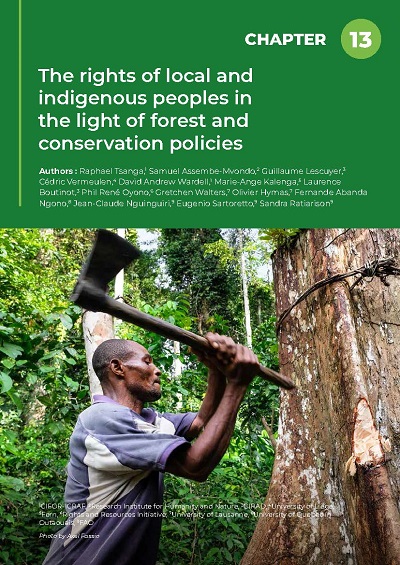


The subject of the rights of local and indigenous peoples is at the heart of the international forest resource management agenda, now more than ever (Sikor and Stahl 2011). These groups claim a set of inherent rights to enjoy land and forest tenure, to practice their cultures and to speak on the management of the natural resources around their biotopes. In response to these demands and pressure from both the grassroots and the non-governmental organizations (NGOs) that claim to represent them, the international community and many governments have put in place a range of legal mechanisms that recognize and promote the rights and duties of these vulnerable social groups in relation to biodiversity. The natural resource conservation approach – focused on promoting and respecting the rights of these groups – is, of course, one response to local stakeholders’ demands for environmental justice (Campese et al. 2009).
This work is licensed under CC-BY 4.0
Download:

This work is licensed under CC-BY 4.0
Export citation:
RIS (.ris)
TI  - The rights of local and indigenous peoples in the light of forest and conservation policies
AU  - Tsanga, R.
AU  - Assembe-Mvondo, S.
AU  - Lescuyer, G.
AU  - Vermeulen, C.
AU  - Wardell, D.A.
AU  - Kalenga, M.A.
AU  - Boutinot, L.
AU  - Oyono, P.R.
AU  - Walters, G.
AU  - Hymas, O.
AU  - Abanda Ngono, F.
AU  - Nguinguiri, J.-C.
AB  - The subject of the rights of local and indigenous peoples is at the heart of the international forest resource management agenda, now more than ever (Sikor and Stahl 2011). These groups claim a set of inherent rights to enjoy land and forest tenure, to practice their cultures and to speak on the management of the natural resources around their biotopes. In response to these demands and pressure from both the grassroots and the non-governmental organizations (NGOs) that claim to represent them, the international community and many governments have put in place a range of legal mechanisms that recognize and promote the rights and duties of these vulnerable social groups in relation to biodiversity. The natural resource conservation approach – focused on promoting and respecting the rights of these groups – is, of course, one response to local stakeholders’ demands for environmental justice (Campese et al. 2009).
PY  - 2022
PB  - Center for International Forestry Research (CIFOR)
PP  - Bogor, Indonesia
UR  - https://www.cifor-icraf.org/knowledge/publication/8713/
KW  - community forestry, forest management, forest resources, indigenous people, natural resource management
ER  -
Endnote (.ciw)
%T The rights of local and indigenous peoples in the light of forest and conservation policies
%A Tsanga, R.
%A Assembe-Mvondo, S.
%A Lescuyer, G.
%A Vermeulen, C.
%A Wardell, D.A.
%A Kalenga, M.A.
%A Boutinot, L.
%A Oyono, P.R.
%A Walters, G.
%A Hymas, O.
%A Abanda Ngono, F.
%A Nguinguiri, J.-C.
%D 2022
%I Center for International Forestry Research (CIFOR)
%C Bogor, Indonesia
%U https://www.cifor-icraf.org/knowledge/publication/8713/
%X The subject of the rights of local and indigenous peoples is at the heart of the international forest resource management agenda, now more than ever (Sikor and Stahl 2011). These groups claim a set of inherent rights to enjoy land and forest tenure, to practice their cultures and to speak on the management of the natural resources around their biotopes. In response to these demands and pressure from both the grassroots and the non-governmental organizations (NGOs) that claim to represent them, the international community and many governments have put in place a range of legal mechanisms that recognize and promote the rights and duties of these vulnerable social groups in relation to biodiversity. The natural resource conservation approach – focused on promoting and respecting the rights of these groups – is, of course, one response to local stakeholders’ demands for environmental justice (Campese et al. 2009).
%K community forestry
%K forest management
%K forest resources
%K indigenous people
%K natural resource management
Publication year
2022
Authors
Tsanga, R.; Assembe-Mvondo, S.; Lescuyer, G.; Vermeulen, C.; Wardell, D.A.; Kalenga, M.A.; Boutinot, L.; Oyono, P.R.; Walters, G.; Hymas, O.; Abanda Ngono, F.; Nguinguiri, J.-C.
Language
English
Keywords
community forestry, forest management, forest resources, indigenous people, natural resource management