


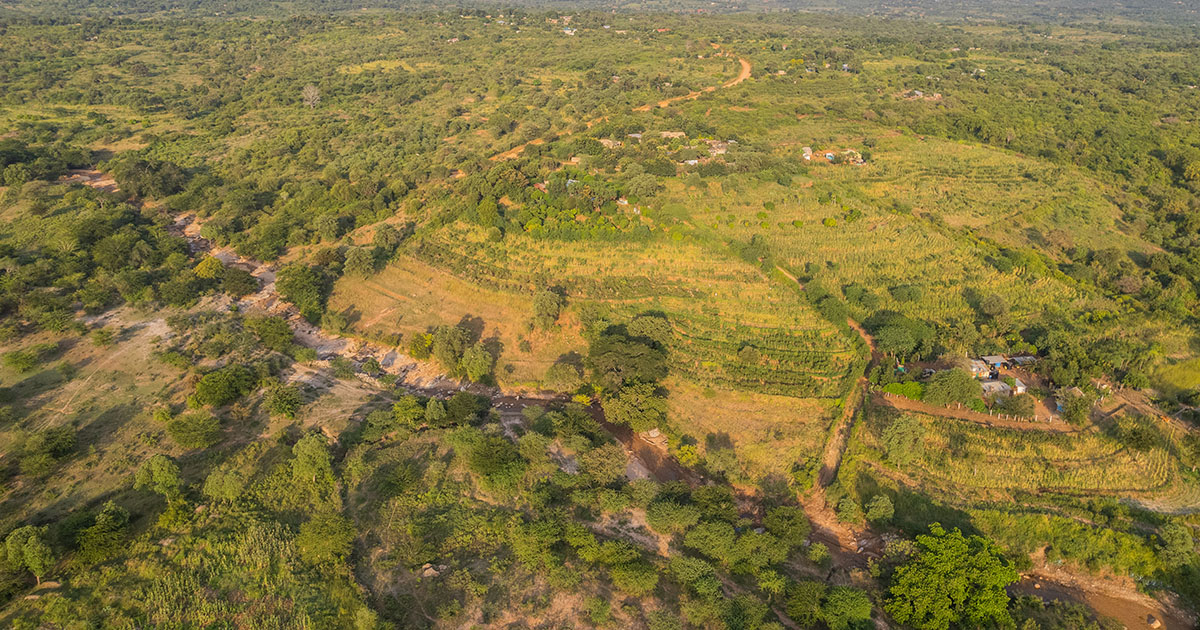





The LDSF was carried out at two-100 km2 sites within the West Africa Sentinel Landscape: Cassou and Koungoussi in Burkina Faso. Field teams were trained by Jerome Tondoh. Field surveys were completed in March 2014. The LDSF is a spatially stratified, randomized sampling design, developed to provide a biophysical baseline at landscape level and a monitoring and evaluation framework for assessing processes of land degradation and effectiveness of rehabilitation measures over time. Measured variables include: land cover, tree and shrub densities, tree biodiversity, erosion prevalence, infiltration capacity, along with an assessment of impact to habitat and occurrence of soil conservation structures. Soil samples were also collected (320 top (0-20 cm) and sub (20-50 cm) soil samples per site) and were processed in Burkina Faso. Processed samples were shipped to Nairobi and subjected to infrared spectroscopy and wet chemistry analysis. These combined data sets will be used to assess soil and ecosystem health for the landscape in more detail.
Dataset's Files
Terms of use
This dataset is made available under the Creative Commons Attribution 4.0 International license (CC-BY-4.0). The license allows you, the user, to copy and redistribute the material in any medium or format and/or transform, and build upon the material for any purpose, even commercially.
 .
.
.

