

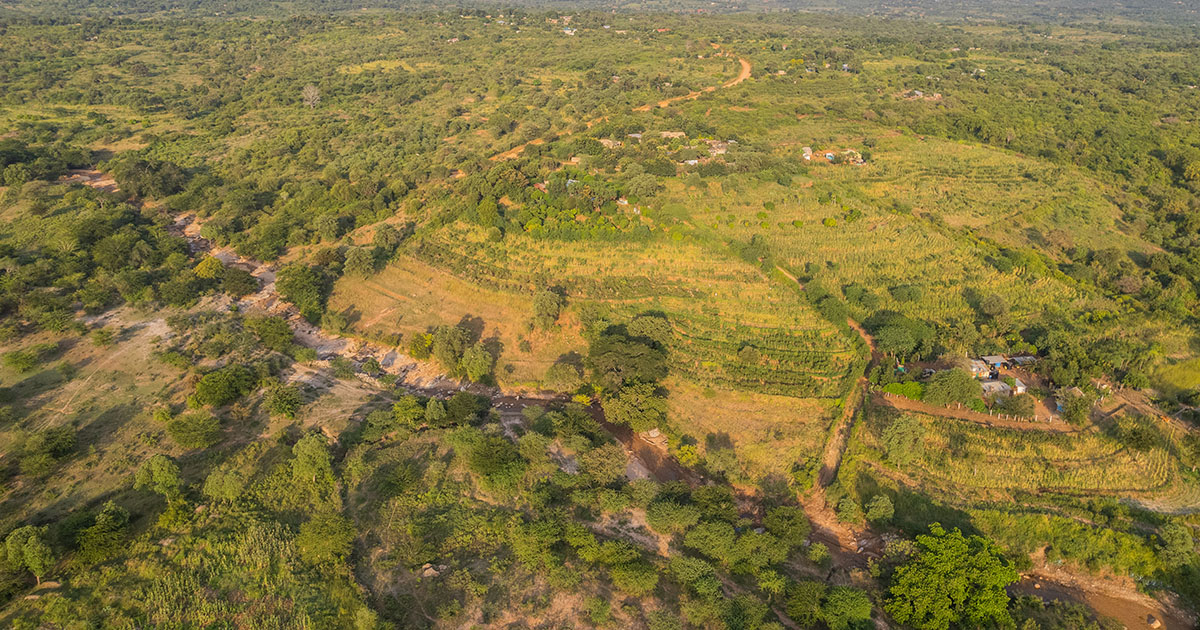







The study aimed at assessing the role of farmer associations in enhancing the adoption of sustainable land management practices in two districts of Uganda. The study employed purposive sampling procedure of the key informants and a combination of cluster and systematic random sampling of the representatives of the farming households with membership to a farmer group/association. Data was collected through key informant interviews, focus group discussions, document review, and face to face structured interviews using semi-structured questionnaires. Descriptive statistics of the respondents’ demographic characteristics, classification of the farmer associations, and of the adopted sustainable land management technologies is presented. Logistic binary regression was used to assess the determinants and predict the adoption of sustainable land management by the farming households. With respect to gender disparities, there was less female participation in land management. This was attributed to the lack of control by the females of key production inputs necessary for production like land, and to the heavy domestic workload that women bear that makes it difficult for them to attend group activities. Agricultural production and subsequent produce marketing was the major service offered by the farmer associations in both districts. These farmer groups facilitate collective marketing of agricultural produce and this has helped reduce transaction costs related to inputs marketing and small marketable surplus emanating from a large number of the usually widely dispersed producers. Farmer groups in Masindi district impose high registration and subscription fees which frustrating their performance. Farm size, membership/subscription fees, and household size, were the major established determinants of farmer participation in the farmer groups.
Dataset's Files
Terms of use
This dataset is made available under the Creative Commons Attribution 4.0 International license (CC-BY-4.0). The license allows you, the user, to copy and redistribute the material in any medium or format and/or transform, and build upon the material for any purpose, even commercially.
 .
.
.

