
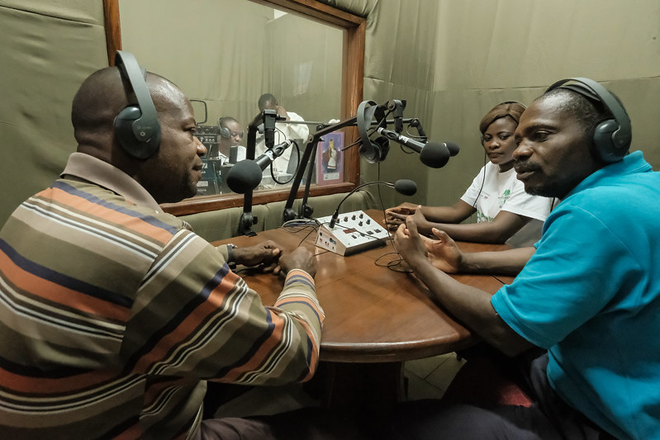





The Philippines still has a long way to go in terms of achieving its Cacao Challenge of producing two kilograms of cacao per tree per year by 2022. According to 2019 data from the Philippine Department of Agriculture, the average production in the country is still at one-half to one kilogram per tree per year. In a policy and regulation review conducted by the Sustainable Farming in Tropical Asian Landscapes (SFITAL) Team in the Philippines, it was argued that multi-stakeholder involvement is necessary for smallholders to reach the target production level.
This work is licensed under CC-BY 4.0
This work is licensed under CC-BY 4.0
Export citation:
RIS (.ris)
TI  - CACAOmustahan. Volume 01, Issue 01. January-March 2022
AU  - Gel Noza, Z.
AU  - Menguito, M.A.
AB  - The Philippines still has a long way to go in terms of achieving its Cacao Challenge of producing two kilograms of cacao per tree per year by 2022. According to 2019 data from the Philippine Department of Agriculture, the average production in the country is still at one-half to one kilogram per tree per year. In a policy and regulation review conducted by the Sustainable Farming in Tropical Asian Landscapes (SFITAL) Team in the Philippines, it was argued that multi-stakeholder involvement is necessary for smallholders to reach the target production level.
PY  - 2022
PB  - World Agroforestry (ICRAF)
PP  - Bogor, Indonesia
UR  - https://www.cifor-icraf.org/knowledge/publication/18402/
KW  - agroforestry, cocoa, small scale farming
ER  -
Endnote (.ciw)
%T CACAOmustahan. Volume 01, Issue 01. January-March 2022
%A Gel Noza, Z.
%A Menguito, M.A.
%D 2022
%I World Agroforestry (ICRAF)
%C Bogor, Indonesia
%U https://www.cifor-icraf.org/knowledge/publication/18402/
%X The Philippines still has a long way to go in terms of achieving its Cacao Challenge of producing two kilograms of cacao per tree per year by 2022. According to 2019 data from the Philippine Department of Agriculture, the average production in the country is still at one-half to one kilogram per tree per year. In a policy and regulation review conducted by the Sustainable Farming in Tropical Asian Landscapes (SFITAL) Team in the Philippines, it was argued that multi-stakeholder involvement is necessary for smallholders to reach the target production level.
%K agroforestry
%K cocoa
%K small scale farming
Publisher
World Agroforestry (ICRAF): Bogor, Indonesia
Publication year
2022
Authors
Language
English
Keywords
agroforestry, cocoa, small scale farming
Geographic
Philippines