


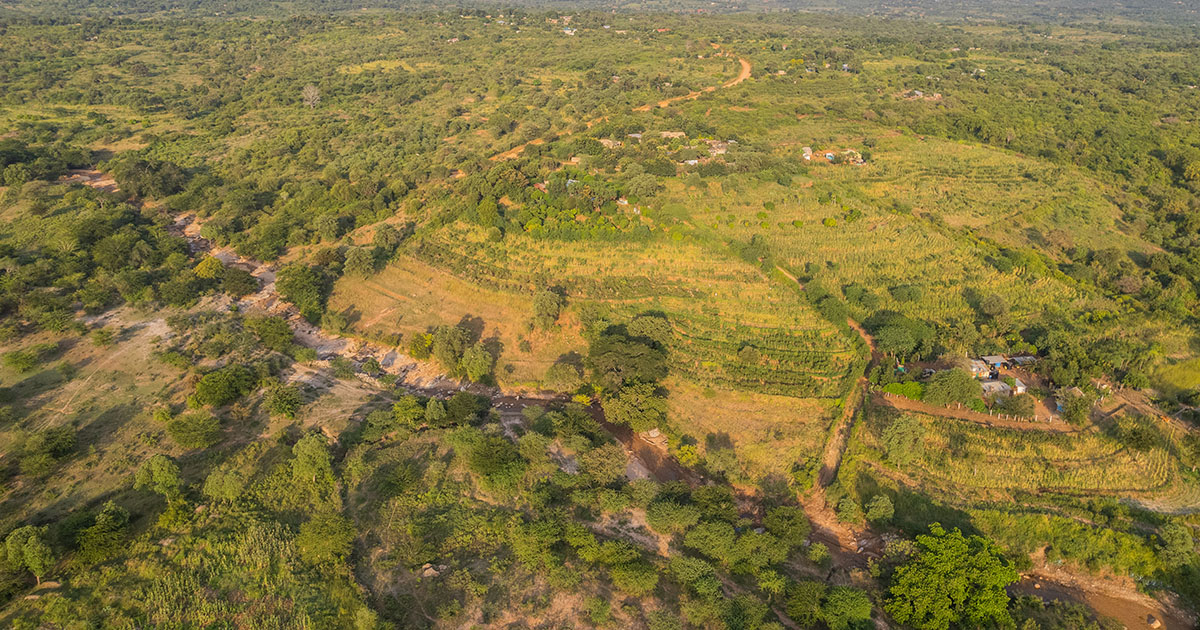








The restoration of terrestrial ecosystems is considered today as one of the most promising mechanisms to mitigate climate change, limit desertification, protect endangered species, enable socio-economic benefits, reach food security, and promote a variety of ecosystem services. The three international conventions (UNFCCC, UNCCD, and CBD), and many international organizations therefore support ecosystem and landscape restoration initiatives, but, as it has been pointed out in recent scientific debates, restoration is not only about planting trees; it is about restoring depleted ecosystems and landscapes, considering all the biophysical (vegetation, soil, water management) and socioeconomic (local livelihood and global issues) aspects associated with it. To achieve landscape restoration, it is therefore necessary to implement holistic methodologies on the ground that target multiple benefits while accounting for both the local and the global socio-ecological context.
This work is licensed under CC-BY 4.0
This work is licensed under CC-BY 4.0
Export citation:
RIS (.ris)
TI  - Restoration Ecology: Lessons Learned and Perspectives From the Field. Special Issue
AU  - Bastin, J.F.
AU  - Nasi, R.
AU  - Winowiecki, L.A.
AU  - Sacande, M.
AU  - (ed)
AB  - The restoration of terrestrial ecosystems is considered today as one of the most promising mechanisms to mitigate climate change, limit desertification, protect endangered species, enable socio-economic benefits, reach food security, and promote a variety of ecosystem services. The three international conventions (UNFCCC, UNCCD, and CBD), and many international organizations therefore support ecosystem and landscape restoration initiatives, but, as it has been pointed out in recent scientific debates, restoration is not only about planting trees; it is about restoring depleted ecosystems and landscapes, considering all the biophysical (vegetation, soil, water management) and socioeconomic (local livelihood and global issues) aspects associated with it. To achieve landscape restoration, it is therefore necessary to implement holistic methodologies on the ground that target multiple benefits while accounting for both the local and the global socio-ecological context.
PY  - 2022
UR  - https://www.cifor-icraf.org/knowledge/publication/18503/
ER  -
Endnote (.ciw)
%T Restoration Ecology: Lessons Learned and Perspectives From the Field. Special Issue
%A Bastin, J.F.
%A Nasi, R.
%A Winowiecki, L.A.
%A Sacande, M.
%A (ed)
%D 2022
%U https://www.cifor-icraf.org/knowledge/publication/18503/
%X The restoration of terrestrial ecosystems is considered today as one of the most promising mechanisms to mitigate climate change, limit desertification, protect endangered species, enable socio-economic benefits, reach food security, and promote a variety of ecosystem services. The three international conventions (UNFCCC, UNCCD, and CBD), and many international organizations therefore support ecosystem and landscape restoration initiatives, but, as it has been pointed out in recent scientific debates, restoration is not only about planting trees; it is about restoring depleted ecosystems and landscapes, considering all the biophysical (vegetation, soil, water management) and socioeconomic (local livelihood and global issues) aspects associated with it. To achieve landscape restoration, it is therefore necessary to implement holistic methodologies on the ground that target multiple benefits while accounting for both the local and the global socio-ecological context.
Publication year
2022
ISSN
2624-893X
Authors
Bastin, J.F.; Nasi, R.; Winowiecki, L.A.; Sacande, M.; (ed)
Language
English
Source
Frontiers in Forests and Global Change. :