

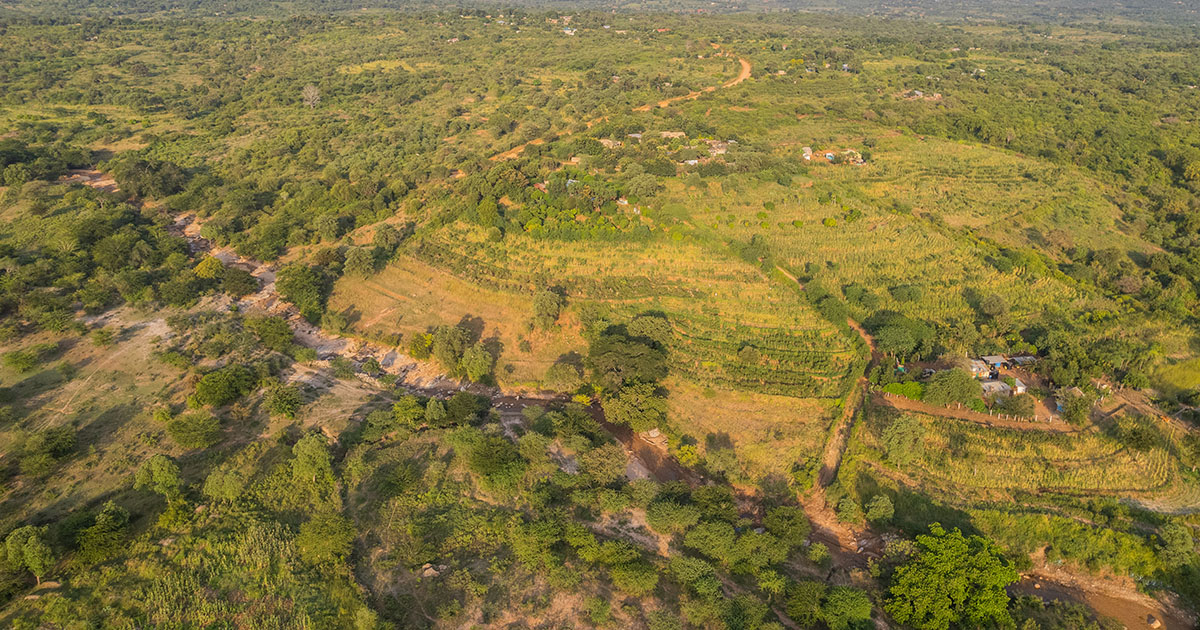






Addressing interconnected social and environmental issues, including poverty, food security, climate change, and biodiversity loss, requires integrated solutions. Agroforestry is a sustainable land use approach with the potential to address multiple issues. This study examined the tree cultivation behavior of smallholder farmers in the Mt. Elgon region of Uganda. We examined the proportion of indigenous tree species added to or removed from agricultural land and the reasons for farmers’ decisions in this regard. We found that farmers overwhelmingly planted exotic species, limiting the possible benefits for the conservation of biodiversity from a suggested re-greening of the region. Indigenous trees were cultivated in low numbers and dominated by a handful of species. Opportunities to help farmers increase the number and variety of indigenous trees on their land were found among smaller-scale coffee farmers and in the protection of natural forests from which indigenous trees propagate into the wider landscape.
This work is licensed under CC-BY 4.0

This work is licensed under CC-BY 4.0
DOI:
https://doi.org/10.1057/s41287-021-00446-5Altmetric score:
Dimensions Citation Count:
Export citation:
RIS (.ris)
TI  - Agroforestry, Indigenous Tree Cover and Biodiversity Conservation: A Case Study of Mount Elgon in Uganda
AU  - Graham, S.
AU  - Ihli, H.J.
AU  - Gassner, A.
AB  - Addressing interconnected social and environmental issues, including poverty, food security, climate change, and biodiversity loss, requires integrated solutions. Agroforestry is a sustainable land use approach with the potential to address multiple issues. This study examined the tree cultivation behavior of smallholder farmers in the Mt. Elgon region of Uganda. We examined the proportion of indigenous tree species added to or removed from agricultural land and the reasons for farmers’ decisions in this regard. We found that farmers overwhelmingly planted exotic species, limiting the possible benefits for the conservation of biodiversity from a suggested re-greening of the region. Indigenous trees were cultivated in low numbers and dominated by a handful of species. Opportunities to help farmers increase the number and variety of indigenous trees on their land were found among smaller-scale coffee farmers and in the protection of natural forests from which indigenous trees propagate into the wider landscape.
PY  - 2021
UR  - https://www.cifor-icraf.org/knowledge/publication/21107/
DO  - https://doi.org/10.1057/s41287-021-00446-5
KW  - agroforestry, biodiversity conservation, indigenous people, small scale farming
ER  -
Endnote (.ciw)
%T Agroforestry, Indigenous Tree Cover and Biodiversity Conservation: A Case Study of Mount Elgon in Uganda
%A Graham, S.
%A Ihli, H.J.
%A Gassner, A.
%D 2021
%U https://www.cifor-icraf.org/knowledge/publication/21107/
%R https://doi.org/10.1057/s41287-021-00446-5
%X Addressing interconnected social and environmental issues, including poverty, food security, climate change, and biodiversity loss, requires integrated solutions. Agroforestry is a sustainable land use approach with the potential to address multiple issues. This study examined the tree cultivation behavior of smallholder farmers in the Mt. Elgon region of Uganda. We examined the proportion of indigenous tree species added to or removed from agricultural land and the reasons for farmers’ decisions in this regard. We found that farmers overwhelmingly planted exotic species, limiting the possible benefits for the conservation of biodiversity from a suggested re-greening of the region. Indigenous trees were cultivated in low numbers and dominated by a handful of species. Opportunities to help farmers increase the number and variety of indigenous trees on their land were found among smaller-scale coffee farmers and in the protection of natural forests from which indigenous trees propagate into the wider landscape.
%K agroforestry
%K biodiversity conservation
%K indigenous people
%K small scale farming
Publication year
2021
ISSN
0957-8811
Authors
Graham, S.; Ihli, H.J.; Gassner, A.
Language
English
Keywords
agroforestry, biodiversity conservation, indigenous people, small scale farming
Source
European Journal of Development Research. :
Geographic
Uganda