
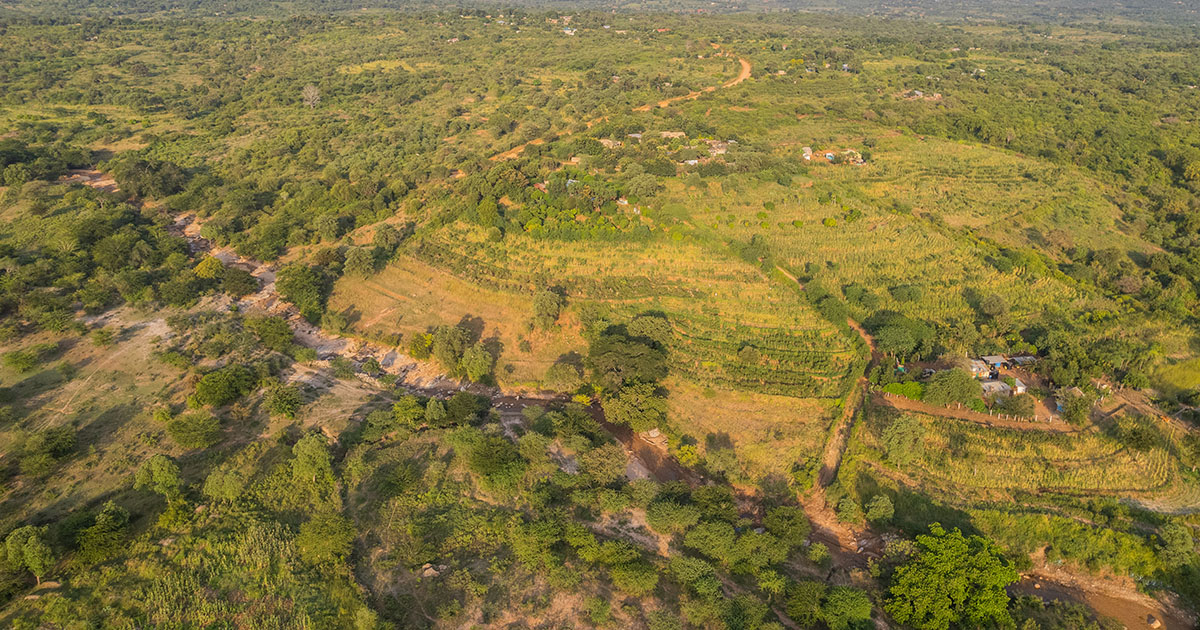






In 1999, the Lao National Agriculture and Forestry Research Institute (NAFRI) teamed up with several international partners to establish the Integrated Upland Agricultural Research Project (IUARP), which aims to develop sustainable upland livelihood systems through an integrated, participatory, on-farm research approach. Based on findings from a participatory problem diagnosis exercise, exposure through field days and cross visits with other farmers, as well as interaction with IUARP staff, about 20 technology options have been selected and tested by farmers. Two of the main problems identified by farmers were declining rice yields and limited opportunities for income generation. Many farmers consider fruit trees as a good option for generating cash, which can be used to purchase rice if necessary. While farmers liked this idea, their major concern was the time lag before harvesting fruit - usually five years or longer. A sustainable system that ensures a continual source of benefits was developed, integrating an annual crop such as upland rice with a medium- term fruit such as pineapple or banana, and longer-term fruit trees planted along contour hedgerows. Integrated fruit tree systems have clearly emerged as the most popular technology among farmers. Within the past three years, over 60 farmers have been testing and expanding this technology in the IUARP villages. To meet the increasing demand for fruit tree planting materials, some farmers were trained in nursery development. Since then, three farmer nurseries have been established, mainly to produce fruit tree seedlings. Meetings between nursery operators and interested farmers were facilitated to negotiate ‘fair prices’ for seedlings that the latter were willing to pay, generally about half of the prevailing market prices in nurseries in Luangprabang. Moreover, to enable the expansion of medium-term fruits, a ‘sucker bank’ system was conceived. Suckers are fruit-bearing shoots that can be used as planting material. In this system, farmers who received pineapple suckers from IUARP as planting material agreed to provide, after three years, the same number of suckers to interested farmers. Thus, a sustainable source of planting material has been established, ensuring that more farmers can develop such systems on their own in the future.
Export citation:
RIS (.ris)
TI  - Integrated fruit tree systems in Luangprabang: scaling-up sustainable technologies and processes
AU  - Lai, C.K.
AU  - Sodarak, H.
AU  - Keoboualapha, B.
AU  - Linquist, B.
AB  - In 1999, the Lao National Agriculture and Forestry Research Institute (NAFRI) teamed up with several international partners to establish the Integrated Upland Agricultural Research Project (IUARP), which aims to develop sustainable upland livelihood systems through an integrated, participatory, on-farm research approach. Based on findings from a participatory problem diagnosis exercise, exposure through field days and cross visits with other farmers, as well as interaction with IUARP staff, about 20 technology options have been selected and tested by farmers. Two of the main problems identified by farmers were declining rice yields and limited opportunities for income generation. Many farmers consider fruit trees as a good option for generating cash, which can be used to purchase rice if necessary. While farmers liked this idea, their major concern was the time lag before harvesting fruit - usually five years or longer. A sustainable system that ensures a continual source of benefits was developed, integrating an annual crop such as upland rice with a medium- term fruit such as pineapple or banana, and longer-term fruit trees planted along contour hedgerows. Integrated fruit tree systems have clearly emerged as the most popular technology among farmers. Within the past three years, over 60 farmers have been testing and expanding this technology in the IUARP villages. To meet the increasing demand for fruit tree planting materials, some farmers were trained in nursery development. Since then, three farmer nurseries have been established, mainly to produce fruit tree seedlings. Meetings between nursery operators and interested farmers were facilitated to negotiate ‘fair prices’ for seedlings that the latter were willing to pay, generally about half of the prevailing market prices in nurseries in Luangprabang. Moreover, to enable the expansion of medium-term fruits, a ‘sucker bank’ system was conceived. Suckers are fruit-bearing shoots that can be used as planting material. In this system, farmers who received pineapple suckers from IUARP as planting material agreed to provide, after three years, the same number of suckers to interested farmers. Thus, a sustainable source of planting material has been established, ensuring that more farmers can develop such systems on their own in the future.
PY  - 2005
PB  - National Agriculture and Forestry Research Institute
PP  - Vientiane, Lao PDR
UR  - https://www.cifor-icraf.org/knowledge/publication/28913/
KW  - farmers, fruits, systems, trees, uplands
ER  -
Endnote (.ciw)
%T Integrated fruit tree systems in Luangprabang: scaling-up sustainable technologies and processes
%A Lai, C.K.
%A Sodarak, H.
%A Keoboualapha, B.
%A Linquist, B.
%D 2005
%I National Agriculture and Forestry Research Institute
%C Vientiane, Lao PDR
%U https://www.cifor-icraf.org/knowledge/publication/28913/
%X In 1999, the Lao National Agriculture and Forestry Research Institute (NAFRI) teamed up with several international partners to establish the Integrated Upland Agricultural Research Project (IUARP), which aims to develop sustainable upland livelihood systems through an integrated, participatory, on-farm research approach. Based on findings from a participatory problem diagnosis exercise, exposure through field days and cross visits with other farmers, as well as interaction with IUARP staff, about 20 technology options have been selected and tested by farmers. Two of the main problems identified by farmers were declining rice yields and limited opportunities for income generation. Many farmers consider fruit trees as a good option for generating cash, which can be used to purchase rice if necessary. While farmers liked this idea, their major concern was the time lag before harvesting fruit - usually five years or longer. A sustainable system that ensures a continual source of benefits was developed, integrating an annual crop such as upland rice with a medium- term fruit such as pineapple or banana, and longer-term fruit trees planted along contour hedgerows. Integrated fruit tree systems have clearly emerged as the most popular technology among farmers. Within the past three years, over 60 farmers have been testing and expanding this technology in the IUARP villages. To meet the increasing demand for fruit tree planting materials, some farmers were trained in nursery development. Since then, three farmer nurseries have been established, mainly to produce fruit tree seedlings. Meetings between nursery operators and interested farmers were facilitated to negotiate ‘fair prices’ for seedlings that the latter were willing to pay, generally about half of the prevailing market prices in nurseries in Luangprabang. Moreover, to enable the expansion of medium-term fruits, a ‘sucker bank’ system was conceived. Suckers are fruit-bearing shoots that can be used as planting material. In this system, farmers who received pineapple suckers from IUARP as planting material agreed to provide, after three years, the same number of suckers to interested farmers. Thus, a sustainable source of planting material has been established, ensuring that more farmers can develop such systems on their own in the future.
%K farmers
%K fruits
%K systems
%K trees
%K uplands
Publication year
2005
Authors
Lai, C.K.; Sodarak, H.; Keoboualapha, B.; Linquist, B.
Language
English
Keywords
farmers, fruits, systems, trees, uplands
Source
Poverty reduction and shifting cultivation stabilisation in the uplands of Lao PDR: technologies, approaches and methods for improving upland livelihoods. Proceedings of a workshop held in Luang Prabang January 27-30, 2004. National Agriculture and Forestry Research Institute: Vientiane, Lao PDR
Geographic
Lao People's Democratic Republic