


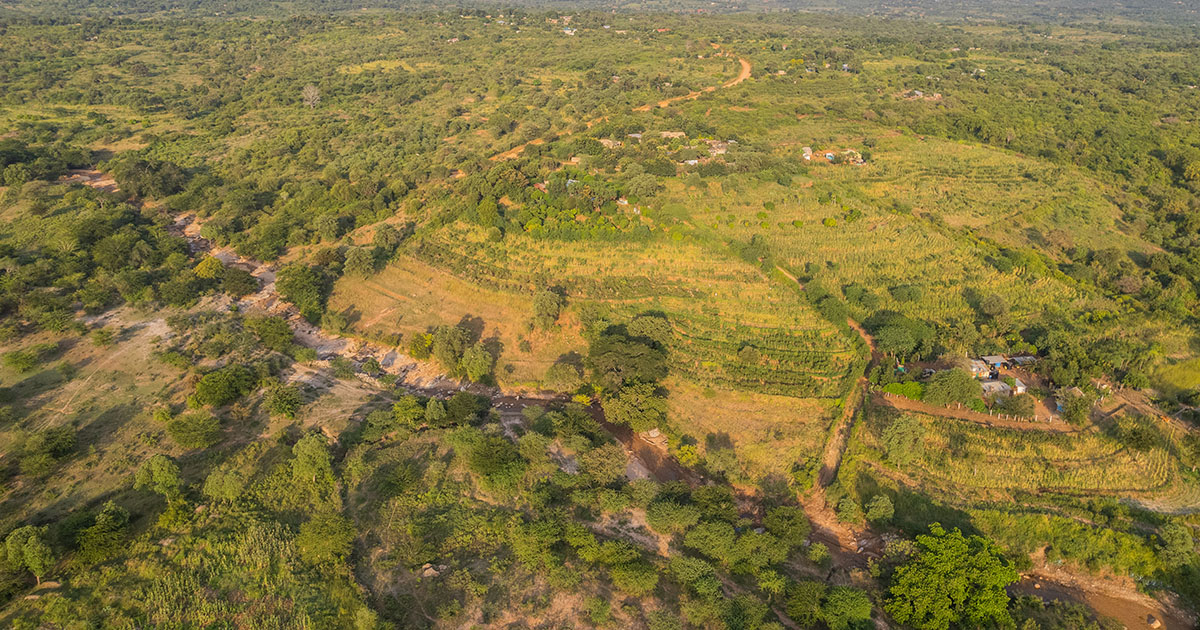







The world's multiple landscape crises have placed agroforestry among the cost-effective nature-based solutions with numerous ecological, social, and economic benefits. This study examined the farmer and land factors influencing the adoption of agroforestry practices in the Gambia's Central River Region. Stratified random sampling was used to collect primary data from 377 households using semi-structured questionnaires and farm-level walkabout observations. The study used purposive and snowball sampling methods to engage different key informants. The results indicated that the agroforestry adoption rate in the study area was 52.3 %. Significant differences between the means of agroforestry adopters and non-adopters were observed. Adopters held more land size 0.66ha vs. 0.55ha, owned more livelihood assets (private land and livestock), and had significantly more fenced lands. The binary regression model established that livelihood assets, land size, land fencing, and gender were positively associated with agroforestry adoption in the study area. Conclusively, land-related factors emerged as more predictable determinants of agroforestry adoption than farmer-related factors. Notably, age and education, though important socioeconomic attributes, remained relatively the same between adopters and non-adopters, and were not statistically significant. The study recommends cross-cutting farmer and land-related policies, as well as other interventions to boost agroforestry adoption. It further suggests a follow-up study to quantify the actual cost and benefits associated with agroforestry adoption in the area.
This work is licensed under CC-BY 4.0

This work is licensed under CC-BY 4.0
DOI:
https://doi.org/10.1016/j.nbsj.2024.100168Altmetric score:
Dimensions Citation Count:
Export citation:
RIS (.ris)
TI  - Factors influencing agroforestry practices adoption in the central river Region of The Gambia
AU  - Muthee, K.
AU  - Wainaina, P.
AU  - Duguma, L.
AU  - Majale, C.
AU  - Mucheru-Muna, M.
AU  - Mutune, J.
AU  - Foundjem-Tita, D.
AU  - Bah, A.
AU  - Minang, P.
AB  - The world's multiple landscape crises have placed agroforestry among the cost-effective nature-based solutions with numerous ecological, social, and economic benefits. This study examined the farmer and land factors influencing the adoption of agroforestry practices in the Gambia's Central River Region. Stratified random sampling was used to collect primary data from 377 households using semi-structured questionnaires and farm-level walkabout observations. The study used purposive and snowball sampling methods to engage different key informants. The results indicated that the agroforestry adoption rate in the study area was 52.3 %. Significant differences between the means of agroforestry adopters and non-adopters were observed. Adopters held more land size 0.66ha vs. 0.55ha, owned more livelihood assets (private land and livestock), and had significantly more fenced lands. The binary regression model established that livelihood assets, land size, land fencing, and gender were positively associated with agroforestry adoption in the study area. Conclusively, land-related factors emerged as more predictable determinants of agroforestry adoption than farmer-related factors. Notably, age and education, though important socioeconomic attributes, remained relatively the same between adopters and non-adopters, and were not statistically significant. The study recommends cross-cutting farmer and land-related policies, as well as other interventions to boost agroforestry adoption. It further suggests a follow-up study to quantify the actual cost and benefits associated with agroforestry adoption in the area.
PY  - 2024
UR  - https://www.cifor-icraf.org/knowledge/publication/31275/
DO  - https://doi.org/10.1016/j.nbsj.2024.100168
KW  - adoption, agroforestry, ecosystems, forestry, livelihoods
ER  -
Endnote (.ciw)
%T Factors influencing agroforestry practices adoption in the central river Region of The Gambia
%A Muthee, K.
%A Wainaina, P.
%A Duguma, L.
%A Majale, C.
%A Mucheru-Muna, M.
%A Mutune, J.
%A Foundjem-Tita, D.
%A Bah, A.
%A Minang, P.
%D 2024
%U https://www.cifor-icraf.org/knowledge/publication/31275/
%R https://doi.org/10.1016/j.nbsj.2024.100168
%X The world's multiple landscape crises have placed agroforestry among the cost-effective nature-based solutions with numerous ecological, social, and economic benefits. This study examined the farmer and land factors influencing the adoption of agroforestry practices in the Gambia's Central River Region. Stratified random sampling was used to collect primary data from 377 households using semi-structured questionnaires and farm-level walkabout observations. The study used purposive and snowball sampling methods to engage different key informants. The results indicated that the agroforestry adoption rate in the study area was 52.3 %. Significant differences between the means of agroforestry adopters and non-adopters were observed. Adopters held more land size 0.66ha vs. 0.55ha, owned more livelihood assets (private land and livestock), and had significantly more fenced lands. The binary regression model established that livelihood assets, land size, land fencing, and gender were positively associated with agroforestry adoption in the study area. Conclusively, land-related factors emerged as more predictable determinants of agroforestry adoption than farmer-related factors. Notably, age and education, though important socioeconomic attributes, remained relatively the same between adopters and non-adopters, and were not statistically significant. The study recommends cross-cutting farmer and land-related policies, as well as other interventions to boost agroforestry adoption. It further suggests a follow-up study to quantify the actual cost and benefits associated with agroforestry adoption in the area.
%K adoption
%K agroforestry
%K ecosystems
%K forestry
%K livelihoods
Publication year
2024
ISSN
2772-4115
Authors
Muthee, K.; Wainaina, P.; Duguma, L.; Majale, C.; Mucheru-Muna, M.; Mutune, J.; Foundjem-Tita, D.; Bah, A.; Minang, P.
Language
English
Keywords
adoption, agroforestry, ecosystems, forestry, livelihoods
Source
Nature-Based Solutions. 6: 100168
Geographic
Gambia