
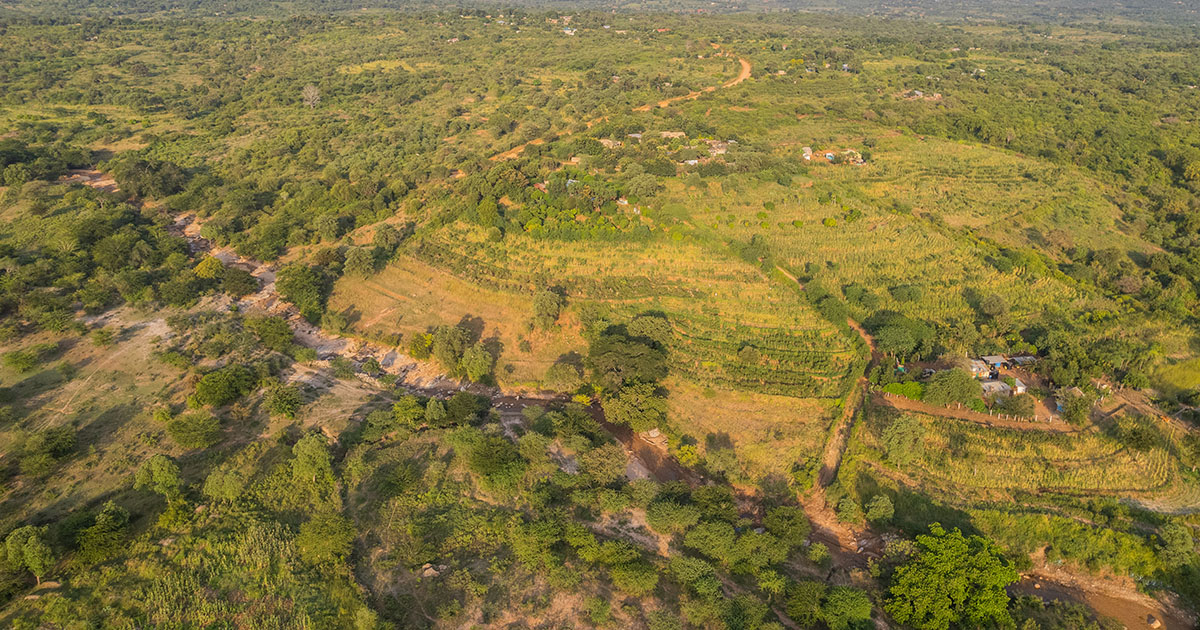






The district of Kodagu, also called Coorg, in the Western Ghats of India produces 2% of the world's coffee, the expansion and intensification of which have reduced the forest cover by more than 30% in 20 years. Innovative actions are therefore urgently required to link economic development and biodiversity conservation, and stakeholders are exploring three strategies to add value to coffee from Coorg and prevent further biodiversity erosion: registration of trademarks; geographical indications; and environmental certification, via ecolabels. This article analyses their respective strengths and weaknesses and discusses the synergies between them.

DOI:
https://doi.org/10.1111/dpr.12060Altmetric score:
Dimensions Citation Count:
Export citation:
RIS (.ris)
TI  - Trademarks, Geographical Indications and Environmental Labelling to Promote Biodiversity: The Case of Agroforestry Coffee in India
AU  - Marie-Vivien, D.
AU  - Garcia, C.A.
AU  - Kushalappa, C.G.
AU  - Vaast, P.
AB  - The district of Kodagu, also called Coorg, in the Western Ghats of India produces 2% of the world's coffee, the expansion and intensification of which have reduced the forest cover by more than 30% in 20 years. Innovative actions are therefore urgently required to link economic development and biodiversity conservation, and stakeholders are exploring three strategies to add value to coffee from Coorg and prevent further biodiversity erosion: registration of trademarks; geographical indications; and environmental certification, via ecolabels. This article analyses their respective strengths and weaknesses and discusses the synergies between them.
PY  - 2014
UR  - https://www.cifor-icraf.org/knowledge/publication/31589/
DO  - https://doi.org/10.1111/dpr.12060
KW  - agroforestry, biodiversity, coffee, conservation, eco-labels, ecosystem services, environmental labeling, geographical indications, humidity, india, stakeholders, trademarks
ER  -
Endnote (.ciw)
%T Trademarks, Geographical Indications and Environmental Labelling to Promote Biodiversity: The Case of Agroforestry Coffee in India
%A Marie-Vivien, D.
%A Garcia, C.A.
%A Kushalappa, C.G.
%A Vaast, P.
%D 2014
%U https://www.cifor-icraf.org/knowledge/publication/31589/
%R https://doi.org/10.1111/dpr.12060
%X The district of Kodagu, also called Coorg, in the Western Ghats of India produces 2% of the world's coffee, the expansion and intensification of which have reduced the forest cover by more than 30% in 20 years. Innovative actions are therefore urgently required to link economic development and biodiversity conservation, and stakeholders are exploring three strategies to add value to coffee from Coorg and prevent further biodiversity erosion: registration of trademarks; geographical indications; and environmental certification, via ecolabels. This article analyses their respective strengths and weaknesses and discusses the synergies between them.
%K agroforestry
%K biodiversity
%K coffee
%K conservation
%K eco-labels
%K ecosystem services
%K environmental labeling
%K geographical indications
%K humidity
%K india
%K stakeholders
%K trademarks
Publication year
2014
ISSN
1467-7679
Authors
Marie-Vivien, D.; Garcia, C.A.; Kushalappa, C.G.; Vaast, P.
Language
English
Keywords
agroforestry, biodiversity, coffee, conservation, eco-labels, ecosystem services, environmental labeling, geographical indications, humidity, india, stakeholders, trademarks
Source
Development Policy Review. 32(4): 379-398
Geographic
India