

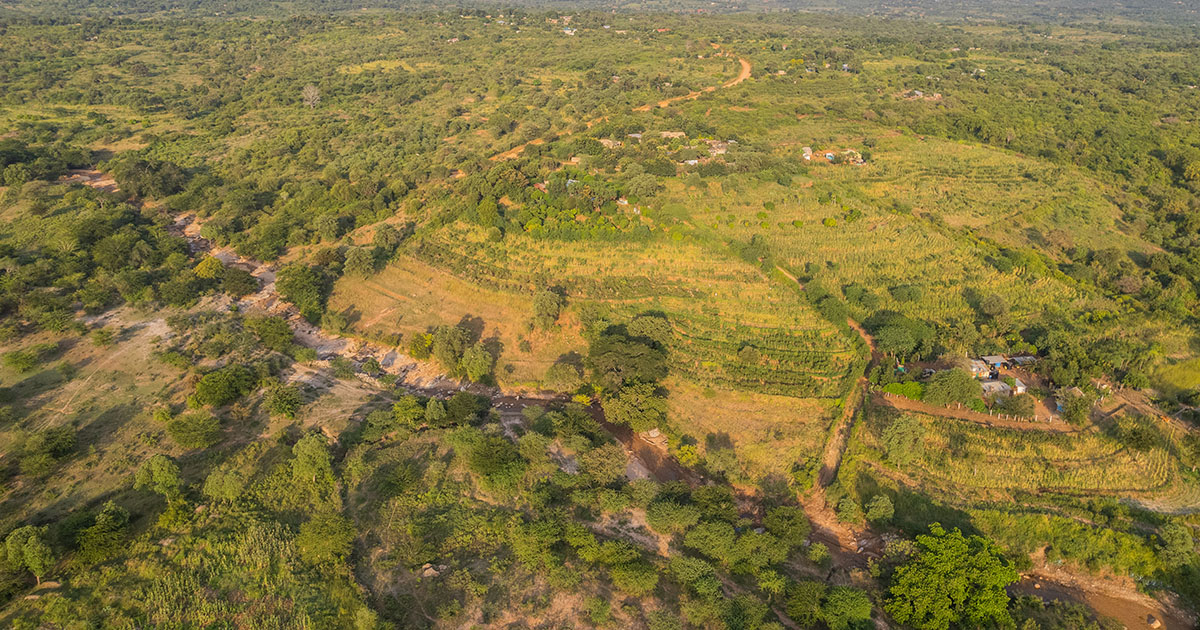






Many studies suggest that biodiversity may be particularly important for ecosystem multifunctionality, because different species with different traits can contribute to different functions. Support, however, comes mostly from experimental studies conducted at small spatial scales in low-diversity systems. Here, we test whether different species contribute to different ecosystem functions that are important for carbon cycling in a high-diversity human-modifed tropical forest landscape in Southern Mexico. We quantifed aboveground standing biomass, primary productivity, litter production, and wood decomposition at the landscape level, and evaluated the extent to which tree species contribute to these ecosystem functions. We used simulations to tease apart the effects of species richness, species dominance and species functional traits on ecosystem functions. We found that dominance was more important than species traits in determining a species' contribution to ecosystem functions. As a consequence of the high dominance in human-modifed landscapes, the same small subset of species mattered across different functions. In human-modifed landscapes in the tropics, biodiversity may play a limited role for ecosystem multifunctionality due to the potentially large effect of species dominance on biogeochemical functions. However, given the spatial and temporal turnover in species dominance, biodiversity may be critically important for the maintenance and resilience of ecosystem functions. © 2016 by the Ecological Society of America.

DOI:
https://doi.org/10.1002/ecy.1499Altmetric score:
Dimensions Citation Count:
Export citation:
RIS (.ris)
TI  - The importance of biodiversity and dominance for multiple ecosystem functions in a human-modifed tropical landscape
AU  - Lohbeck, M.
AU  - Bongers, F.
AU  - Martinez-Ramos, M.
AU  - Poorter, L.
AB  - Many studies suggest that biodiversity may be particularly important for ecosystem multifunctionality, because different species with different traits can contribute to different functions. Support, however, comes mostly from experimental studies conducted at small spatial scales in low-diversity systems. Here, we test whether different species contribute to different ecosystem functions that are important for carbon cycling in a high-diversity human-modifed tropical forest landscape in Southern Mexico. We quantifed aboveground standing biomass, primary productivity, litter production, and wood decomposition at the landscape level, and evaluated the extent to which tree species contribute to these ecosystem functions. We used simulations to tease apart the effects of species richness, species dominance and species functional traits on ecosystem functions. We found that dominance was more important than species traits in determining a species' contribution to ecosystem functions. As a consequence of the high dominance in human-modifed landscapes, the same small subset of species mattered across different functions. In human-modifed landscapes in the tropics, biodiversity may play a limited role for ecosystem multifunctionality due to the potentially large effect of species dominance on biogeochemical functions. However, given the spatial and temporal turnover in species dominance, biodiversity may be critically important for the maintenance and resilience of ecosystem functions. © 2016 by the Ecological Society of America.
PY  - 2016
UR  - https://www.cifor-icraf.org/knowledge/publication/31640/
DO  - https://doi.org/10.1002/ecy.1499
KW  - biodiversity, dominance, ecosystem functions, ecosystem multifunctionality, ecosystem services, functional traits, low-diversity systems, multifunctionality, secondary forest, species richness, tropical forest, tropical zones
ER  -
Endnote (.ciw)
%T The importance of biodiversity and dominance for multiple ecosystem functions in a human-modifed tropical landscape
%A Lohbeck, M.
%A Bongers, F.
%A Martinez-Ramos, M.
%A Poorter, L.
%D 2016
%U https://www.cifor-icraf.org/knowledge/publication/31640/
%R https://doi.org/10.1002/ecy.1499
%X Many studies suggest that biodiversity may be particularly important for ecosystem multifunctionality, because different species with different traits can contribute to different functions. Support, however, comes mostly from experimental studies conducted at small spatial scales in low-diversity systems. Here, we test whether different species contribute to different ecosystem functions that are important for carbon cycling in a high-diversity human-modifed tropical forest landscape in Southern Mexico. We quantifed aboveground standing biomass, primary productivity, litter production, and wood decomposition at the landscape level, and evaluated the extent to which tree species contribute to these ecosystem functions. We used simulations to tease apart the effects of species richness, species dominance and species functional traits on ecosystem functions. We found that dominance was more important than species traits in determining a species' contribution to ecosystem functions. As a consequence of the high dominance in human-modifed landscapes, the same small subset of species mattered across different functions. In human-modifed landscapes in the tropics, biodiversity may play a limited role for ecosystem multifunctionality due to the potentially large effect of species dominance on biogeochemical functions. However, given the spatial and temporal turnover in species dominance, biodiversity may be critically important for the maintenance and resilience of ecosystem functions. © 2016 by the Ecological Society of America.
%K biodiversity
%K dominance
%K ecosystem functions
%K ecosystem multifunctionality
%K ecosystem services
%K functional traits
%K low-diversity systems
%K multifunctionality
%K secondary forest
%K species richness
%K tropical forest
%K tropical zones
Publication year
2016
ISSN
1939-9170
Authors
Lohbeck, M.; Bongers, F.; Martinez-Ramos, M.; Poorter, L.
Language
English
Keywords
biodiversity, dominance, ecosystem functions, ecosystem multifunctionality, ecosystem services, functional traits, low-diversity systems, multifunctionality, secondary forest, species richness, tropical forest, tropical zones
Source
Ecology. 97(10): 2772-2779
Geographic
México