

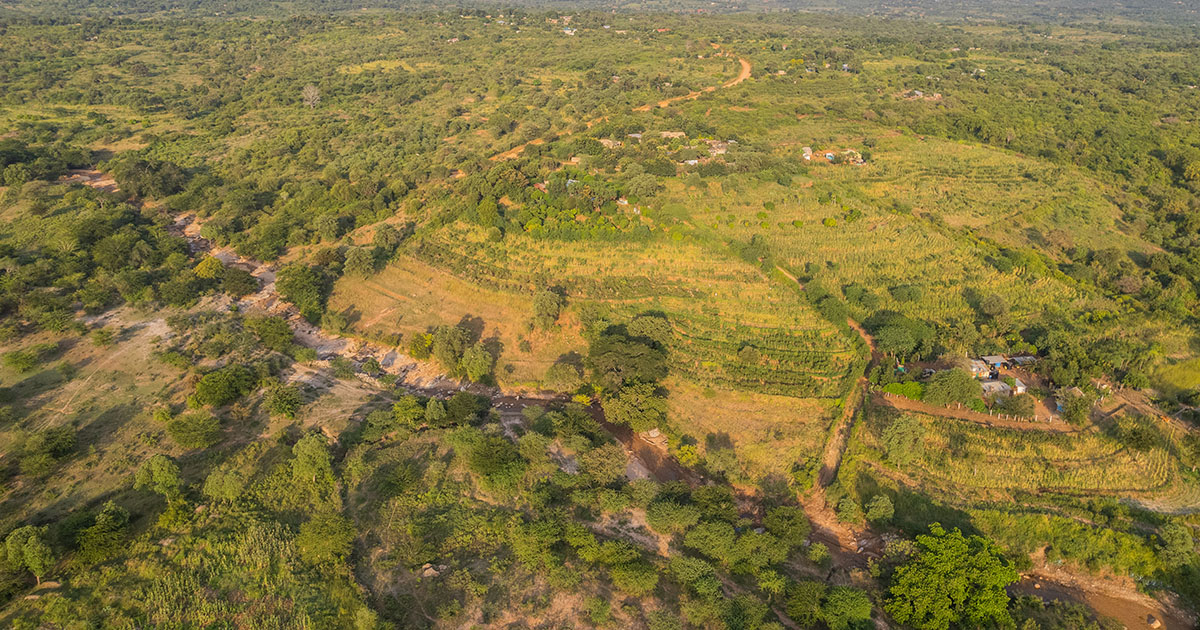





Fragmentation, degradation and loss of natural habitats are now recognised as major threats to wildlife conservation and mobile pastoralism in East African savannah These processes are driven primarily by land tenure and policy, increasing human population, expansion of settlements and agricultural farms, road networks, urban development and fencing. To understand and characterise the forces driving habitat fragmentation, we analyse how biophysical (soils, slope, rainfall, rivers) and human-created (roads, towns, parks, quarries) features influence where people choose to fence the land in the Athi-Kaputiei ecosystem of Kenya. We also explore the consequences of land fragmentation through fencing on the abundance and distribution of wildlife and livestock populations. We show that fences are most highly concentrated along the major roads and around the major urban centres. Movements of migratory wildebeest and zebra between the Nairobi National Park and the pastoral Kitengela Plains adjoining the park on the south are getting increasingly impeded by increasing concentration of fences. Populations of wildebeest and other herbivores have collapsed to a small fraction of their former abundance largely owing to destruction of their habitats and obstruction of their movements between the park and the pastoral lands by fences and other land use developments. Conserving the key seasonal wildlife dispersal areas in the Athi-Kaputiei Plains is critical to ensuring the future viability of several key wildlife species in Nairobi National Park. Several initiatives, including a conservation land lease program has been launched, but their spatial coverage and funding levels would need to be greatly expanded to secure sufficient open spaces for both wildlife and livestock.

DOI:
https://doi.org/10.1016/j.jnc.2016.10.005Altmetric score:
Dimensions Citation Count:
Export citation:
RIS (.ris)
TI  - Effects of extreme land fragmentation on wildlife and livestock population abundance and distribution
AU  - Said, M.Y.
AU  - Oguto, J.O.
AU  - Kifugo, S.
AU  - Makui, O.
AU  - Reid, R.S.
AU  - De Leeuw, J.M.
AB  - Fragmentation, degradation and loss of natural habitats are now recognised as major threats to wildlife conservation and mobile pastoralism in East African savannah These processes are driven primarily by land tenure and policy, increasing human population, expansion of settlements and agricultural farms, road networks, urban development and fencing. To understand and characterise the forces driving habitat fragmentation, we analyse how biophysical (soils, slope, rainfall, rivers) and human-created (roads, towns, parks, quarries) features influence where people choose to fence the land in the Athi-Kaputiei ecosystem of Kenya. We also explore the consequences of land fragmentation through fencing on the abundance and distribution of wildlife and livestock populations. We show that fences are most highly concentrated along the major roads and around the major urban centres. Movements of migratory wildebeest and zebra between the Nairobi National Park and the pastoral Kitengela Plains adjoining the park on the south are getting increasingly impeded by increasing concentration of fences. Populations of wildebeest and other herbivores have collapsed to a small fraction of their former abundance largely owing to destruction of their habitats and obstruction of their movements between the park and the pastoral lands by fences and other land use developments. Conserving the key seasonal wildlife dispersal areas in the Athi-Kaputiei Plains is critical to ensuring the future viability of several key wildlife species in Nairobi National Park. Several initiatives, including a conservation land lease program has been launched, but their spatial coverage and funding levels would need to be greatly expanded to secure sufficient open spaces for both wildlife and livestock.
PY  - 2016
UR  - https://www.cifor-icraf.org/knowledge/publication/32361/
DO  - https://doi.org/10.1016/j.jnc.2016.10.005
KW  - fences, fragmentation, global biodiversity, land fragmentation, land use, livestock, natural habitats, pastoralism, ungulates, wildlife
ER  -
Endnote (.ciw)
%T Effects of extreme land fragmentation on wildlife and livestock population abundance and distribution
%A Said, M.Y.
%A Oguto, J.O.
%A Kifugo, S.
%A Makui, O.
%A Reid, R.S.
%A De Leeuw, J.M.
%D 2016
%U https://www.cifor-icraf.org/knowledge/publication/32361/
%R https://doi.org/10.1016/j.jnc.2016.10.005
%X Fragmentation, degradation and loss of natural habitats are now recognised as major threats to wildlife conservation and mobile pastoralism in East African savannah These processes are driven primarily by land tenure and policy, increasing human population, expansion of settlements and agricultural farms, road networks, urban development and fencing. To understand and characterise the forces driving habitat fragmentation, we analyse how biophysical (soils, slope, rainfall, rivers) and human-created (roads, towns, parks, quarries) features influence where people choose to fence the land in the Athi-Kaputiei ecosystem of Kenya. We also explore the consequences of land fragmentation through fencing on the abundance and distribution of wildlife and livestock populations. We show that fences are most highly concentrated along the major roads and around the major urban centres. Movements of migratory wildebeest and zebra between the Nairobi National Park and the pastoral Kitengela Plains adjoining the park on the south are getting increasingly impeded by increasing concentration of fences. Populations of wildebeest and other herbivores have collapsed to a small fraction of their former abundance largely owing to destruction of their habitats and obstruction of their movements between the park and the pastoral lands by fences and other land use developments. Conserving the key seasonal wildlife dispersal areas in the Athi-Kaputiei Plains is critical to ensuring the future viability of several key wildlife species in Nairobi National Park. Several initiatives, including a conservation land lease program has been launched, but their spatial coverage and funding levels would need to be greatly expanded to secure sufficient open spaces for both wildlife and livestock.
%K fences
%K fragmentation
%K global biodiversity
%K land fragmentation
%K land use
%K livestock
%K natural habitats
%K pastoralism
%K ungulates
%K wildlife
Publication year
2016
ISSN
1617-1381
Authors
Said, M.Y.; Oguto, J.O.; Kifugo, S.; Makui, O.; Reid, R.S.; De Leeuw, J.M.
Language
English
Keywords
fences, fragmentation, global biodiversity, land fragmentation, land use, livestock, natural habitats, pastoralism, ungulates, wildlife
Source
Journal of Nature Conservation. 34: 151-164
Geographic
Kenya