


![Séquestration du carbone et provision d’autres services écosystémiques des parcs agroforestiers à karité au Burkina Faso [Carbon sequestration and other ecosystem services provided by shea-tree agroforestry parks in Burkina Faso]](https://www.cifor-icraf.org/uploads/webservice/0006579X.jpg)


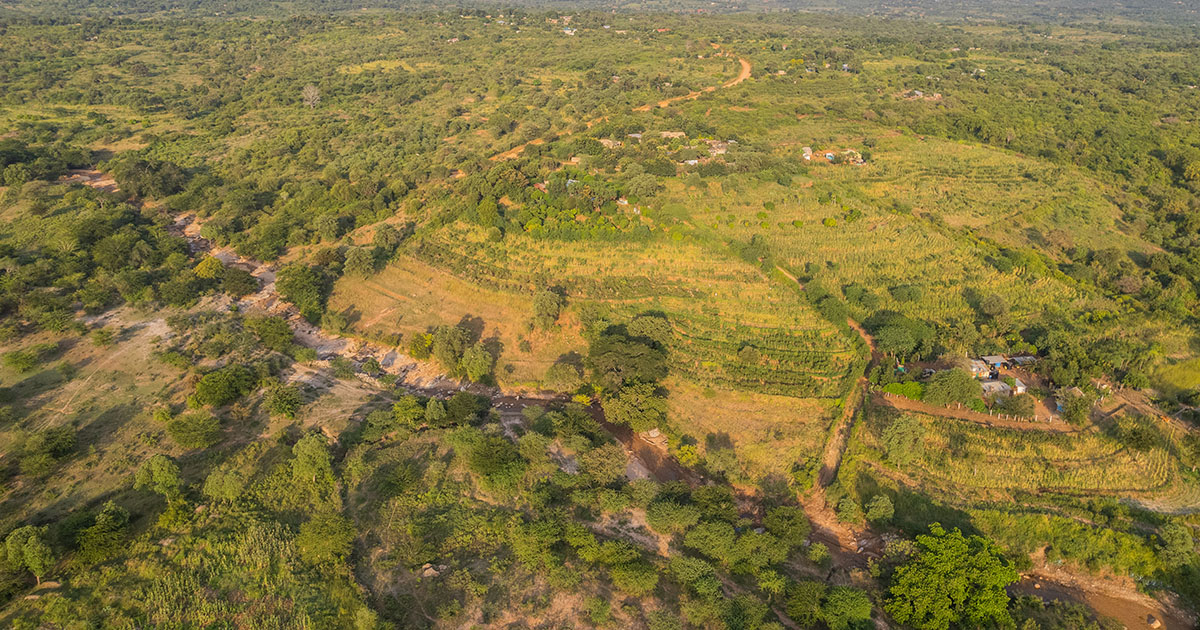
Shea-tree agroforestry parks play a crucial role in climate mitigation and ecosystem services in West Africa, yet their carbon sequestration potential remains poorly documented. This study assesses the contribution of shea-tree (Vitellaria paradoxa) agroforestry parks in Burkina Faso, using household surveys and field inventories across three phytogeographical sectors. Findings indicate that over 89% of surveyed households have shea trees in their fields, which provide fuelwood, timber, improve soil fertility, and help control erosion. Tree density varies from 32 to 45 individuals per hectare, with an average height of 7.93 meters and a diameter at breast height (DBH) of 31.9 cm. Above-ground biomass estimates range from 15.5 to 42.8 Mg/ha, averaging 25.7 Mg/ha or 12.8 Mg of carbon per hectare. The study highlights the significant carbon sequestration potential of these agroforestry systems, though benefits vary based on tree DBH and regional factors. Notably, all surveyed trees had a DBH greater than 24 cm, indicating a lack of young trees and an urgent need for regeneration through assisted natural regeneration, planting, or a combination of both.
This work is licensed under CC-BY 4.0

This work is licensed under CC-BY 4.0
DOI:
https://doi.org/10.19182/bft2023.356.a36903Altmetric score:
Dimensions Citation Count:
Export citation:
RIS (.ris)
TI  - Séquestration du carbone et provision d’autres services écosystémiques des parcs agroforestiers à karité au Burkina Faso [Carbon sequestration and other ecosystem services provided by shea-tree agroforestry parks in Burkina Faso]
AU  - Dimobe, K.
AU  - Bayala, J.
AB  - Shea-tree agroforestry parks play a crucial role in climate mitigation and ecosystem services in West Africa, yet their carbon sequestration potential remains poorly documented. This study assesses the contribution of shea-tree (Vitellaria paradoxa) agroforestry parks in Burkina Faso, using household surveys and field inventories across three phytogeographical sectors. Findings indicate that over 89% of surveyed households have shea trees in their fields, which provide fuelwood, timber, improve soil fertility, and help control erosion. Tree density varies from 32 to 45 individuals per hectare, with an average height of 7.93 meters and a diameter at breast height (DBH) of 31.9 cm. Above-ground biomass estimates range from 15.5 to 42.8 Mg/ha, averaging 25.7 Mg/ha or 12.8 Mg of carbon per hectare. The study highlights the significant carbon sequestration potential of these agroforestry systems, though benefits vary based on tree DBH and regional factors. Notably, all surveyed trees had a DBH greater than 24 cm, indicating a lack of young trees and an urgent need for regeneration through assisted natural regeneration, planting, or a combination of both.
PY  - 2023
UR  - https://www.cifor-icraf.org/knowledge/publication/38090/
DO  - https://doi.org/10.19182/bft2023.356.a36903
KW  - aboveground biomass, agroforestry, carbon sequestration, climate change mitigation, ecosystem services, fuelwood, shea trees, soil fertility
ER  -
Endnote (.ciw)
%T Séquestration du carbone et provision d’autres services écosystémiques des parcs agroforestiers à karité au Burkina Faso [Carbon sequestration and other ecosystem services provided by shea-tree agroforestry parks in Burkina Faso]
%A Dimobe, K.
%A Bayala, J.
%D 2023
%U https://www.cifor-icraf.org/knowledge/publication/38090/
%R https://doi.org/10.19182/bft2023.356.a36903
%X Shea-tree agroforestry parks play a crucial role in climate mitigation and ecosystem services in West Africa, yet their carbon sequestration potential remains poorly documented. This study assesses the contribution of shea-tree (Vitellaria paradoxa) agroforestry parks in Burkina Faso, using household surveys and field inventories across three phytogeographical sectors. Findings indicate that over 89% of surveyed households have shea trees in their fields, which provide fuelwood, timber, improve soil fertility, and help control erosion. Tree density varies from 32 to 45 individuals per hectare, with an average height of 7.93 meters and a diameter at breast height (DBH) of 31.9 cm. Above-ground biomass estimates range from 15.5 to 42.8 Mg/ha, averaging 25.7 Mg/ha or 12.8 Mg of carbon per hectare. The study highlights the significant carbon sequestration potential of these agroforestry systems, though benefits vary based on tree DBH and regional factors. Notably, all surveyed trees had a DBH greater than 24 cm, indicating a lack of young trees and an urgent need for regeneration through assisted natural regeneration, planting, or a combination of both.
%K aboveground biomass
%K agroforestry
%K carbon sequestration
%K climate change mitigation
%K ecosystem services
%K fuelwood
%K shea trees
%K soil fertility
Publication year
2023
ISSN
0006-579X
Authors
Language
English
Keywords
aboveground biomass, agroforestry, carbon sequestration, climate change mitigation, ecosystem services, fuelwood, shea trees, soil fertility
Source
Bois et Forets des Tropiques. 356: 67-80
Geographic
Burkina Faso