

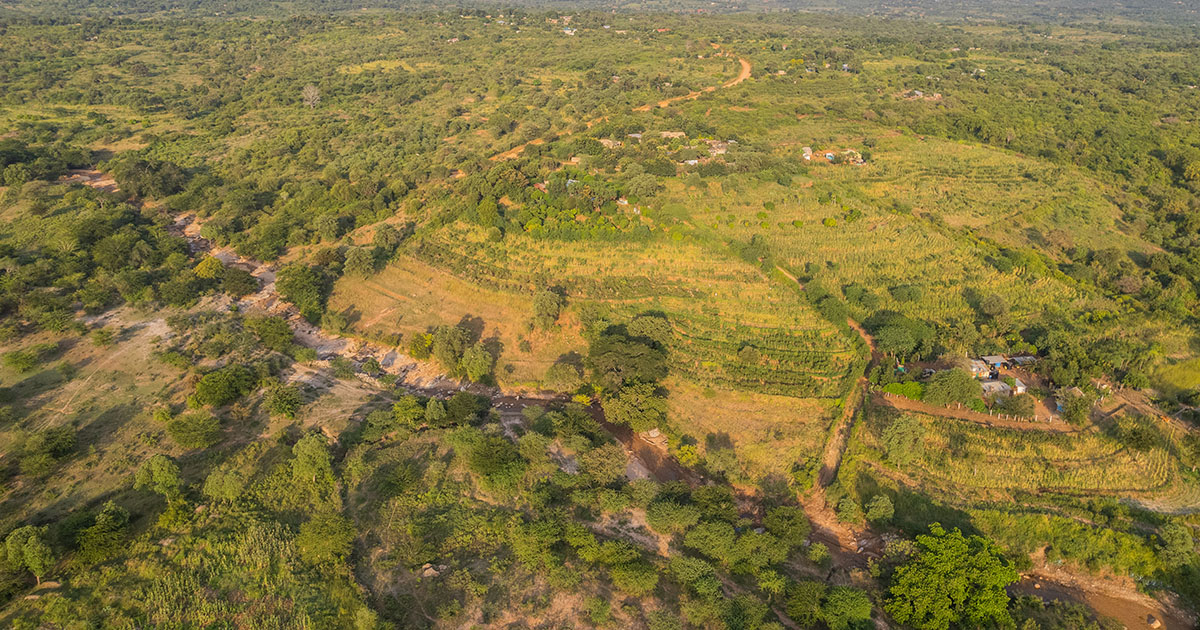






The illegal exploitation of wood and cocoa is a key driver of deforestation and forest degradation in the tropics, benefiting multiple stakeholders, including urban consumers. Shifting consumer purchasing behavior could significantly reduce the illegal trade of these products. While demand for sustainably sourced goods has been extensively studied in Western countries and emerging economies, Sub-Saharan Africa is still minimally impacted but expected to see a rise in demand in the future. Understanding the motivations driving African consumers to purchase deforestation-free products is crucial for supporting this transition.
This study employed a behavioral economics approach to analyze consumer purchasing intentions and behaviors regarding timber and cocoa in Cameroon. Using propensity score matching and structural equation modeling, responses from 463 sawnwood market consumers and 703 cocoa market consumers revealed two key findings, (1) Consumers with higher environmental awareness, perceived social pressure, past purchasing behavior, education, and exposure to awareness campaigns are more likely to buy deforestation-free timber and respond to sustainable supply chain policies., (2) The status quo bias is the most influential factor in purchasing chocolate without illegal deforestation links—meaning most buyers avoid change due to transaction costs and habitual consumption patterns.
This study provides the first estimate of consumer motivations for buying deforestation-free products in Sub-Saharan Africa, offering valuable insights for shaping social nudges to promote sustainable purchasing behavior. The findings have important theoretical and practical implications for behavioral and applied economics in sustainable consumption within developing countries.
This work is licensed under CC-BY 4.0

This study employed a behavioral economics approach to analyze consumer purchasing intentions and behaviors regarding timber and cocoa in Cameroon. Using propensity score matching and structural equation modeling, responses from 463 sawnwood market consumers and 703 cocoa market consumers revealed two key findings, (1) Consumers with higher environmental awareness, perceived social pressure, past purchasing behavior, education, and exposure to awareness campaigns are more likely to buy deforestation-free timber and respond to sustainable supply chain policies., (2) The status quo bias is the most influential factor in purchasing chocolate without illegal deforestation links—meaning most buyers avoid change due to transaction costs and habitual consumption patterns.
This study provides the first estimate of consumer motivations for buying deforestation-free products in Sub-Saharan Africa, offering valuable insights for shaping social nudges to promote sustainable purchasing behavior. The findings have important theoretical and practical implications for behavioral and applied economics in sustainable consumption within developing countries.
This work is licensed under CC-BY 4.0
DOI:
https://doi.org/10.13140/RG.2.2.11306.12480Altmetric score:
Dimensions Citation Count:
Export citation:
RIS (.ris)
TI  - Analyse économique de la demande de produits sans déforestation illégale au Cameroun
AU  - Bienvenue, B.
AB  - The illegal exploitation of wood and cocoa is a key driver of deforestation and forest degradation in the tropics, benefiting multiple stakeholders, including urban consumers. Shifting consumer purchasing behavior could significantly reduce the illegal trade of these products. While demand for sustainably sourced goods has been extensively studied in Western countries and emerging economies, Sub-Saharan Africa is still minimally impacted but expected to see a rise in demand in the future. Understanding the motivations driving African consumers to purchase deforestation-free products is crucial for supporting this transition.This study employed a behavioral economics approach to analyze consumer purchasing intentions and behaviors regarding timber and cocoa in Cameroon. Using propensity score matching and structural equation modeling, responses from 463 sawnwood market consumers and 703 cocoa market consumers revealed two key findings, (1) Consumers with higher environmental awareness, perceived social pressure, past purchasing behavior, education, and exposure to awareness campaigns are more likely to buy deforestation-free timber and respond to sustainable supply chain policies., (2) The status quo bias is the most influential factor in purchasing chocolate without illegal deforestation links—meaning most buyers avoid change due to transaction costs and habitual consumption patterns.This study provides the first estimate of consumer motivations for buying deforestation-free products in Sub-Saharan Africa, offering valuable insights for shaping social nudges to promote sustainable purchasing behavior. The findings have important theoretical and practical implications for behavioral and applied economics in sustainable consumption within developing countries.
PY  - 2025
PB  - Université de Douala
PP  - Cameroon
UR  - https://www.cifor-icraf.org/knowledge/publication/44568/
DO  - https://doi.org/10.13140/RG.2.2.11306.12480
KW  - cocoa, consumer behaviour, consumption, deforestation, developing countries, economic analysis, illegal logging, mathematical models, score matching, structural equation, supply chain, sustainability, timber, trade
ER  -
Endnote (.ciw)
%T Analyse économique de la demande de produits sans déforestation illégale au Cameroun
%A Bienvenue, B.
%D 2025
%I Université de Douala
%C Cameroon
%U https://www.cifor-icraf.org/knowledge/publication/44568/
%R https://doi.org/10.13140/RG.2.2.11306.12480
%X The illegal exploitation of wood and cocoa is a key driver of deforestation and forest degradation in the tropics, benefiting multiple stakeholders, including urban consumers. Shifting consumer purchasing behavior could significantly reduce the illegal trade of these products. While demand for sustainably sourced goods has been extensively studied in Western countries and emerging economies, Sub-Saharan Africa is still minimally impacted but expected to see a rise in demand in the future. Understanding the motivations driving African consumers to purchase deforestation-free products is crucial for supporting this transition.This study employed a behavioral economics approach to analyze consumer purchasing intentions and behaviors regarding timber and cocoa in Cameroon. Using propensity score matching and structural equation modeling, responses from 463 sawnwood market consumers and 703 cocoa market consumers revealed two key findings, (1) Consumers with higher environmental awareness, perceived social pressure, past purchasing behavior, education, and exposure to awareness campaigns are more likely to buy deforestation-free timber and respond to sustainable supply chain policies., (2) The status quo bias is the most influential factor in purchasing chocolate without illegal deforestation links—meaning most buyers avoid change due to transaction costs and habitual consumption patterns.This study provides the first estimate of consumer motivations for buying deforestation-free products in Sub-Saharan Africa, offering valuable insights for shaping social nudges to promote sustainable purchasing behavior. The findings have important theoretical and practical implications for behavioral and applied economics in sustainable consumption within developing countries.
%K cocoa
%K consumer behaviour
%K consumption
%K deforestation
%K developing countries
%K economic analysis
%K illegal logging
%K mathematical models
%K score matching
%K structural equation
%K supply chain
%K sustainability
%K timber
%K trade
Publisher
Université de Douala: Cameroon
Publication year
2025
Authors
Language
French
Keywords
cocoa, consumer behaviour, consumption, deforestation, developing countries, economic analysis, illegal logging, mathematical models, score matching, structural equation, supply chain, sustainability, timber, trade
Geographic
Cameroon