


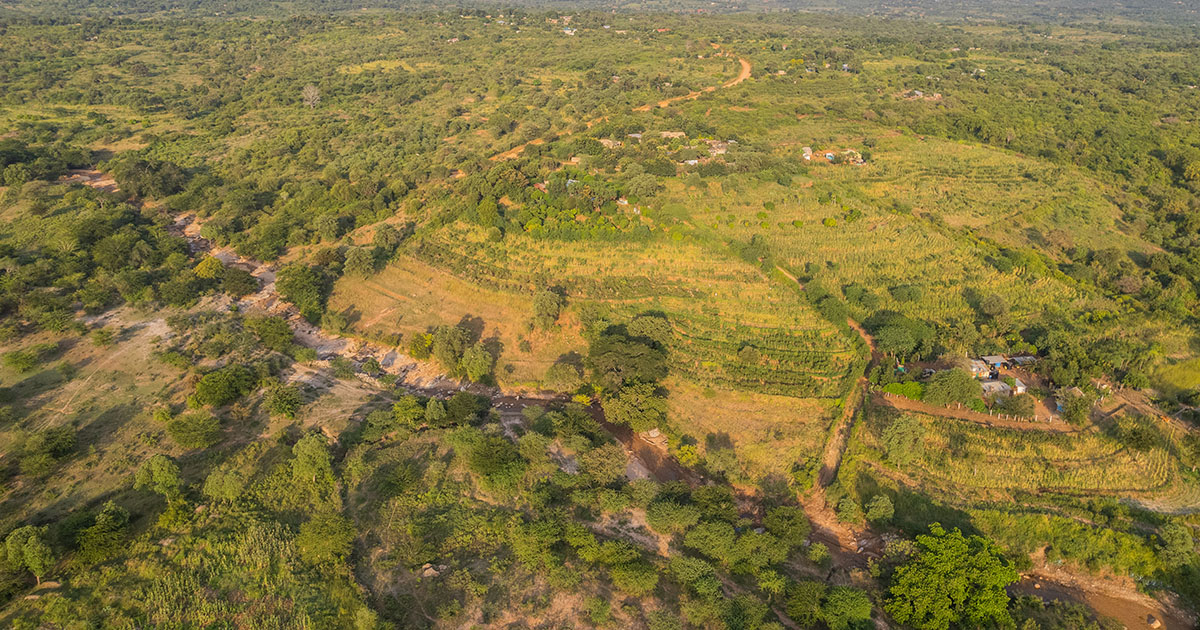






Climate variability and change significantly affect smallholder farmers' food security and livelihoods in sub-Saharan Africa. Tree planting is one of the measures promoted by development programs to mitigate and adapt to climate change. Tree planting is also believed to positively contribute to livelihoods. This paper examines factors influencing smallholders' tree planting activities in four villages in the Ziro province, Southern Burkina Faso. Furthermore, it analyses the challenges encountered and willingness to continue tree planting under current tenure arrangements. The data was obtained through key informants, household interviews, focus group discussions, and field observations. Results indicate that the majority of farmers interviewed planted Mangifera indica (50%), Anacardium occidentale (32%) and Moringa oleifera (30%). In a number of trees planted, Eucalyptus camaldulensis, Mangifera indica and Anacardium occidentale dominated. Tree planters were mainly farmers who held large and old farm areas, were literate and relatively wealthy, had favorable attitudes toward tree planting, and with considerable years of participation in a farmers' group. The main reasons for planting trees included income generation from the sale of tree products, access to markets and local support for tree planting. Preference for agriculture, tenure insecurity and lack of sufficient land were the main reasons cited for not planting trees. Farm households that were relatively poor, had smaller workforces and smaller farm sizes were not willing to continue tree planting. To effectively engage farmers in tree planting and to make it more attractive, policies are needed that address tenure insecurity for migrants, enable better access to markets, and support fair pricing structures for wood and other tree resources.
This work is licensed under CC-BY 4.0

Download:

This work is licensed under CC-BY 4.0
DOI:
https://doi.org/10.3390/f6082655Altmetric score:
Dimensions Citation Count:
Export citation:
RIS (.ris)
TI  - Smallholders' Tree Planting Activity in the Ziro Province, Southern Burkina Faso: Impacts on Livelihood and Policy Implications
AU  - Etongo, D.
AU  - Djenontin, I.N.S.
AU  - Kanninen, M.
AU  - Fobissie, K.
AB  - Climate variability and change significantly affect smallholder farmers' food security and livelihoods in sub-Saharan Africa. Tree planting is one of the measures promoted by development programs to mitigate and adapt to climate change. Tree planting is also believed to positively contribute to livelihoods. This paper examines factors influencing smallholders' tree planting activities in four villages in the Ziro province, Southern Burkina Faso. Furthermore, it analyses the challenges encountered and willingness to continue tree planting under current tenure arrangements. The data was obtained through key informants, household interviews, focus group discussions, and field observations. Results indicate that the majority of farmers interviewed planted Mangifera indica (50%), Anacardium occidentale (32%) and Moringa oleifera (30%). In a number of trees planted, Eucalyptus camaldulensis, Mangifera indica and Anacardium occidentale dominated. Tree planters were mainly farmers who held large and old farm areas, were literate and relatively wealthy, had favorable attitudes toward tree planting, and with considerable years of participation in a farmers' group. The main reasons for planting trees included income generation from the sale of tree products, access to markets and local support for tree planting. Preference for agriculture, tenure insecurity and lack of sufficient land were the main reasons cited for not planting trees. Farm households that were relatively poor, had smaller workforces and smaller farm sizes were not willing to continue tree planting. To effectively engage farmers in tree planting and to make it more attractive, policies are needed that address tenure insecurity for migrants, enable better access to markets, and support fair pricing structures for wood and other tree resources.
PY  - 2015
UR  - https://www.cifor-icraf.org/knowledge/publication/5681/
DO  - https://doi.org/10.3390/f6082655
KW  - farmers, land tenure, market, perceptions, smallholders, tree planting, trees
ER  -
Endnote (.ciw)
%T Smallholders' Tree Planting Activity in the Ziro Province, Southern Burkina Faso: Impacts on Livelihood and Policy Implications
%A Etongo, D.
%A Djenontin, I.N.S.
%A Kanninen, M.
%A Fobissie, K.
%D 2015
%U https://www.cifor-icraf.org/knowledge/publication/5681/
%R https://doi.org/10.3390/f6082655
%X Climate variability and change significantly affect smallholder farmers' food security and livelihoods in sub-Saharan Africa. Tree planting is one of the measures promoted by development programs to mitigate and adapt to climate change. Tree planting is also believed to positively contribute to livelihoods. This paper examines factors influencing smallholders' tree planting activities in four villages in the Ziro province, Southern Burkina Faso. Furthermore, it analyses the challenges encountered and willingness to continue tree planting under current tenure arrangements. The data was obtained through key informants, household interviews, focus group discussions, and field observations. Results indicate that the majority of farmers interviewed planted Mangifera indica (50%), Anacardium occidentale (32%) and Moringa oleifera (30%). In a number of trees planted, Eucalyptus camaldulensis, Mangifera indica and Anacardium occidentale dominated. Tree planters were mainly farmers who held large and old farm areas, were literate and relatively wealthy, had favorable attitudes toward tree planting, and with considerable years of participation in a farmers' group. The main reasons for planting trees included income generation from the sale of tree products, access to markets and local support for tree planting. Preference for agriculture, tenure insecurity and lack of sufficient land were the main reasons cited for not planting trees. Farm households that were relatively poor, had smaller workforces and smaller farm sizes were not willing to continue tree planting. To effectively engage farmers in tree planting and to make it more attractive, policies are needed that address tenure insecurity for migrants, enable better access to markets, and support fair pricing structures for wood and other tree resources.
%K farmers
%K land tenure
%K market
%K perceptions
%K smallholders
%K tree planting
%K trees
Publication year
2015
ISSN
1999-4907
Authors
Etongo, D.; Djenontin, I.N.S.; Kanninen, M.; Fobissie, K.
Language
English
Keywords
farmers, land tenure, market, perceptions, smallholders, tree planting, trees
Source
Forests. 6(8): 2655-2677
Geographic
Burkina Faso