

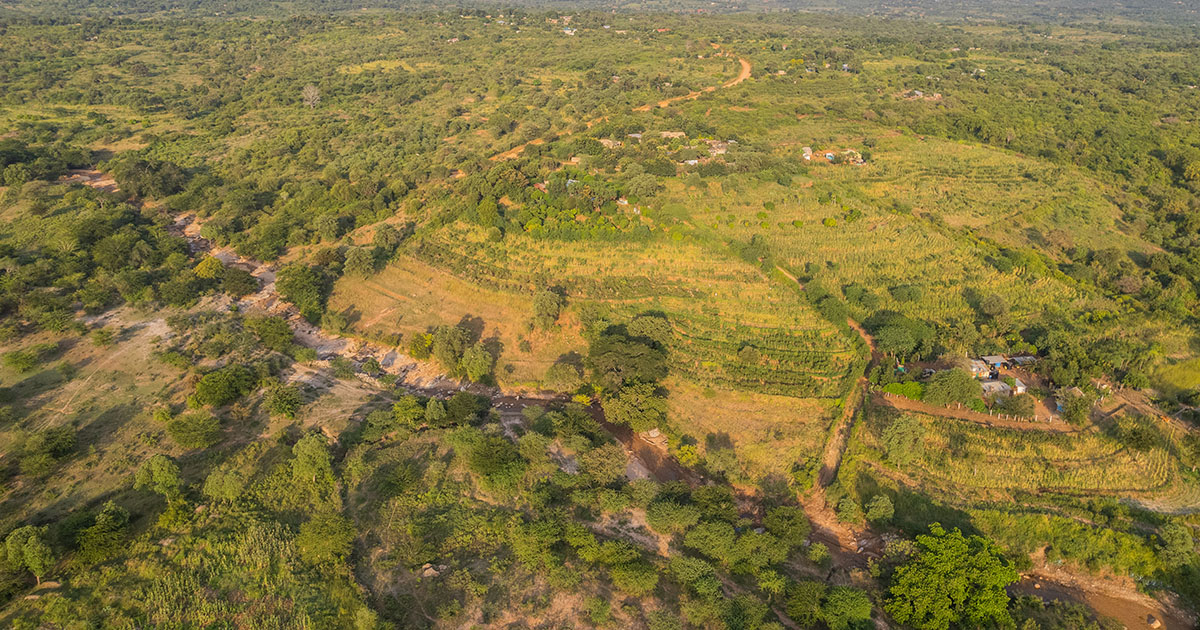





With the current rise in interest and awareness of conserving forests as a source of clean water and other water-related ecosystem services, there is an increasing need to understand the effect of land use on water and nutrient cycling. While quite a number of such studies are available, the focus is often limited to the effect of land use on water yield, and less is known about the hydrological processes behind it and water quality. There is a lack of long-term field studies, especially in Africa. Furthermore, a fairly limited amount is known about tropical montane forests, an ecosystem providing many people with water, also in Kenya. This project aims to study the effect of land use on water and nutrient cycling in the South-West Mau, a region that has been affected significantly by land use change in the past decades. It is an important water source and the headwater area of the Sondu river.
This work is licensed under CC-BY 4.0
Download:

This work is licensed under CC-BY 4.0
Export citation:
RIS (.ris)
TI  - Impacts of land use on water and nutrient cycling in the South-West Mau, Kenya: Project description and preliminary data
AU  - Jacobs, S.
AU  - Weeser, B.
AU  - Njue, N.
AU  - Guzha, A.
AU  - Breuer, L.
AU  - Butterbach-Bahl, K.
AU  - Martius, C.
AU  - Rufino, M.C.
AB  - With the current rise in interest and awareness of conserving forests as a source of clean water and other water-related ecosystem services, there is an increasing need to understand the effect of land use on water and nutrient cycling. While quite a number of such studies are available, the focus is often limited to the effect of land use on water yield, and less is known about the hydrological processes behind it and water quality. There is a lack of long-term field studies, especially in Africa. Furthermore, a fairly limited amount is known about tropical montane forests, an ecosystem providing many people with water, also in Kenya. This project aims to study the effect of land use on water and nutrient cycling in the South-West Mau, a region that has been affected significantly by land use change in the past decades. It is an important water source and the headwater area of the Sondu river.
PY  - 2016
PB  - Center for International Forestry Research (CIFOR)
PP  - Nairobi, Kenya
UR  - https://www.cifor-icraf.org/knowledge/publication/5824/
KW  - land use, nutrition, research, water management
ER  -
Endnote (.ciw)
%T Impacts of land use on water and nutrient cycling in the South-West Mau, Kenya: Project description and preliminary data
%A Jacobs, S.
%A Weeser, B.
%A Njue, N.
%A Guzha, A.
%A Breuer, L.
%A Butterbach-Bahl, K.
%A Martius, C.
%A Rufino, M.C.
%D 2016
%I Center for International Forestry Research (CIFOR)
%C Nairobi, Kenya
%U https://www.cifor-icraf.org/knowledge/publication/5824/
%X With the current rise in interest and awareness of conserving forests as a source of clean water and other water-related ecosystem services, there is an increasing need to understand the effect of land use on water and nutrient cycling. While quite a number of such studies are available, the focus is often limited to the effect of land use on water yield, and less is known about the hydrological processes behind it and water quality. There is a lack of long-term field studies, especially in Africa. Furthermore, a fairly limited amount is known about tropical montane forests, an ecosystem providing many people with water, also in Kenya. This project aims to study the effect of land use on water and nutrient cycling in the South-West Mau, a region that has been affected significantly by land use change in the past decades. It is an important water source and the headwater area of the Sondu river.
%K land use
%K nutrition
%K research
%K water management
Publisher
Center for International Forestry Research (CIFOR): Nairobi, Kenya
Publication year
2016
Authors
Jacobs, S.; Weeser, B.; Njue, N.; Guzha, A.; Breuer, L.; Butterbach-Bahl, K.; Martius, C.; Rufino, M.C.
Language
English
Keywords
land use, nutrition, research, water management
Geographic
Kenya