

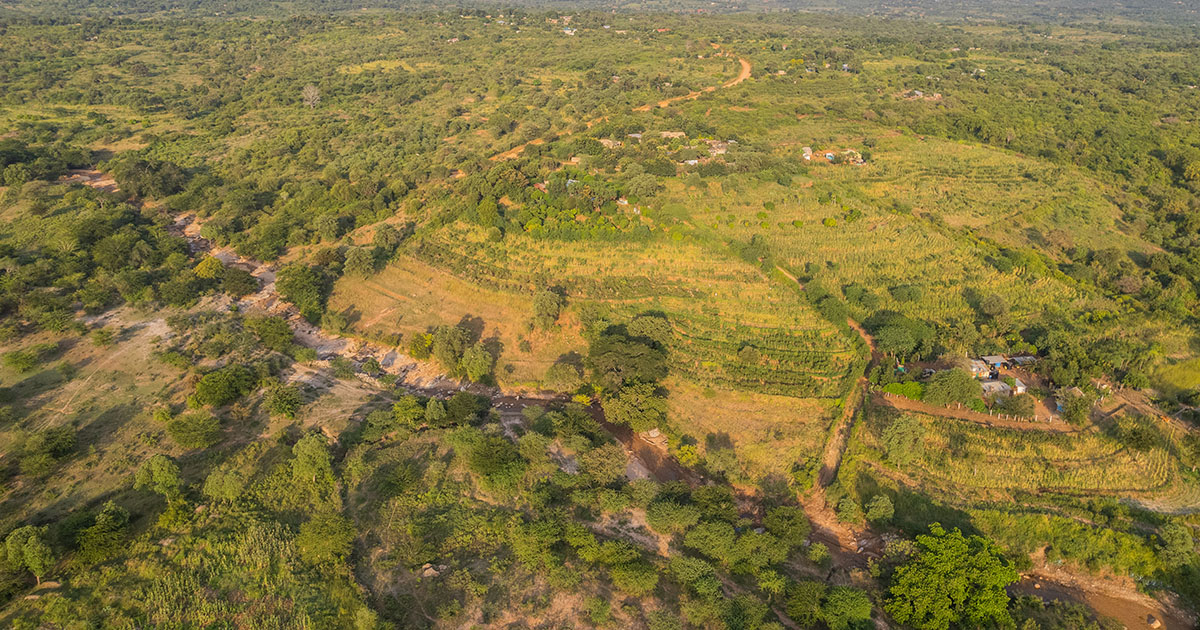






Cocoa agroforests are growing in importance with a view to meeting farmers’ livelihood goals as well as ecological services. Following the recognition of cocoa agroforests as being useful for biodiversity conservation and farmers’ livelihoods, there is a growing discourse on the fact that they may also be useful in climate change mitigation and biodiversity conservation. Several companies have expressed their willingness to be “deforestation” certified within the next two decades. In West and Central Africa, cocoa is part of the endeavour to contribute to the REDD+ mechanism. Besides producing cocoa beans, the additional expectations from cocoa agroforests (timber, NWFP, biodiversity conservation, carbon storage, etc…) depend on the trees associated with the cocoa plants. The manner in which associated trees are mixed in the system impacts on the cocoa plants and plants associated with cocoa trees within the agroforestry system thus impact on the products and services produced by these farming systems. Studies are being undertaken to identify the exact composition of these associated trees but very few deal with the manner in which these trees are structurally distributed—vertically and horizontally—within the cocoa agroforest. Understanding the way in which cocoa and non-cocoa trees are distributed within the system would be useful with a view to improving the farm system, thus meeting the needs of several stakeholders. The present study reviews the structure of cocoa orchards and agroforests in West and Central Africa (Cameroon, Nigeria, Ghana and Cote d’Ivoire) with a view to improving the products and services of cocoa landscapes. This review is centred around: (i) density of cocoa, (ii) density of associated plants, (iii) basal area or associated plants, (iv) stratification and space between components, and (v) the life cycle of cocoa plantation components.

DOI:
https://doi.org/10.1007/s10457-018-0306-7Altmetric score:
Dimensions Citation Count:
Export citation:
RIS (.ris)
TI  - Structure of cocoa farming systems in West and Central Africa: a review
AU  - Sonwa, D.J.
AU  - Weise, S.F.
AU  - Schroth, G.
AU  - Janssens, M.J.J.
AU  - Shapiro, H-Y.
AB  - Cocoa agroforests are growing in importance with a view to meeting farmers’ livelihood goals as well as ecological services. Following the recognition of cocoa agroforests as being useful for biodiversity conservation and farmers’ livelihoods, there is a growing discourse on the fact that they may also be useful in climate change mitigation and biodiversity conservation. Several companies have expressed their willingness to be “deforestation” certified within the next two decades. In West and Central Africa, cocoa is part of the endeavour to contribute to the REDD+ mechanism. Besides producing cocoa beans, the additional expectations from cocoa agroforests (timber, NWFP, biodiversity conservation, carbon storage, etc…) depend on the trees associated with the cocoa plants. The manner in which associated trees are mixed in the system impacts on the cocoa plants and plants associated with cocoa trees within the agroforestry system thus impact on the products and services produced by these farming systems. Studies are being undertaken to identify the exact composition of these associated trees but very few deal with the manner in which these trees are structurally distributed—vertically and horizontally—within the cocoa agroforest. Understanding the way in which cocoa and non-cocoa trees are distributed within the system would be useful with a view to improving the farm system, thus meeting the needs of several stakeholders. The present study reviews the structure of cocoa orchards and agroforests in West and Central Africa (Cameroon, Nigeria, Ghana and Cote d’Ivoire) with a view to improving the products and services of cocoa landscapes. This review is centred around: (i) density of cocoa, (ii) density of associated plants, (iii) basal area or associated plants, (iv) stratification and space between components, and (v) the life cycle of cocoa plantation components.
PY  - 2019
UR  - https://www.cifor-icraf.org/knowledge/publication/7359/
DO  - https://doi.org/10.1007/s10457-018-0306-7
KW  - agroforestry, biodiversity, cocoa, farming systems, forest management, landscape, livelihoods
ER  -
Endnote (.ciw)
%T Structure of cocoa farming systems in West and Central Africa: a review
%A Sonwa, D.J.
%A Weise, S.F.
%A Schroth, G.
%A Janssens, M.J.J.
%A Shapiro, H-Y.
%D 2019
%U https://www.cifor-icraf.org/knowledge/publication/7359/
%R https://doi.org/10.1007/s10457-018-0306-7
%X Cocoa agroforests are growing in importance with a view to meeting farmers’ livelihood goals as well as ecological services. Following the recognition of cocoa agroforests as being useful for biodiversity conservation and farmers’ livelihoods, there is a growing discourse on the fact that they may also be useful in climate change mitigation and biodiversity conservation. Several companies have expressed their willingness to be “deforestation” certified within the next two decades. In West and Central Africa, cocoa is part of the endeavour to contribute to the REDD+ mechanism. Besides producing cocoa beans, the additional expectations from cocoa agroforests (timber, NWFP, biodiversity conservation, carbon storage, etc…) depend on the trees associated with the cocoa plants. The manner in which associated trees are mixed in the system impacts on the cocoa plants and plants associated with cocoa trees within the agroforestry system thus impact on the products and services produced by these farming systems. Studies are being undertaken to identify the exact composition of these associated trees but very few deal with the manner in which these trees are structurally distributed—vertically and horizontally—within the cocoa agroforest. Understanding the way in which cocoa and non-cocoa trees are distributed within the system would be useful with a view to improving the farm system, thus meeting the needs of several stakeholders. The present study reviews the structure of cocoa orchards and agroforests in West and Central Africa (Cameroon, Nigeria, Ghana and Cote d’Ivoire) with a view to improving the products and services of cocoa landscapes. This review is centred around: (i) density of cocoa, (ii) density of associated plants, (iii) basal area or associated plants, (iv) stratification and space between components, and (v) the life cycle of cocoa plantation components.
%K agroforestry
%K biodiversity
%K cocoa
%K farming systems
%K forest management
%K landscape
%K livelihoods
Publication year
2019
ISSN
0167-4366
Authors
Sonwa, D.J.; Weise, S.F.; Schroth, G.; Janssens, M.J.J.; Shapiro, H-Y.
Language
English
Keywords
agroforestry, biodiversity, cocoa, farming systems, forest management, landscape, livelihoods
Source
Agroforestry Systems. 93(5): 2009-2025
Geographic
Cameroon, Nigeria, Ghana, Côte d’Ivoire