



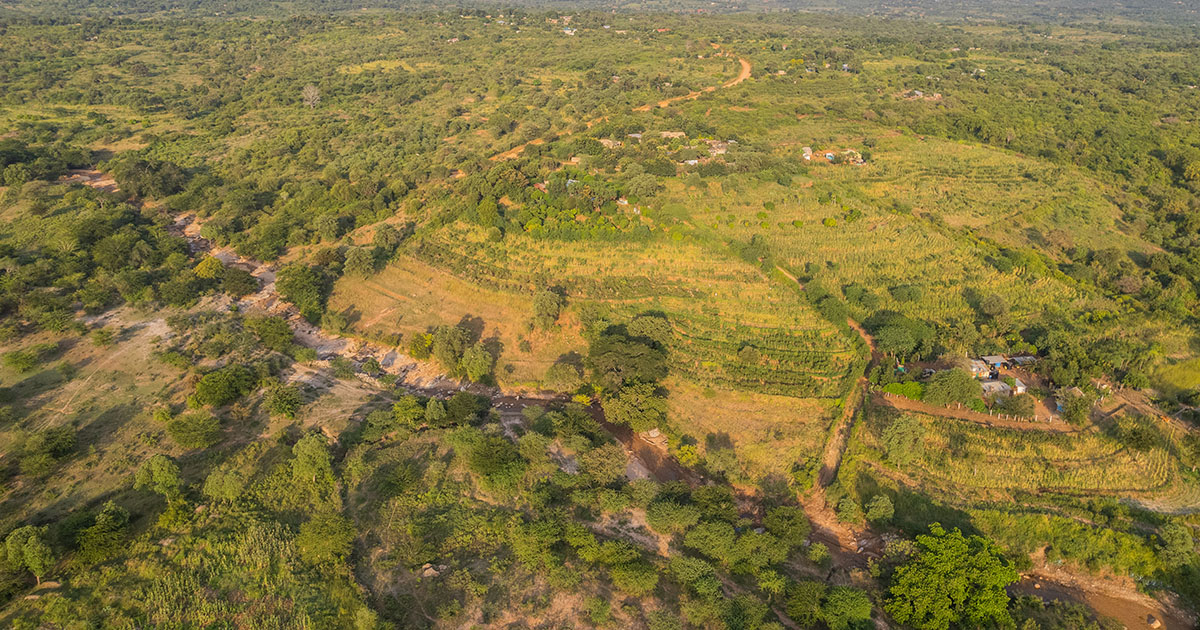
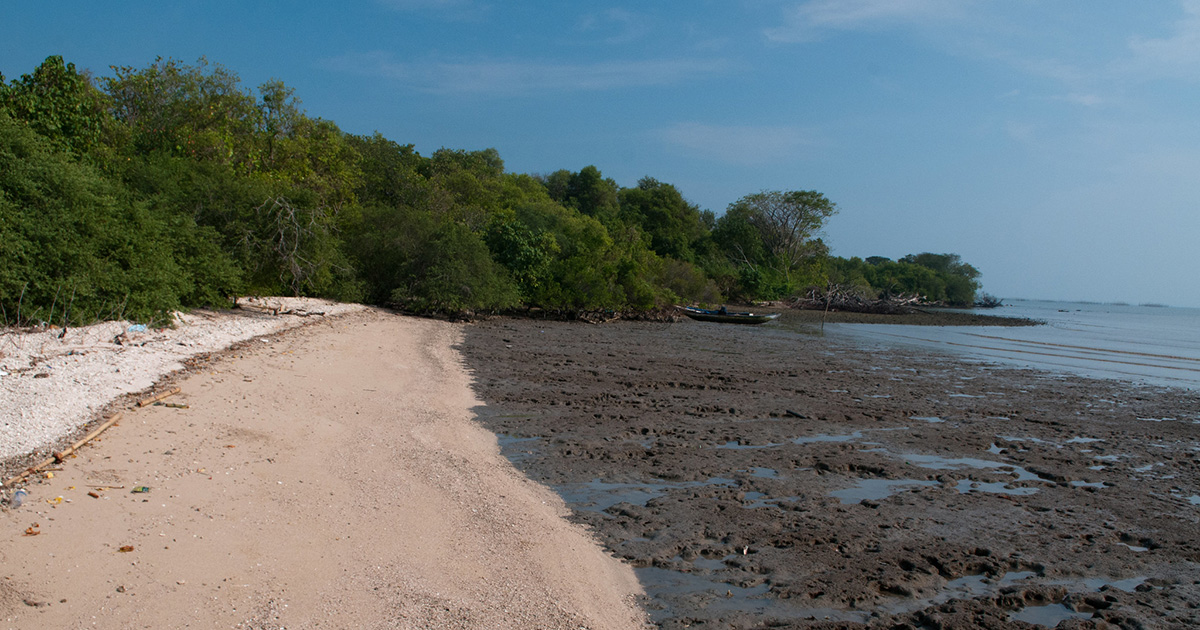






Natural recovery of mangroves in abandoned rice farming areas is important for reviving its multiple ecosystem services including climate change mitigation. This study aims at understanding the natural recovery rate and pattern of mangroves in the abandoned rice farming areas of the Rufiji Delta. Mangrove areas were stratified into early and intermediate succession as well as old growth forest. Forty-five nested plots, fifteen at each site, were randomly selected, where plant and soil data were collected. Based on the Importance Value Index, the most abundant tree species in the early succession was Barringtonia racemosa, a mangrove associated tree species having a value of 67.9. The mangrove Avicennia marina was the most abundant in both intermediate succession and old growth forest having a value of 170.7 and 163.1, respectively. Pairwise comparison of means indicated a significant change (p< 0.05) of structural parameters with fallow age. No significant change (p > 0.05) was detected in the measured soil properties among the three succession categories. The findings demonstrate that even a period of up to 15 years would not allow full recovery of structural attributes for a mangrove forest converted to agricultural land, with grass cover
This work is licensed under CC-BY 4.0

Download:

This work is licensed under CC-BY 4.0
DOI:
https://doi.org/10.4314/wiojms.v18i2.3Altmetric score:
Dimensions Citation Count:
Export citation:
RIS (.ris)
TI  - Natural recovery of mangroves in abandoned rice farming areas of the Rufiji Delta, Tanzania
AU  - Japhet, E.
AU  - Mangora, M.M.
AU  - Trettin, C.C.
AU  - Okello, J.A.
AB  - Natural recovery of mangroves in abandoned rice farming areas is important for reviving its multiple ecosystem services including climate change mitigation. This study aims at understanding the natural recovery rate and pattern of mangroves in the abandoned rice farming areas of the Rufiji Delta. Mangrove areas were stratified into early and intermediate succession as well as old growth forest. Forty-five nested plots, fifteen at each site, were randomly selected, where plant and soil data were collected. Based on the Importance Value Index, the most abundant tree species in the early succession was Barringtonia racemosa, a mangrove associated tree species having a value of 67.9. The mangrove Avicennia marina was the most abundant in both intermediate succession and old growth forest having a value of 170.7 and 163.1, respectively. Pairwise comparison of means indicated a significant change (p< 0.05) of structural parameters with fallow age. No significant change (p > 0.05) was detected in the measured soil properties among the three succession categories. The findings demonstrate that even a period of up to 15 years would not allow full recovery of structural attributes for a mangrove forest converted to agricultural land, with grass cover
PY  - 2019
UR  - https://www.cifor-icraf.org/knowledge/publication/7704/
DO  - https://doi.org/10.4314/wiojms.v18i2.3
KW  - abandoned land, ecological restoration, mangroves, soil properties, tree species
ER  -
Endnote (.ciw)
%T Natural recovery of mangroves in abandoned rice farming areas of the Rufiji Delta, Tanzania
%A Japhet, E.
%A Mangora, M.M.
%A Trettin, C.C.
%A Okello, J.A.
%D 2019
%U https://www.cifor-icraf.org/knowledge/publication/7704/
%R https://doi.org/10.4314/wiojms.v18i2.3
%X Natural recovery of mangroves in abandoned rice farming areas is important for reviving its multiple ecosystem services including climate change mitigation. This study aims at understanding the natural recovery rate and pattern of mangroves in the abandoned rice farming areas of the Rufiji Delta. Mangrove areas were stratified into early and intermediate succession as well as old growth forest. Forty-five nested plots, fifteen at each site, were randomly selected, where plant and soil data were collected. Based on the Importance Value Index, the most abundant tree species in the early succession was Barringtonia racemosa, a mangrove associated tree species having a value of 67.9. The mangrove Avicennia marina was the most abundant in both intermediate succession and old growth forest having a value of 170.7 and 163.1, respectively. Pairwise comparison of means indicated a significant change (p< 0.05) of structural parameters with fallow age. No significant change (p > 0.05) was detected in the measured soil properties among the three succession categories. The findings demonstrate that even a period of up to 15 years would not allow full recovery of structural attributes for a mangrove forest converted to agricultural land, with grass cover
%K abandoned land
%K ecological restoration
%K mangroves
%K soil properties
%K tree species
Publication year
2019
ISSN
0856-860X
Authors
Japhet, E.; Mangora, M.M.; Trettin, C.C.; Okello, J.A.
Language
English
Keywords
abandoned land, ecological restoration, mangroves, soil properties, tree species
Source
Western Indian Ocean Journal of Marine Science. 18(2): 25-36
Geographic
Tanzania