
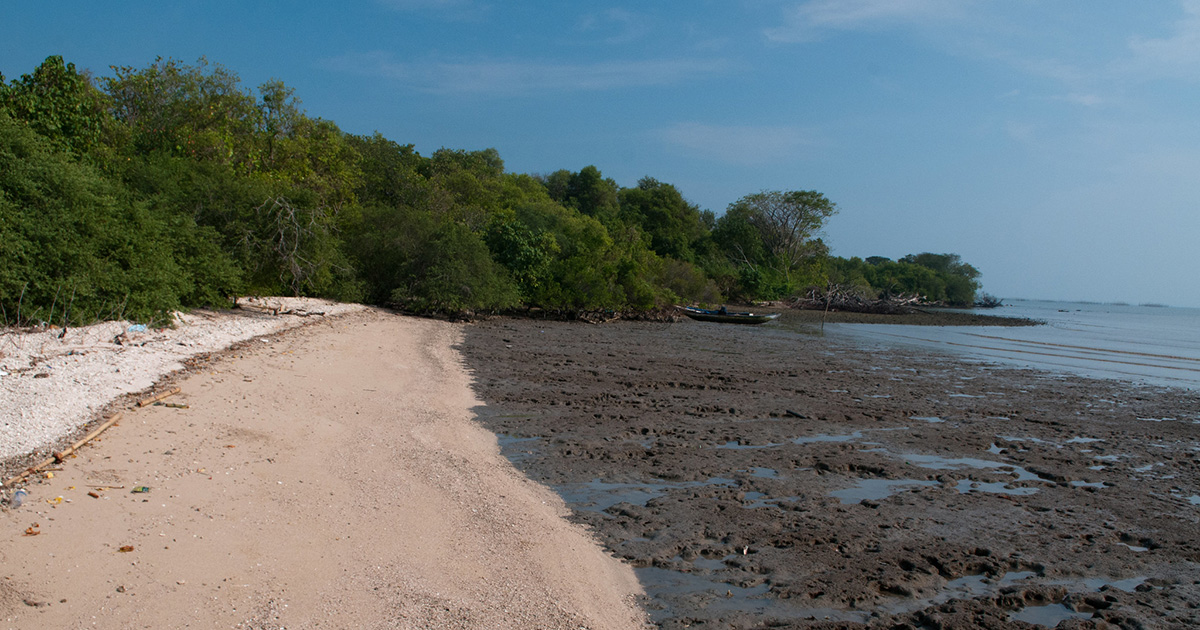





West Papua’s Bintuni Bay is Indonesia’s largest contiguous mangrove block, only second to the world’s largest mangrove in the Sundarbans, Bangladesh. As almost 40% of these mangroves are designated production forest, we assessed the effects of commercial logging on forest structure, biomass recovery, and soil carbon stocks and burial in five-year intervals, up to 25 years post-harvest. Through remote sensing and field surveys, we found that canopy structure and species diversity were gradually enhanced following biomass recovery. Carbon pools preserved in soil were supported by similar rates of carbon burial before and after logging. Our results show that mangrove forest management maintained between 70 and 75% of the total ecosystem carbon stocks, and 15–20% returned to the ecosystem after 15–25 years. This analysis suggests that mangroves managed through selective logging provide an opportunity for coastal nature-based climate solutions, while provisioning other ecosystem services, including wood and wood products.
This work is licensed under CC-BY 4.0

Download:

This work is licensed under CC-BY 4.0
DOI:
https://doi.org/10.1038/s41598-021-91502-xAltmetric score:
Dimensions Citation Count:
Export citation:
RIS (.ris)
TI  - Mangrove selective logging sustains biomass carbon recovery, soil carbon, and sediment
AU  - Murdiyarso, D.
AU  - Sasmito, S.D.
AU  - Sillanpää, M.
AU  - MacKenzie, R.A.
AU  - Gaveau, D.L.A.
AB  - West Papua’s Bintuni Bay is Indonesia’s largest contiguous mangrove block, only second to the world’s largest mangrove in the Sundarbans, Bangladesh. As almost 40% of these mangroves are designated production forest, we assessed the effects of commercial logging on forest structure, biomass recovery, and soil carbon stocks and burial in five-year intervals, up to 25 years post-harvest. Through remote sensing and field surveys, we found that canopy structure and species diversity were gradually enhanced following biomass recovery. Carbon pools preserved in soil were supported by similar rates of carbon burial before and after logging. Our results show that mangrove forest management maintained between 70 and 75% of the total ecosystem carbon stocks, and 15–20% returned to the ecosystem after 15–25 years. This analysis suggests that mangroves managed through selective logging provide an opportunity for coastal nature-based climate solutions, while provisioning other ecosystem services, including wood and wood products.
PY  - 2021
UR  - https://www.cifor-icraf.org/knowledge/publication/8053/
DO  - https://doi.org/10.1038/s41598-021-91502-x
KW  - biomass, carbon sinks, climate change, ecology, logging, mangroves, sediment, soil carbon
ER  -
Endnote (.ciw)
%T Mangrove selective logging sustains biomass carbon recovery, soil carbon, and sediment
%A Murdiyarso, D.
%A Sasmito, S.D.
%A Sillanpää, M.
%A MacKenzie, R.A.
%A Gaveau, D.L.A.
%D 2021
%U https://www.cifor-icraf.org/knowledge/publication/8053/
%R https://doi.org/10.1038/s41598-021-91502-x
%X West Papua’s Bintuni Bay is Indonesia’s largest contiguous mangrove block, only second to the world’s largest mangrove in the Sundarbans, Bangladesh. As almost 40% of these mangroves are designated production forest, we assessed the effects of commercial logging on forest structure, biomass recovery, and soil carbon stocks and burial in five-year intervals, up to 25 years post-harvest. Through remote sensing and field surveys, we found that canopy structure and species diversity were gradually enhanced following biomass recovery. Carbon pools preserved in soil were supported by similar rates of carbon burial before and after logging. Our results show that mangrove forest management maintained between 70 and 75% of the total ecosystem carbon stocks, and 15–20% returned to the ecosystem after 15–25 years. This analysis suggests that mangroves managed through selective logging provide an opportunity for coastal nature-based climate solutions, while provisioning other ecosystem services, including wood and wood products.
%K biomass
%K carbon sinks
%K climate change
%K ecology
%K logging
%K mangroves
%K sediment
%K soil carbon
Publication year
2021
ISSN
2045-2322
Authors
Murdiyarso, D.; Sasmito, S.D.; Sillanpää, M.; MacKenzie, R.A.; Gaveau, D.L.A.
Language
English
Keywords
biomass, carbon sinks, climate change, ecology, logging, mangroves, sediment, soil carbon
Source
Scientific Reports. 11(1): 12325
Geographic
Indonesia