

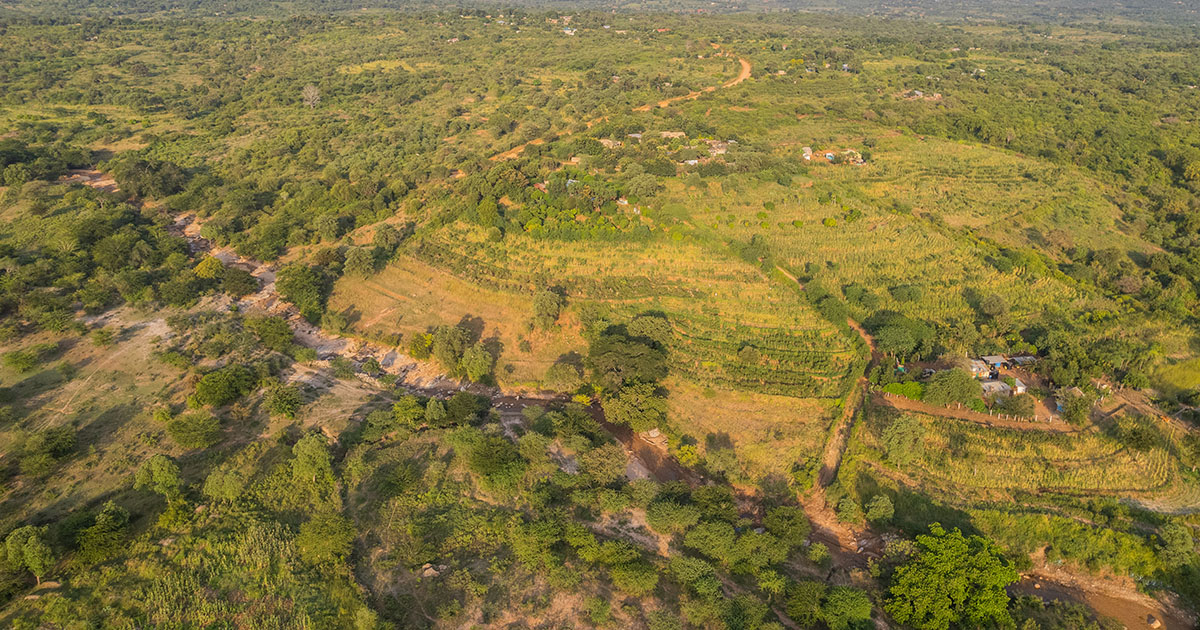







In most low- and middle-income countries (LMICs), conventional agricultural policy promotes specialized production systems of carbohydrate-rich crops to address hunger and food insecurity. For rural populations, however, increased landscape uniformity can reduce both agrobiodiversity and wild biodiversity, which can contribute to diet uniformity. Although maintaining diversity in and around agricultural systems is far from a new approach, there is growing empirical attention on the contribution of trees on/around farms to dietary quality. While recent research suggests that forests can contribute to improved diets, there is only emerging evidence on how incorporating trees into farming systems not only benefits nature but also positively affects the diets of rural households.
This work is licensed under CC-BY 4.0

Download:

This work is licensed under CC-BY 4.0
DOI:
https://doi.org/10.1002/pan3.10306Altmetric score:
Dimensions Citation Count:
Export citation:
RIS (.ris)
TI  - What are the links between tree-based farming and dietary quality for rural households? A review of emerging evidence in low- and middle-income countries
AU  - Vansant, E.C.
AU  - Mausch, K.
AU  - Ickowitz, A.
AU  - McMullin, S.
AU  - Karanja, A.
AU  - Rasmussen, L.V.
AB  - In most low- and middle-income countries (LMICs), conventional agricultural policy promotes specialized production systems of carbohydrate-rich crops to address hunger and food insecurity. For rural populations, however, increased landscape uniformity can reduce both agrobiodiversity and wild biodiversity, which can contribute to diet uniformity. Although maintaining diversity in and around agricultural systems is far from a new approach, there is growing empirical attention on the contribution of trees on/around farms to dietary quality. While recent research suggests that forests can contribute to improved diets, there is only emerging evidence on how incorporating trees into farming systems not only benefits nature but also positively affects the diets of rural households.
PY  - 2022
UR  - https://www.cifor-icraf.org/knowledge/publication/8469/
DO  - https://doi.org/10.1002/pan3.10306
KW  - developing countries, dietary intake, farming systems, food quality, household income, literature reviews, rural development
ER  -
Endnote (.ciw)
%T What are the links between tree-based farming and dietary quality for rural households? A review of emerging evidence in low- and middle-income countries
%A Vansant, E.C.
%A Mausch, K.
%A Ickowitz, A.
%A McMullin, S.
%A Karanja, A.
%A Rasmussen, L.V.
%D 2022
%U https://www.cifor-icraf.org/knowledge/publication/8469/
%R https://doi.org/10.1002/pan3.10306
%X In most low- and middle-income countries (LMICs), conventional agricultural policy promotes specialized production systems of carbohydrate-rich crops to address hunger and food insecurity. For rural populations, however, increased landscape uniformity can reduce both agrobiodiversity and wild biodiversity, which can contribute to diet uniformity. Although maintaining diversity in and around agricultural systems is far from a new approach, there is growing empirical attention on the contribution of trees on/around farms to dietary quality. While recent research suggests that forests can contribute to improved diets, there is only emerging evidence on how incorporating trees into farming systems not only benefits nature but also positively affects the diets of rural households.
%K developing countries
%K dietary intake
%K farming systems
%K food quality
%K household income
%K literature reviews
%K rural development
Publication year
2022
ISSN
2575-8314
Authors
Vansant, E.C.; Mausch, K.; Ickowitz, A.; McMullin, S.; Karanja, A.; Rasmussen, L.V.
Language
English
Keywords
developing countries, dietary intake, farming systems, food quality, household income, literature reviews, rural development
Source
People and Nature. 4(2): 296-311