








Social Forestry in Indonesia is mostly understood as a government driven program, as a means to improve forest management, empower local people and improve their wellbeing. Over time the form and structure of the program has evolved into the current five schemes, linked to agrarian and land tenure reform. Meanwhile, local and indigenous peoples have managed forests according to their own values and traditions. This chapter will discuss how these different interests and values shaped social forestry in practice. We show how different actors and institutions collaborate in different ways and adjusted the rigid government program according to local situation and needs, and what issues and challenges emerged. We use the concept of ‘social value” on what people consider important, worthwhile and desirable that forms the basis of cultural norms or rules of behavior. We then discuss briefly the issues related to evaluation, as rules for implementation and the actual implementation are based on different values.

DOI:
https://doi.org/10.1007/978-3-031-23145-2_8Altmetric score:
Dimensions Citation Count:
Export citation:
RIS (.ris)
TI  - Social Forestry in Indonesia: Fragmented Values, Progress, Contradictions, and Opportunities
AU  - Moeliono, M.
AU  - Sahide, M.A.K.
AU  - Bong, I.W.
AU  - Dwisatrio, B.
AB  - Social Forestry in Indonesia is mostly understood as a government driven program, as a means to improve forest management, empower local people and improve their wellbeing. Over time the form and structure of the program has evolved into the current five schemes, linked to agrarian and land tenure reform. Meanwhile, local and indigenous peoples have managed forests according to their own values and traditions. This chapter will discuss how these different interests and values shaped social forestry in practice. We show how different actors and institutions collaborate in different ways and adjusted the rigid government program according to local situation and needs, and what issues and challenges emerged. We use the concept of ‘social value” on what people consider important, worthwhile and desirable that forms the basis of cultural norms or rules of behavior. We then discuss briefly the issues related to evaluation, as rules for implementation and the actual implementation are based on different values.
PY  - 2023
PB  - Springer
UR  - https://www.cifor-icraf.org/knowledge/publication/8795/
DO  - https://doi.org/10.1007/978-3-031-23145-2_8
KW  - forest management, indigenous people, local government, social forestry, value systems
ER  -
Endnote (.ciw)
%T Social Forestry in Indonesia: Fragmented Values, Progress, Contradictions, and Opportunities
%A Moeliono, M.
%A Sahide, M.A.K.
%A Bong, I.W.
%A Dwisatrio, B.
%D 2023
%I Springer
%U https://www.cifor-icraf.org/knowledge/publication/8795/
%R https://doi.org/10.1007/978-3-031-23145-2_8
%X Social Forestry in Indonesia is mostly understood as a government driven program, as a means to improve forest management, empower local people and improve their wellbeing. Over time the form and structure of the program has evolved into the current five schemes, linked to agrarian and land tenure reform. Meanwhile, local and indigenous peoples have managed forests according to their own values and traditions. This chapter will discuss how these different interests and values shaped social forestry in practice. We show how different actors and institutions collaborate in different ways and adjusted the rigid government program according to local situation and needs, and what issues and challenges emerged. We use the concept of ‘social value” on what people consider important, worthwhile and desirable that forms the basis of cultural norms or rules of behavior. We then discuss briefly the issues related to evaluation, as rules for implementation and the actual implementation are based on different values.
%K forest management
%K indigenous people
%K local government
%K social forestry
%K value systems
Publication year
2023
ISBN
978-3-031-23145-2
Authors
Moeliono, M.; Sahide, M.A.K.; Bong, I.W.; Dwisatrio, B.
Language
English
Keywords
forest management, indigenous people, local government, social forestry, value systems
Source
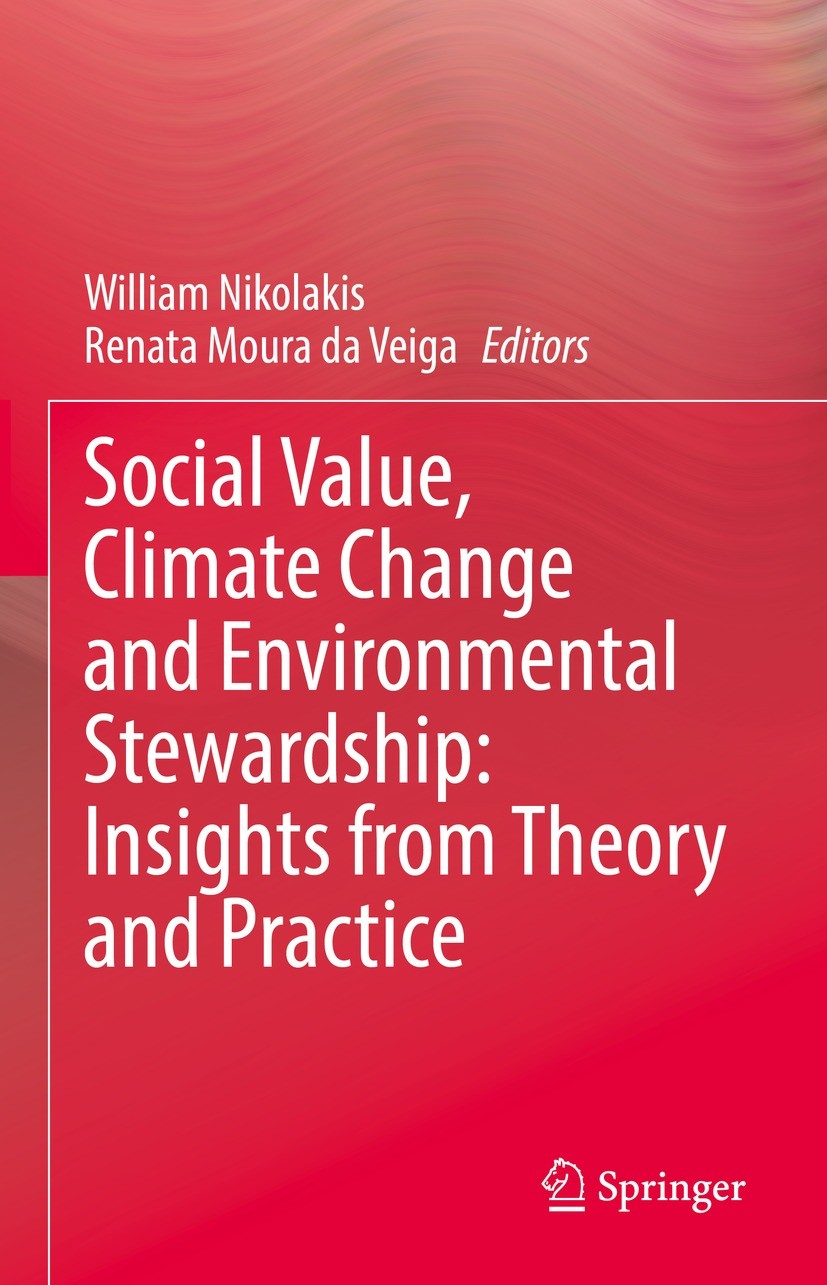
Social Value, Climate Change and Environmental Stewardship: Insights from Theory and Practice. Springer:Geographic
Indonesia