
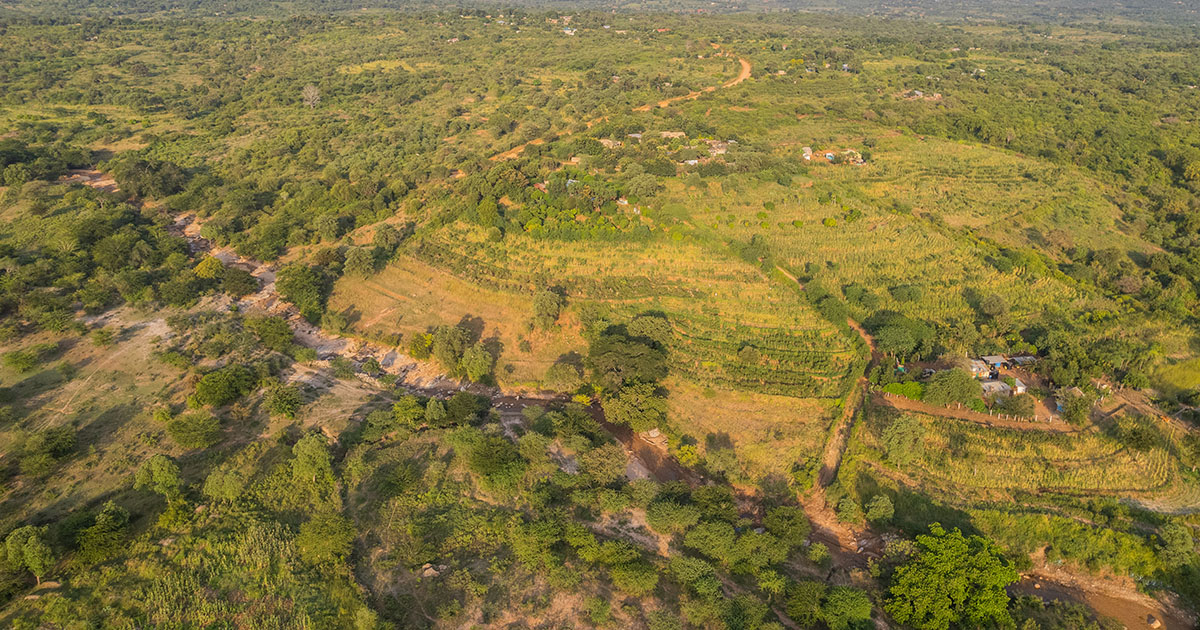





Ensuring the perpetuity and improvement of REDD+ initiatives requires rigorous impact evaluation of their effectiveness in curbing deforestation. Today, a number of global and regional remote sensing (RS) products that detect changes in forest cover are publicly available. In this study, we assess the suitability of using these datasets to evaluate the impact of local REDD+ projects targeting smallholders in the Brazilian Amazonb] Firstly, we reconstruct the forest loss of 21,492 farms located in the Transamazonian region for the period 2008 to 2018, using data from two RS products: Global Forest Change (GFC) and the Amazon Deforestation Monitoring Project (PRODES). Secondly, we evaluate the consistency between these two data sources and find that the deforestation estimates at the farm level vary considerably between datasets. Despite this difference, using microeconometric techniques that use pre-treatment outcomes to construct counter-factual patterns of REDD+ program participants, we estimate that about two hectares, or about four percent of the forest area, were saved on average on each of the 350 participating farms during the first years of the program, regardless of the data-source used. Moreover, we find that deforestation decreased on plots surrounding participating farms during the very first years of the program, suggesting that the program may have had a positive effect on neighboring farms as well. Finally, we show that participants returned to their business-as-usual pattern of clearing one to three hectares per year at the end of the program. The environmental gain generated by the program, however, was not offset by any catch-up behavior, as the two hectares saved on each farm before 2017 were not cleared in 2018. By calculating the monetary gain of the delayed carbon dioxide emissions, we find that the program’s benefits were ultimately greater than its costs.

DOI:
https://doi.org/10.1016/j.gloenvcha.2023.102653Altmetric score:
Dimensions Citation Count:
Export citation:
RIS (.ris)
TI  - Using publicly available remote sensing products to evaluate REDD+ projects in Brazil
AU  - Demarchi, G.
AU  - Subervie, J.
AU  - Catry, T.
AU  - Tritsch, I.
AB  - Ensuring the perpetuity and improvement of REDD+ initiatives requires rigorous impact evaluation of their effectiveness in curbing deforestation. Today, a number of global and regional remote sensing (RS) products that detect changes in forest cover are publicly available. In this study, we assess the suitability of using these datasets to evaluate the impact of local REDD+ projects targeting smallholders in the Brazilian Amazonb] Firstly, we reconstruct the forest loss of 21,492 farms located in the Transamazonian region for the period 2008 to 2018, using data from two RS products: Global Forest Change (GFC) and the Amazon Deforestation Monitoring Project (PRODES). Secondly, we evaluate the consistency between these two data sources and find that the deforestation estimates at the farm level vary considerably between datasets. Despite this difference, using microeconometric techniques that use pre-treatment outcomes to construct counter-factual patterns of REDD+ program participants, we estimate that about two hectares, or about four percent of the forest area, were saved on average on each of the 350 participating farms during the first years of the program, regardless of the data-source used. Moreover, we find that deforestation decreased on plots surrounding participating farms during the very first years of the program, suggesting that the program may have had a positive effect on neighboring farms as well. Finally, we show that participants returned to their business-as-usual pattern of clearing one to three hectares per year at the end of the program. The environmental gain generated by the program, however, was not offset by any catch-up behavior, as the two hectares saved on each farm before 2017 were not cleared in 2018. By calculating the monetary gain of the delayed carbon dioxide emissions, we find that the program’s benefits were ultimately greater than its costs.
PY  - 2023
UR  - https://www.cifor-icraf.org/knowledge/publication/8950/
DO  - https://doi.org/10.1016/j.gloenvcha.2023.102653
KW  - climate change, deforestation, mitigation, remote sensing, satellite imagery
ER  -
Endnote (.ciw)
%T Using publicly available remote sensing products to evaluate REDD+ projects in Brazil
%A Demarchi, G.
%A Subervie, J.
%A Catry, T.
%A Tritsch, I.
%D 2023
%U https://www.cifor-icraf.org/knowledge/publication/8950/
%R https://doi.org/10.1016/j.gloenvcha.2023.102653
%X Ensuring the perpetuity and improvement of REDD+ initiatives requires rigorous impact evaluation of their effectiveness in curbing deforestation. Today, a number of global and regional remote sensing (RS) products that detect changes in forest cover are publicly available. In this study, we assess the suitability of using these datasets to evaluate the impact of local REDD+ projects targeting smallholders in the Brazilian Amazonb] Firstly, we reconstruct the forest loss of 21,492 farms located in the Transamazonian region for the period 2008 to 2018, using data from two RS products: Global Forest Change (GFC) and the Amazon Deforestation Monitoring Project (PRODES). Secondly, we evaluate the consistency between these two data sources and find that the deforestation estimates at the farm level vary considerably between datasets. Despite this difference, using microeconometric techniques that use pre-treatment outcomes to construct counter-factual patterns of REDD+ program participants, we estimate that about two hectares, or about four percent of the forest area, were saved on average on each of the 350 participating farms during the first years of the program, regardless of the data-source used. Moreover, we find that deforestation decreased on plots surrounding participating farms during the very first years of the program, suggesting that the program may have had a positive effect on neighboring farms as well. Finally, we show that participants returned to their business-as-usual pattern of clearing one to three hectares per year at the end of the program. The environmental gain generated by the program, however, was not offset by any catch-up behavior, as the two hectares saved on each farm before 2017 were not cleared in 2018. By calculating the monetary gain of the delayed carbon dioxide emissions, we find that the program’s benefits were ultimately greater than its costs.
%K climate change
%K deforestation
%K mitigation
%K remote sensing
%K satellite imagery
Publication year
2023
ISSN
0959-3780
Authors
Demarchi, G.; Subervie, J.; Catry, T.; Tritsch, I.
Language
English
Keywords
climate change, deforestation, mitigation, remote sensing, satellite imagery
Source
Global Environmental Change. 80: 102653
Geographic
Brazil