


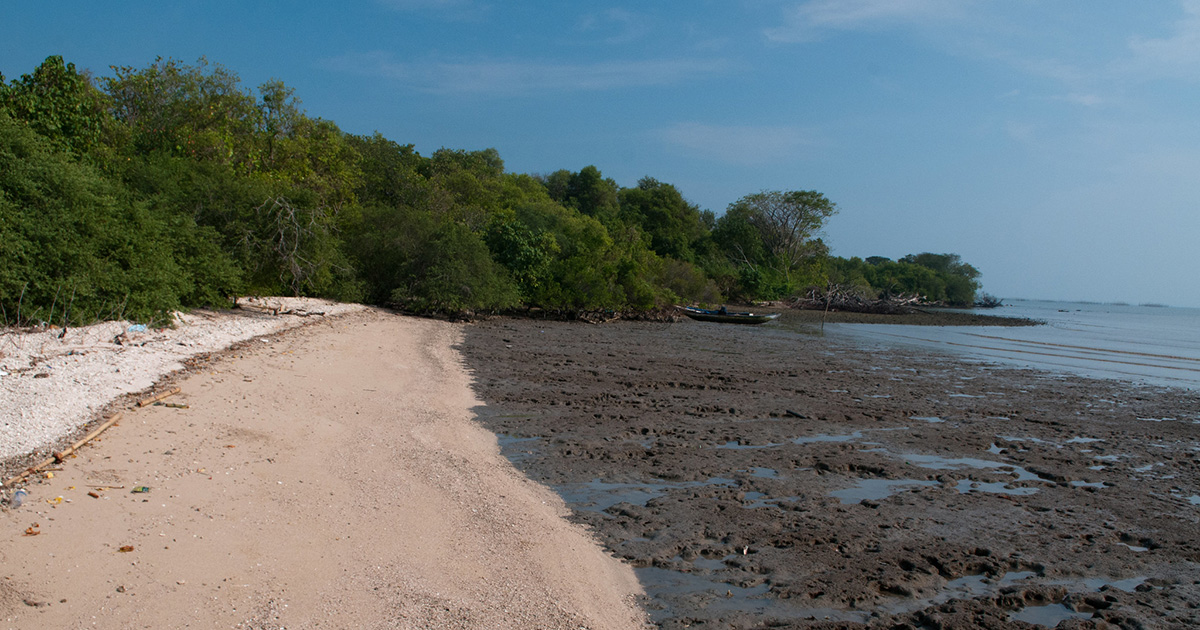






Sustainable Development Goals and Low Carbon Development are global- and national-scale development agendas Indonesia is currently applying. Mangrove ecosystems are included to achieve the targets within the same time frame, and a coordinated strategy and integrated planning are necessary.
The National Strategy for Mangrove Ecosystem Management clearly separates between conservation and rehabilitation goals of coastal region rehabilitation objectives as they involve extremely different ecosystem conditions, in both biophysical and social terms, as well as economic opportunities. Mangrove conservation should be prioritized, bearing in mind the huge threats and the challenges involved in conducting rehabilitation and restoration, which are more technically challenging and involve greater costs.
For mangrove conservation and rehabilitation to be transparent for all stakeholders, a monitoring and evaluation, reporting, and verification system is required. This mechanism should cover all aspects of conservation and rehabilitation, including accountability over funding, and the performance (successes and failures) of conservation and rehabilitation efforts.
Download:

This work is licensed under CC-BY 4.0
DOI:
https://doi.org/10.17528/cifor-icraf/008954Altmetric score:
Dimensions Citation Count:
Export citation:
RIS (.ris)
TI  - National Strategy for Mangrove Ecosystem Management: A reference for the conservation and rehabilitation of coastal areas to achieve Sustainable Development Goals and Low Carbon Development
AU  - Nurhati, I.S.
AU  - Murdiyarso, D.
AB  - Sustainable Development Goals and Low Carbon Development are global- and national-scale development agendas Indonesia is currently applying. Mangrove ecosystems are included to achieve the targets within the same time frame, and a coordinated strategy and integrated planning are necessary. The National Strategy for Mangrove Ecosystem Management clearly separates between conservation and rehabilitation goals of coastal region rehabilitation objectives as they involve extremely different ecosystem
conditions, in both biophysical and social terms, as well as economic opportunities. Mangrove conservation should be prioritized, bearing in mind the huge threats and the challenges involved in conducting rehabilitation and restoration, which are more technically challenging and involve greater costs.For mangrove conservation and rehabilitation to be transparent for all stakeholders, a monitoring and evaluation, reporting, and verification system is required. This mechanism should cover all aspects of conservation and rehabilitation, including accountability over funding, and the performance (successes and failures) of conservation and rehabilitation efforts.
PY  - 2023
PB  - CIFOR-ICRAF
PP  - Bogor, Indonesia and Nairobi, Kenya
UR  - https://www.cifor-icraf.org/knowledge/publication/8954/
DO  - https://doi.org/10.17528/cifor-icraf/008954
KW  - conservation, ecological restoration, ecosystem management, evaluation, mangroves, monitoring, sustainable development
ER  -
Endnote (.ciw)
%T National Strategy for Mangrove Ecosystem Management: A reference for the conservation and rehabilitation of coastal areas to achieve Sustainable Development Goals and Low Carbon Development
%A Nurhati, I.S.
%A Murdiyarso, D.
%D 2023
%I CIFOR-ICRAF
%C Bogor, Indonesia and Nairobi, Kenya
%U https://www.cifor-icraf.org/knowledge/publication/8954/
%R https://doi.org/10.17528/cifor-icraf/008954
%X Sustainable Development Goals and Low Carbon Development are global- and national-scale development agendas Indonesia is currently applying. Mangrove ecosystems are included to achieve the targets within the same time frame, and a coordinated strategy and integrated planning are necessary. The National Strategy for Mangrove Ecosystem Management clearly separates between conservation and rehabilitation goals of coastal region rehabilitation objectives as they involve extremely different ecosystem
conditions, in both biophysical and social terms, as well as economic opportunities. Mangrove conservation should be prioritized, bearing in mind the huge threats and the challenges involved in conducting rehabilitation and restoration, which are more technically challenging and involve greater costs.For mangrove conservation and rehabilitation to be transparent for all stakeholders, a monitoring and evaluation, reporting, and verification system is required. This mechanism should cover all aspects of conservation and rehabilitation, including accountability over funding, and the performance (successes and failures) of conservation and rehabilitation efforts.
%K conservation
%K ecological restoration
%K ecosystem management
%K evaluation
%K mangroves
%K monitoring
%K sustainable development
Publisher
CIFOR-ICRAF: Bogor, Indonesia and Nairobi, Kenya
Publication year
2023
Authors
Language
English
Keywords
conservation, ecological restoration, ecosystem management, evaluation, mangroves, monitoring, sustainable development
Geographic
Indonesia