









Abstract
The Evolving Participatory Information System for Nature-based Climate Solutions (Epistem) is a collaborative initiative designed to advance mapping technologies that address the need for high-quality spatial data to support efforts in preventing deforestation and restoring degraded landscapes. Epistem responds to the persistent challenge of fragmented and non-standardised spatial data, which often hampers effective planning, investment, and monitoring of forest and landscape restoration activities. By promoting open-source, standardised, and participatory mapping technologies, the initiative aims to strengthen the capacities of diverse stakeholders — including civil society organisations, restoration implementers, funding institutions, advocacy groups, and government agencies — to advance Nature-based Climate Solutions (NCS). Through a collaborative and iterative development process rooted in a community of practice, Epistem integrates user feedback and technical progress to build a dynamic platform linking data, tools, and decision-making. Its participatory nature ensures that the platform remains practical, inclusive, and responsive to real-world needs. By fostering shared evidence and open collaboration, Epistem seeks to enable landscape restoration that balances carbon sequestration, biodiversity conservation, and human well-being.
Objectives

Outputs
1. Landscape Mapping Technology
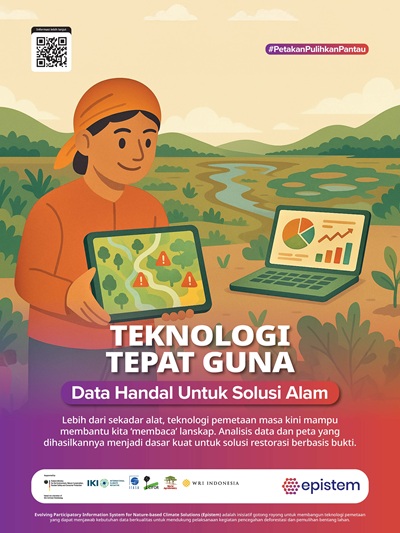
A publicly available, open-source, adaptive, and scalable mapping platform will support deforestation prevention and landscape restoration across Indonesia. The technology will be user-friendly, technically robust, and designed to meet the operational needs of practitioners.

2. Community of Practice
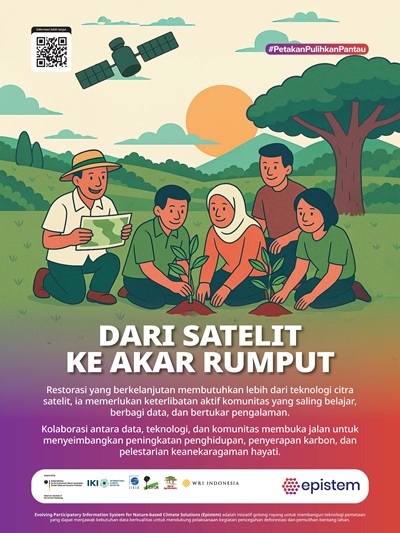
A multi-stakeholder community of practice will ensure the co-development, testing, and continuous improvement of the mapping technology. The community will include organisations engaged in restoration, monitoring, and forest governance to ensure relevance and sustainability.

Outcome
Key actors involved in forest and landscape restoration adopt standardised and accessible landscape monitoring technologies, resulting in:
- Improved data quality and transparency for planning, implementation, and monitoring.
- Enhanced collaboration and evidence-based decision-making across institutions.
Expected Impacts
In Indonesia, Epistem contributes to the large-scale prevention of deforestation and successful forest and landscape restoration, delivering balanced trade-offs and multiple benefits — including carbon sequestration, biodiversity enhancement, and improved human well-being.
Key Activities
- Co-development and stakeholder engagement: Iterative collaboration with end-users to ensure the mapping tools address real operational and landscape-level needs.
- Development of an open-source, cloud-based platform: The tool will accommodate large datasets, operate efficiently on standard computers, and integrate user feedback to remain adaptive and relevant.
- Capacity building and outreach: Workshops, training, and continuous knowledge exchange will strengthen institutional capacity to use and sustain the platform effectively.

Target Groups

Locations
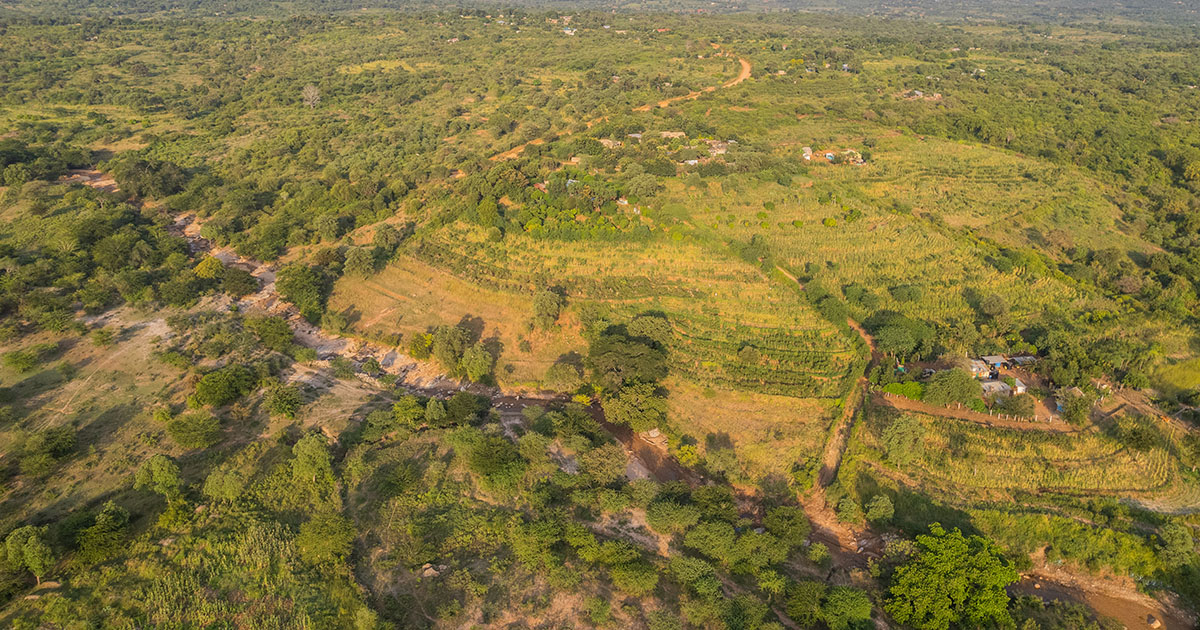
Geographic Focus: Epistem is designed for application across Indonesia, with initial consultations and piloting activities beginning in South Sumatra Province.

Contact us

Andree Ekadinata
Details
Project Team
Andree Ekadinata

Diah Wulandari

Dony Indiarto

Arga Pandiwijaya

Seruni Lestari

Nurhayatun Nafsiyah

Suraida Meisari
Knowledge Products


Funders



Partners


