


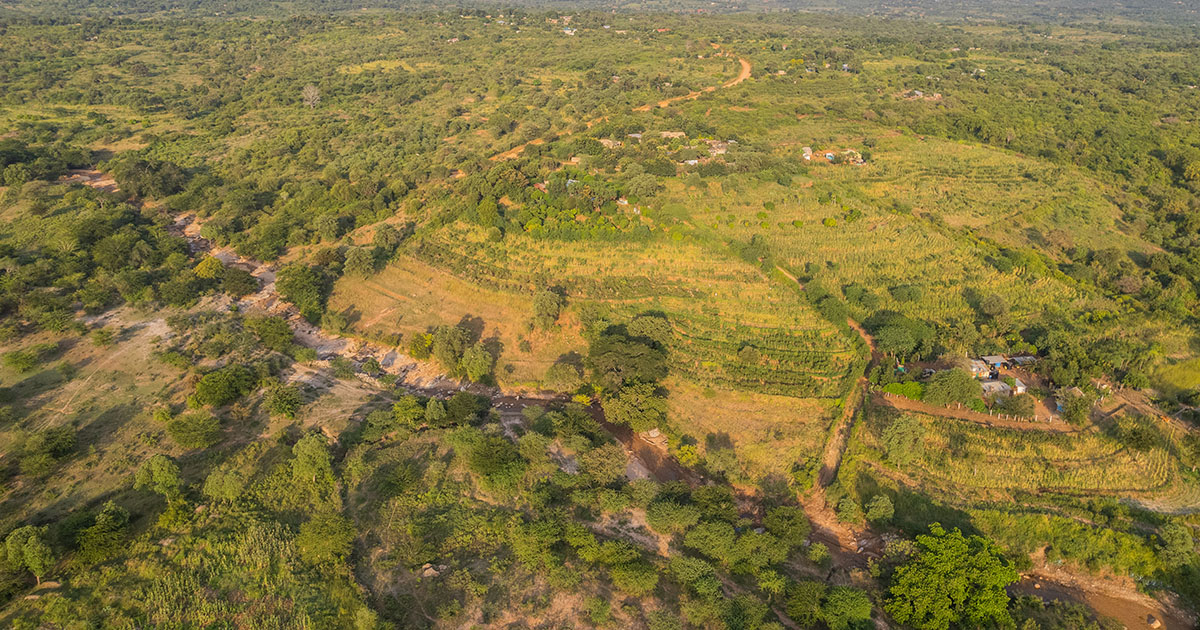






Tajikistan has been the world's most remittance-dependent economy for a decade. While migration processes have been well documented, their effects on ecological systems deserve greater scholarly and policy engagement. This paper considers the impact of wide-spread labor migration on land and forest resources. Changes to Tajikistan's land tenure regime alongside relative stability after a lost decade of civil war and upheaval have created new opportunities for long-term ecological management. Despite a lack of experience and institutional support, Tajik households are beginning to invest in tree crops and expand woodlands. Migrants and sending communities are emerging as important drivers of land use and forest cover in Tajikistan.
This work is licensed under CC-BY 4.0

Download:

This work is licensed under CC-BY 4.0
DOI:
https://doi.org/10.17528/cifor/006348Altmetric score:
Dimensions Citation Count:
Export citation:
RIS (.ris)
TI  - The impact of migration and remittances on natural resources in Tajikistan
AU  - Rubinov, I.
AB  - Tajikistan has been the world's most remittance-dependent economy for a decade. While migration processes have been well documented, their effects on ecological systems deserve greater scholarly and policy engagement. This paper considers the impact of wide-spread labor migration on land and forest resources. Changes to Tajikistan's land tenure regime alongside relative stability after a lost decade of civil war and upheaval have created new opportunities for long-term ecological management. Despite a lack of experience and institutional support, Tajik households are beginning to invest in tree crops and expand woodlands. Migrants and sending communities are emerging as important drivers of land use and forest cover in Tajikistan.
PY  - 2016
PB  - Center for International Forestry Research (CIFOR)
PP  - Bogor, Indonesia
UR  - https://www.cifor-icraf.org/knowledge/publication/6348/
DO  - https://doi.org/10.17528/cifor/006348
KW  - assets, gender, land use, migration, natural resources, state forests, tenure
ER  -
Endnote (.ciw)
%T The impact of migration and remittances on natural resources in Tajikistan
%A Rubinov, I.
%D 2016
%I Center for International Forestry Research (CIFOR)
%C Bogor, Indonesia
%U https://www.cifor-icraf.org/knowledge/publication/6348/
%R https://doi.org/10.17528/cifor/006348
%X Tajikistan has been the world's most remittance-dependent economy for a decade. While migration processes have been well documented, their effects on ecological systems deserve greater scholarly and policy engagement. This paper considers the impact of wide-spread labor migration on land and forest resources. Changes to Tajikistan's land tenure regime alongside relative stability after a lost decade of civil war and upheaval have created new opportunities for long-term ecological management. Despite a lack of experience and institutional support, Tajik households are beginning to invest in tree crops and expand woodlands. Migrants and sending communities are emerging as important drivers of land use and forest cover in Tajikistan.
%K assets
%K gender
%K land use
%K migration
%K natural resources
%K state forests
%K tenure
Publisher
Center for International Forestry Research (CIFOR): Bogor, Indonesia
Publication year
2016
ISBN
978-602-387-049-3
Authors
Language
English
Keywords
assets, gender, land use, migration, natural resources, state forests, tenure
Geographic
Tajikistan