




About the project
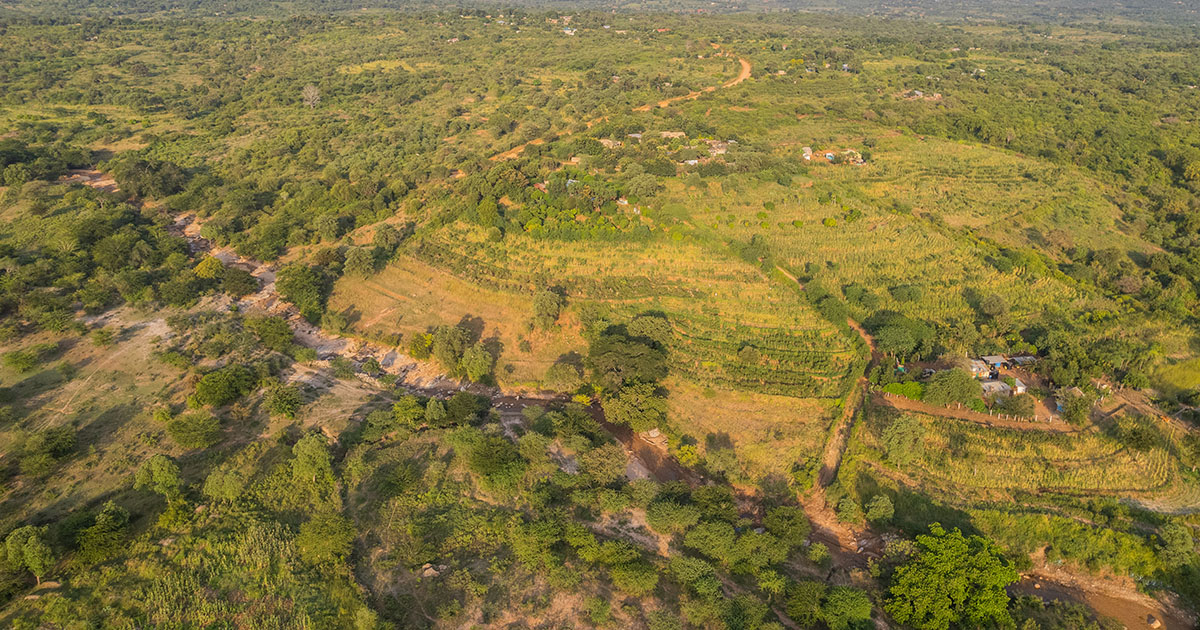
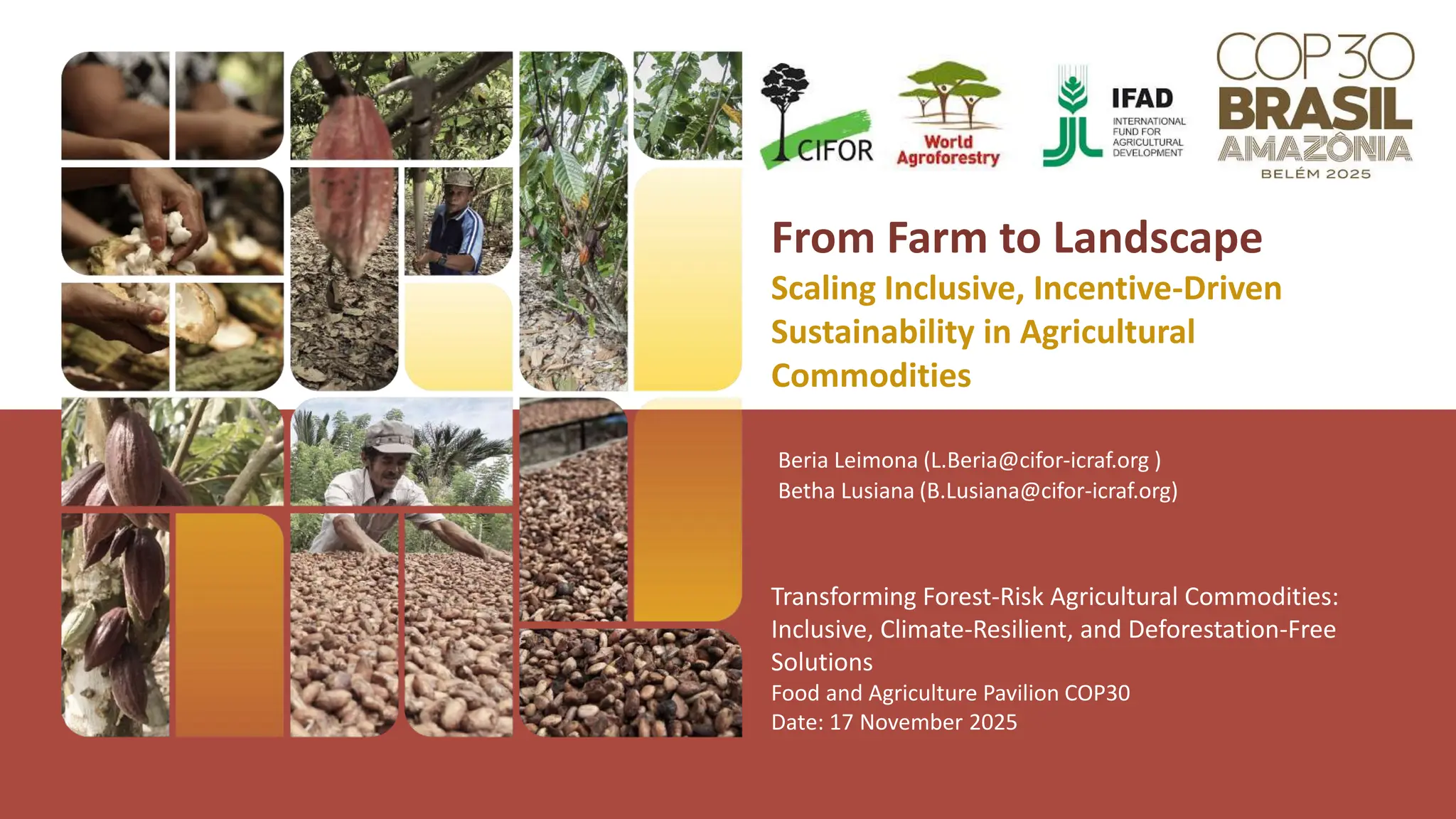
The Sustainable Farming in Tropical Asian Landscapes (SFITAL) programme, implemented by CIFOR-ICRAF and funded by the International Fund for Agricultural Development (IFAD) for five years (2020-2025), supports the transformation of cacao and oil palm production systems toward more inclusive, climate-resilient, and environmentally sustainable practices. In partnership with MARS Inc., Rainforest Alliance, and Kennemer Foods International, SFITAL works with smallholder farmers in Indonesia and the Philippines to promote sustainable commodity landscapes. The programme operates in South Sulawesi in North Luwu (cacao) and in North Sumatera in North Labuhanbatu (oil palm) in Indonesia, and in Davao de Oro in the Philippines (cacao), strengthening agroforestry practices, local governance, and value chains through a jurisdictional approach and its financing schemes that aligns farmers, governments, and market actors.
Challenges
Smallholders face low productivity, land degradation, pest and disease pressures, increasing climate risks, and barriers to sustainability certification and markets. The low productivity is mainly due to the low quality of planting materials, over-aged plantation, limited access to knowledge and technical supports on best management practices, and low adoption of agroforestry as sustainable farming practices for cacao and oil palm. Fragmented supply chains and weak local institutions' coordination often prevent farmers from benefiting from sustainable commodity demand, while environmental pressures threaten long-term livelihoods.
Approach
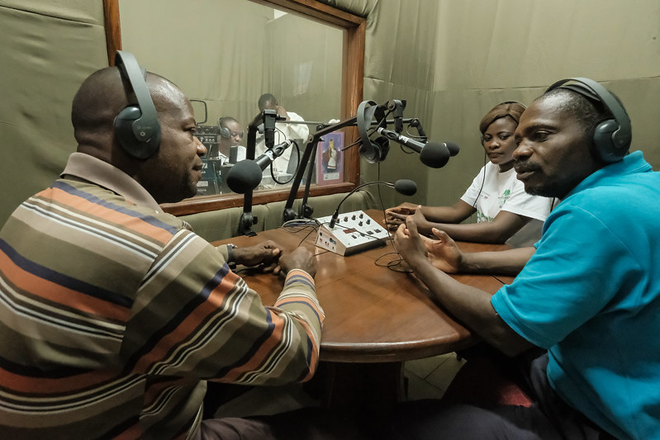
Over five years (2020–2025), SFITAL piloted scalable models of sustainable cacao and oil palm production, addressing local productivity, governance, and environmental challenges. The programme introduced jurisdictional strategies by supporting regional action plans and sustainability roadmaps that integrate spatial planning, environmental management, and stakeholder support into district or provincial policies. It strengthened farmer capacities through training in Good Agricultural Practices, agroecological practices, agroforestry innovation, demonstration plots, and business skills, while promoting diversified livelihoods. Digital tools, including knowledge management and e-learning platforms and district/province-wide monitoring and evaluation (monev) dashboards, enhanced participatory learning, transparency, and evidence-based decision-making at both community and government levels. The program also works closely with local governments to develop sustainability roadmaps, action plans and monitoring systems, and mainstream public finance to innovations, while fostering partnerships with the private sector and communities to scale impact.
Achievements/Outcomes
- 3,000+ cacao farmers and local agricultural extensionists, and 900+ oil palm farmers capacity building-30% of whom were women and nearly 20% youth.
- 23 participatory learning plots (9 on cacao agroforestry and 14 on oil palm good agricultural practices and agroforestry) as collaborative platforms for co-designing, co-investing, and co-learning innovative technologies.
- Jurisdiction sustainability planning strategies documents: District-level Cacao Sustainability Roadmap (North Luwu), Sustainable Oil Palm Action Plan (the Indonesian acronym is RAD-KSB) (North Labuhanbatu), and Roadmap for Sustainable Cacao Development in Davao de Oro Province 2025-2030, Vision to 2050 legalized.
- Two community-based business models developed through beekeeping and palm-sugar production.
- Digital curriculum, National e-learning platforms (https://e-learning.agroforestri.id/), and knowledge management platform (cacaomustahan.com) launched.
- District-wide monitoring and evaluation (monev) dashboards, for both North Luwu and North Labuhanbatu, and province-wide monev platform that equips the roadmap in Davao de Oro.
- Strengthened and scaled up ecological fiscal instruments by improving the targeting of TAKE (Ecological Fiscal Transfer) for sustainable cacao agroforestry and supporting district-level access to and allocation of the Oil Palm Revenue Sharing Fund (Dana Bagi Hasil Sawit) to advance sustainable oil palm development. Co-investment schemes for promoting agroecological practices for climate resilient and environment friendly cacao cultivation.
Overall, SFITAL demonstrates how knowledge, collaboration, and innovation can drive sustainable agricultural transformation. Through a landscape-based and multi-stakeholder approach, the project has strengthened farmers’ capacities, improved land management practices, and promoted collaboration among local governments, communities, civil society, and the private sector. By strengthening local institutions, empowering farmers, and promoting environmentally responsible practices, the initiative is helping build more resilient livelihoods and healthier landscapes for the future.
Contact us

Beria Leimona
Details
Project Team
Beria Leimona

Betha Lusiana
Suyanto

Endri Martini

Feri Johana

Tikah Atikah

Rachmat Mulia

Zarrel Gel Noza

Grace Ann Salvan

Erwin Albios

Arizka Mufida

Diah Wulandari
Knowledge Products
Publications


Videos


Presentations

News

Funders and Partners


