
CIFOR–ICRAF publishes over 750 publications every year on agroforestry, forests and climate change, landscape restoration, rights, forest policy and much more – in multiple languages.

COMPLETED PROJECT

Gender-responsive innovations for soil rehabilitation, alternative fuel and agriculture for resilient refugee and host community settlements in East Africa

Gender-responsive innovations for soil rehabilitation, alternative fuel and agriculture for resilient refugee and host community settlements in East Africa

Duration: August 2019 - September 2023

Description

The project addresses the prevailing challenges of African countries to meet their ambitious forest landscape restoration pledges under the Bonn Challenge and AFR100, and their national climate and biodiversity targets. In Burkina Faso, Ethiopia, Rwanda and Uganda the project seeks to improve the very low availability of high-quality seed and seedlings of native tree species for a diverse range of sites and purposes. Activities focus on enhancing the enabling environment for tree seed and seedling production, building functioning seed/seedling supply systems and involving the public and private sector in mobilising tree seed/seedling uptake through appropriate business models, best practice model nurseries and targeted training. The project facilitates an Africa wide partnership platform with innovative knowledge management and various networks to disseminate the results and knowledge. The main objective of the project is to strengthen the efforts of the four selected African countries with their ambitious FLR pledges to implement their restoration targets by ensuring a sustainable supply of native tree seed (NTS) planting material. This addresses one of the principle bottlenecks for achieving their NDC, NBSAP, LDN and SDG targets through tree planting. The main beneficiaries of the project are the growers and farmers that plant trees for timber, food and a multitude of other purposes; rural custodians, small-scale enterprises, nurseries, national tree seed centres (TSCs), networks, private and public cooperatives in the tree seed supply sector; government agencies and relevant authorities; research organisations and civil society organizations.

The East Africa Sub-region hosts 3.2 million refugees from various countries and nearly 5.76 million internally displaced persons who rely on humanitarian aid and surrounding natural resources for survival. As refugee settlements are located mostly in fragile dry landscapes with poor soils, the increasing population pressure accelerates loss of vegetative cover, soil erosion and land degradation, hindering small-scale agricultural production.

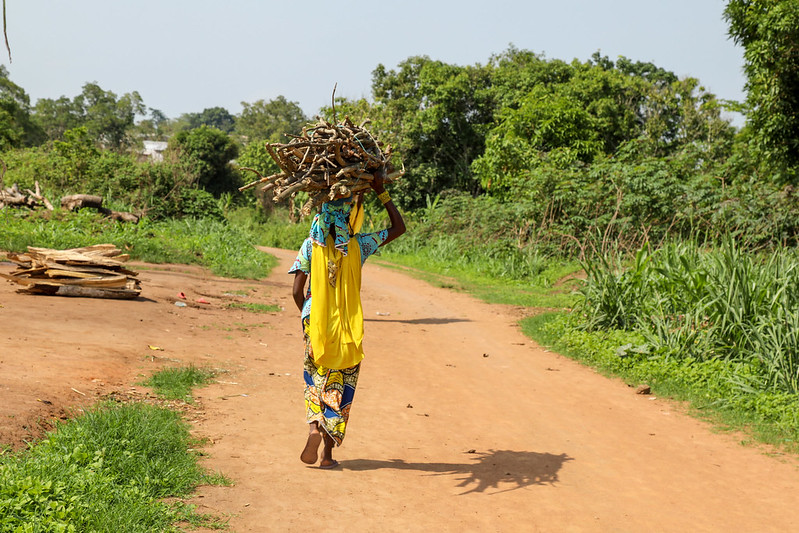
Moreover, competition over resources such as firewood, fertile land and water is becoming a common source of social tension between refugees and their surrounding host communities. Particularly, women and children, who make up a large proportion of the refugee population, suffer more when supplies of food and biomass energy become constrained.

The project therefore aims to pilot and increase in scale adaptable and gender-responsive circular economy-based solutions to capture energy, water and nutrients, thus building resilient local food and energy systems for refugee and host communities in Uganda (Rhino and Imvepi), Kenya (Kalobeyei and Kakuma) and Ethiopia (Kule).

Overall objective

To pilot and scale adaptable and gender-responsive circular economy-based Resource Recovery and Reuse solutions for increased food and energy security contributing to socio-ecologically sustainable ecosystems among refugee and host communities in Uganda, Kenya and Ethiopia.

Key activities and expected outputs

Work package 1: Local authorities supported in the implementation and scaling of innovative and gender-responsive fuel and farming options in refugee and host communities.

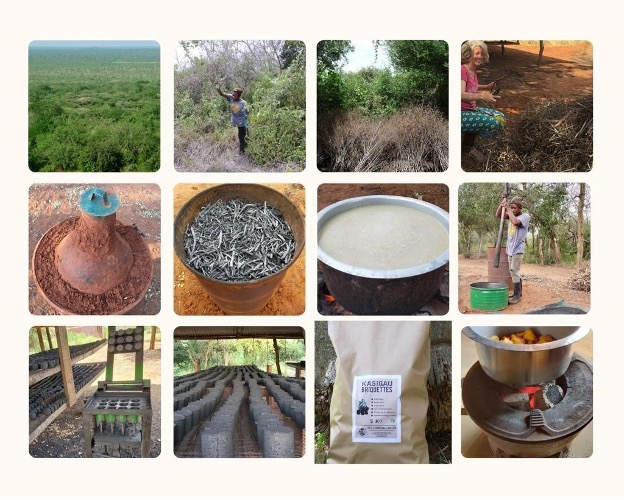
Work package 2: Local trainers, refugees and neighbouring host community members trained in waste-based options for a) safe production and marketing of dry fuel briquettes; and b) low-space farming and agroforestry innovations for subsistence needs and/or cash crop production. 3600 people from refugee and host communities trained.

Work package 3: Household and community-based pilots established and analysed for their viability and scaling potential.

Work package 4: Tested and verified solutions integrated in the programs and activities of project upscaling partners, aid and donor agencies. 200,000 inhabitants of refugee and host settlements sensitized on interventions.

Expected outcomes

Scaling of circular bioeconomy solutions in refugee context by national, regional and international NGOs, UN partners, humanitarian agencies and donors as well as local governments.

Increased gender-responsive energy and food security among refugee and host communities.

Sustainable socio-ecological systems in refugee context.

Contact us
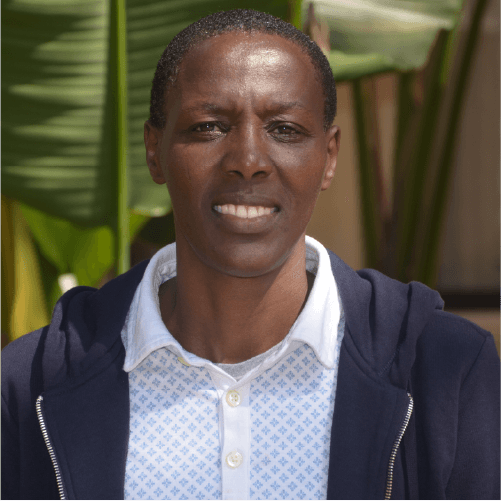
Mary Njenga

Principal Investigator

Details

Project locations

Burkina Faso, Ethiopia, Rwanda, Uganda, Kenya

Project duration

August 2019 - September 2023
(4 years, 1 month)

Thematic areas

  • Climate Change, Energy and Low Carbon Development (CCE), Soil and Land Health, Governance, Equity and Wellbeing (GEW)

Sustainable Development Goals (SDG)

  • Gender equality
  • Affordable and clean energy

Project team

Photo of Mary Njenga

Mary Njenga

Research Scientist-Bioenergy
Photo of Erik Acanakwo

Erik Acanakwo

Country Coordinator-Uganda
Photo of Niguse Hagazi

Niguse Hagazi

Interim Ethiopia Country Rep

Erick otieno

Research Assistant

Funder

Partners