
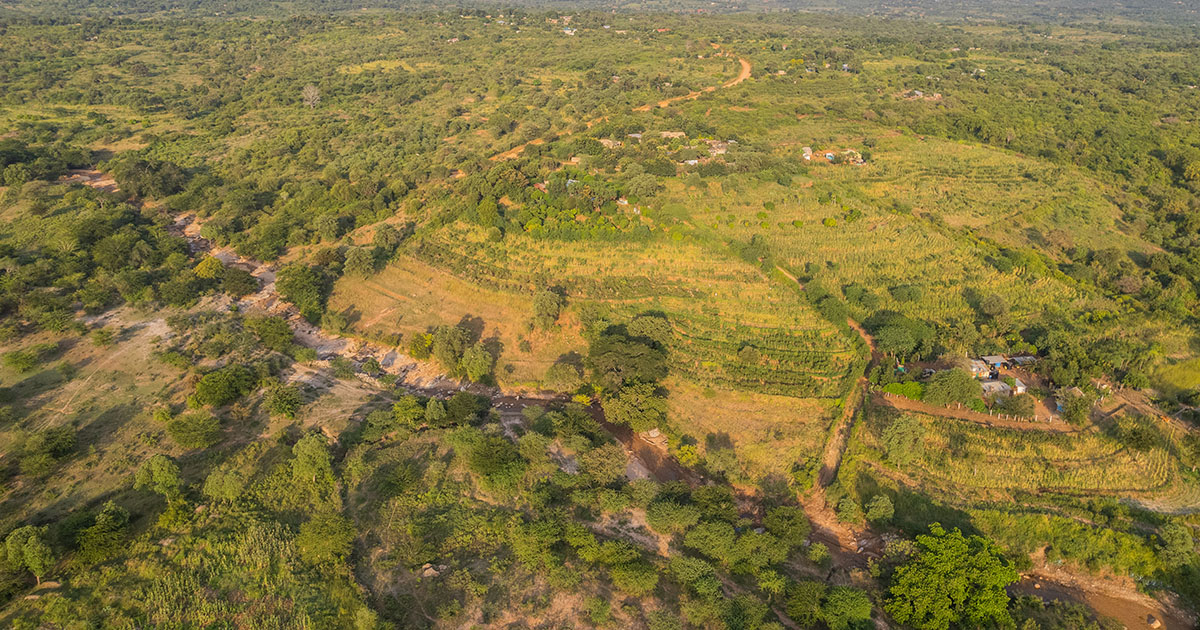


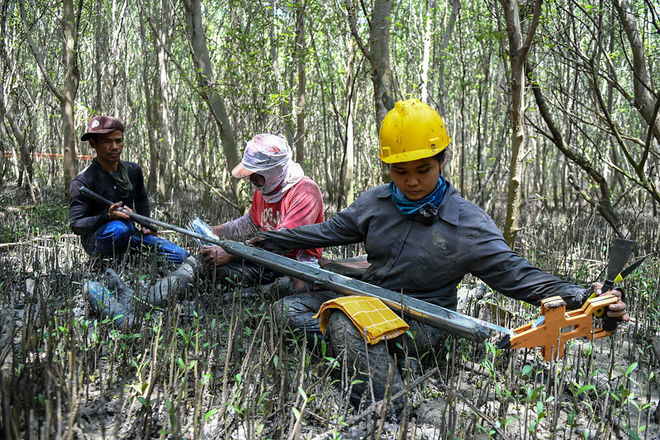
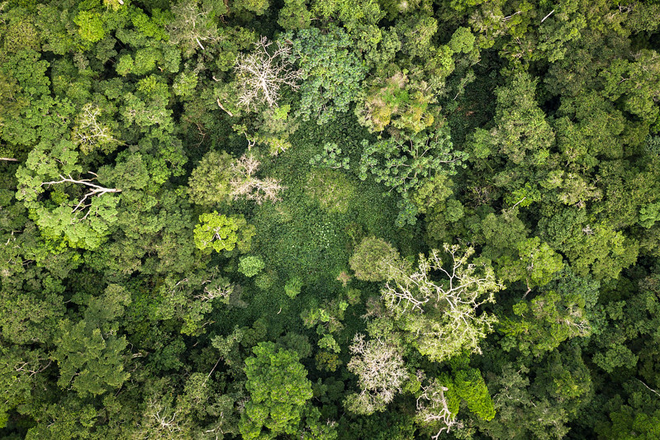



In West and Central Africa, most forest patches lie outside protected areas and are managed by local communities who depend on their ecosystem services. Yet, their role in conserving tree diversity under varying bioregions and disturbance pressures remains poorly documented. We investigated tree community diversity and structure in nine forest patches across the Guineo-Sudanian and Guineo-Congolian bioregions using 121 plots (2500 m² each) along edge-interior gradients. We recorded anthropogenic disturbances (wildfire, logging, agriculture, invasive plants, footpaths) and measured the diameter at breast height (DBH) for all trees ≥ 10 cm. We identified 382 tree species, of which ∼10 % are globally threatened. Despite their small size, the patches contribute 15–33 % of national tree species richness in the four countries studied. Tree density and basal area were consistently lower than reference values from nearby protected forests, ranging from 186 to 422 stems.ha⁻¹ and 12.36–23.17 m².ha⁻¹ in the Guineo-Sudanian, and 263–476 stems.ha⁻¹ and 12.20–34.75 m².ha⁻¹ in the Guineo-Congolian. Alpha diversity was higher in the Guineo-Congolian than in the Guineo-Sudanian, and beta diversity was generally high among forest patches. Disturbances were concentrated at forest edges and negatively affected tree structure and composition, irrespective of ownership. Our findings show that small, unprotected forest patches make a disproportionate contribution to national and regional tree diversity but remain vulnerable to disturbances. Strengthening customary rights and inclusive governance under “Other Effective area-based Conservation Measures” (OECMs), coupled with locally adapted forest zoning, could enhance both biodiversity conservation and community livelihoods.
This work is licensed under CC-BY 4.0

This work is licensed under CC-BY 4.0
DOI:
https://doi.org/10.1016/j.foreco.2025.123314Skor altmetrik:
Jumlah Kutipan Dimensi:
Ekspor kutipan:
RIS (.ris)
TI  - Tree species diversity and conservation across disturbance and bioregion types in forest patches outside protected areas in tropical Africa
AU  - Agonvonon, G.A.
AU  - Hepner, S.M.
AU  - Iheaturu, C.J.
AU  - Azihou, A.F.
AU  - Sonwa, D.J.
AU  - Bisong, F.E.
AU  - Anwana, E.D.
AU  - Koudouvo, K.
AU  - Sinsin, B.A.
AU  - Fischer, M.
AU  - Speranza, C.I.
AB  - In West and Central Africa, most forest patches lie outside protected areas and are managed by local communities who depend on their ecosystem services. Yet, their role in conserving tree diversity under varying bioregions and disturbance pressures remains poorly documented. We investigated tree community diversity and structure in nine forest patches across the Guineo-Sudanian and Guineo-Congolian bioregions using 121 plots (2500 m² each) along edge-interior gradients. We recorded anthropogenic disturbances (wildfire, logging, agriculture, invasive plants, footpaths) and measured the diameter at breast height (DBH) for all trees ≥ 10 cm. We identified 382 tree species, of which ∼10 % are globally threatened. Despite their small size, the patches contribute 15–33 % of national tree species richness in the four countries studied. Tree density and basal area were consistently lower than reference values from nearby protected forests, ranging from 186 to 422 stems.ha⁻¹ and 12.36–23.17 m².ha⁻¹ in the Guineo-Sudanian, and 263–476 stems.ha⁻¹ and 12.20–34.75 m².ha⁻¹ in the Guineo-Congolian. Alpha diversity was higher in the Guineo-Congolian than in the Guineo-Sudanian, and beta diversity was generally high among forest patches. Disturbances were concentrated at forest edges and negatively affected tree structure and composition, irrespective of ownership. Our findings show that small, unprotected forest patches make a disproportionate contribution to national and regional tree diversity but remain vulnerable to disturbances. Strengthening customary rights and inclusive governance under “Other Effective area-based Conservation Measures” (OECMs), coupled with locally adapted forest zoning, could enhance both biodiversity conservation and community livelihoods.
PY  - 2026
UR  - https://www.cifor-icraf.org/knowledge/publication/46162/
DO  - https://doi.org/10.1016/j.foreco.2025.123314
KW  - customary rights, forest conservation, forest management, forest trees, governance, protected areas, species richness, tree diversity, tropical forests
ER  -
Endnote (.ciw)
%T Tree species diversity and conservation across disturbance and bioregion types in forest patches outside protected areas in tropical Africa
%A Agonvonon, G.A.
%A Hepner, S.M.
%A Iheaturu, C.J.
%A Azihou, A.F.
%A Sonwa, D.J.
%A Bisong, F.E.
%A Anwana, E.D.
%A Koudouvo, K.
%A Sinsin, B.A.
%A Fischer, M.
%A Speranza, C.I.
%D 2026
%U https://www.cifor-icraf.org/knowledge/publication/46162/
%R https://doi.org/10.1016/j.foreco.2025.123314
%X In West and Central Africa, most forest patches lie outside protected areas and are managed by local communities who depend on their ecosystem services. Yet, their role in conserving tree diversity under varying bioregions and disturbance pressures remains poorly documented. We investigated tree community diversity and structure in nine forest patches across the Guineo-Sudanian and Guineo-Congolian bioregions using 121 plots (2500 m² each) along edge-interior gradients. We recorded anthropogenic disturbances (wildfire, logging, agriculture, invasive plants, footpaths) and measured the diameter at breast height (DBH) for all trees ≥ 10 cm. We identified 382 tree species, of which ∼10 % are globally threatened. Despite their small size, the patches contribute 15–33 % of national tree species richness in the four countries studied. Tree density and basal area were consistently lower than reference values from nearby protected forests, ranging from 186 to 422 stems.ha⁻¹ and 12.36–23.17 m².ha⁻¹ in the Guineo-Sudanian, and 263–476 stems.ha⁻¹ and 12.20–34.75 m².ha⁻¹ in the Guineo-Congolian. Alpha diversity was higher in the Guineo-Congolian than in the Guineo-Sudanian, and beta diversity was generally high among forest patches. Disturbances were concentrated at forest edges and negatively affected tree structure and composition, irrespective of ownership. Our findings show that small, unprotected forest patches make a disproportionate contribution to national and regional tree diversity but remain vulnerable to disturbances. Strengthening customary rights and inclusive governance under “Other Effective area-based Conservation Measures” (OECMs), coupled with locally adapted forest zoning, could enhance both biodiversity conservation and community livelihoods.
%K customary rights
%K forest conservation
%K forest management
%K forest trees
%K governance
%K protected areas
%K species richness
%K tree diversity
%K tropical forests
Tahun publikasi
2026
ISSN
0378-1127
Penulis
Agonvonon, G.A.; Hepner, S.M.; Iheaturu, C.J.; Azihou, A.F.; Sonwa, D.J.; Bisong, F.E.; Anwana, E.D.; Koudouvo, K.; Sinsin, B.A.; Fischer, M.; Speranza, C.I.
Bahasa
English
Kata kunci
customary rights, forest conservation, forest management, forest trees, governance, protected areas, species richness, tree diversity, tropical forests
Source
Forest Ecology and Management. 601: 123314
Geografis
Togo, Benin, Nigeria, Cameroon