

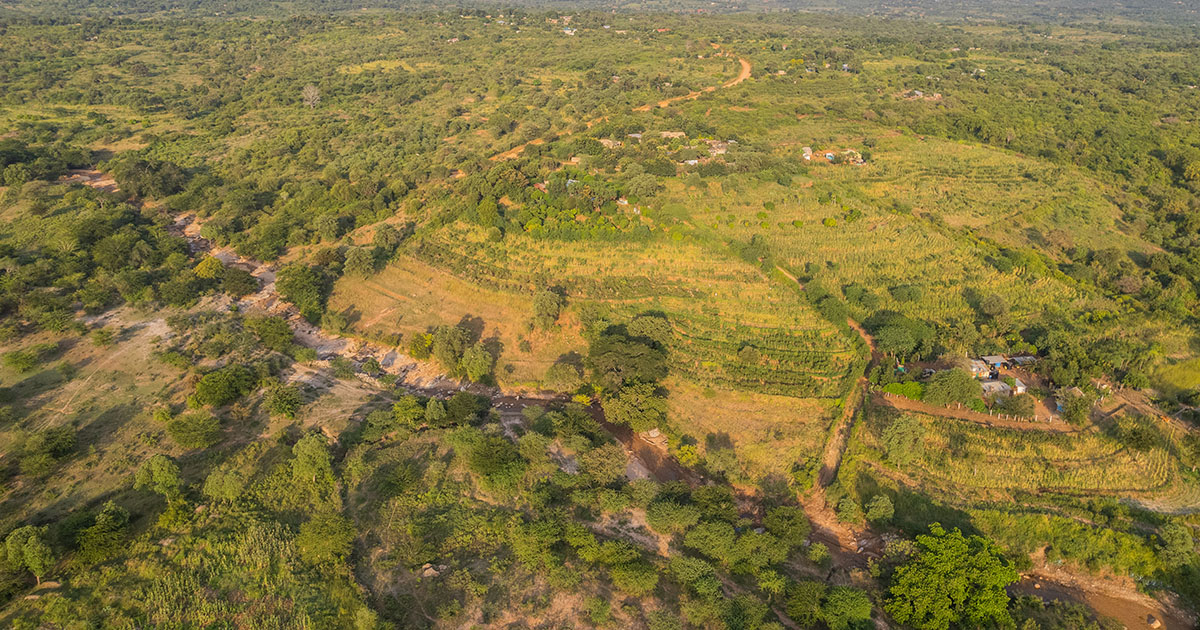








A random sample of 847 households (HHs) in southern Ethiopia was used to assess the impact of HH characteristics, land and livestock ownership, seasonal variations, and agricultural challenges on cereals and legumes, crucial to community livelihoods. A structured survey was integrated into the ODK data collection tool, validated, and used with trained agricultural agents, and analyzed using an R statistical package. Farm productivity was significantly influenced by gender, since male headed HHs produced 25.5% more yield than female headed HHs. Livestock ownership, land cultivation, farm productivity and product utilizations were also varied among the HHs. Furthermore, agricultural practices like labor utilization, fertilizer and composite application, and use of improved seed varieties significantly affected the farm productivity. Besides, maize was identified as the principal and top-priority crop, while common bean (legume) was the second-priority crop for local people. This shows that legumes were important in the region’s agricultural systems, but some farmers experienced reduced productivity due to poor agronomic practices. Consequently, a substantial proportion of farmers (>50%) faced food shortages from February to June, representing the peak of the dry season and the beginning of the rainy season (April to May). Integrating early-maturing legumes in the farming system would help to escape the food shortage periods. Many farmers disclosed that the cost of chemical fertilizers’ was unaffordable, indicating a need for options like use of rhizobia inoculants and showed interest to use on their farms for improved productivities.
This work is licensed under CC-BY 4.0

This work is licensed under CC-BY 4.0
DOI:
https://doi.org/10.1371/journal.pone.0327727Skor altmetrik:
Jumlah Kutipan Dimensi:
Ekspor kutipan:
RIS (.ris)
TI  - Legume integration in smallholder farming systems for food security and resilience to climate change
AU  - Melese, M.
AU  - Getachew, B.
AU  - Wolde-meskel, E.
AU  - Gunnabo, A.H.
AB  - A random sample of 847 households (HHs) in southern Ethiopia was used to assess the impact of HH characteristics, land and livestock ownership, seasonal variations, and agricultural challenges on cereals and legumes, crucial to community livelihoods. A structured survey was integrated into the ODK data collection tool, validated, and used with trained agricultural agents, and analyzed using an R statistical package. Farm productivity was significantly influenced by gender, since male headed HHs produced 25.5% more yield than female headed HHs. Livestock ownership, land cultivation, farm productivity and product utilizations were also varied among the HHs. Furthermore, agricultural practices like labor utilization, fertilizer and composite application, and use of improved seed varieties significantly affected the farm productivity. Besides, maize was identified as the principal and top-priority crop, while common bean (legume) was the second-priority crop for local people. This shows that legumes were important in the region’s agricultural systems, but some farmers experienced reduced productivity due to poor agronomic practices. Consequently, a substantial proportion of farmers (>50%) faced food shortages from February to June, representing the peak of the dry season and the beginning of the rainy season (April to May). Integrating early-maturing legumes in the farming system would help to escape the food shortage periods. Many farmers disclosed that the cost of chemical fertilizers’ was unaffordable, indicating a need for options like use of rhizobia inoculants and showed interest to use on their farms for improved productivities.
PY  - 2025
UR  - https://www.cifor-icraf.org/knowledge/publication/46299/
DO  - https://doi.org/10.1371/journal.pone.0327727
KW  - bean, climate change, crops, farming systems, farms, fertilizers, food production, food security, household surveys, legumes, productivity, resilience, small scale farming, vegetables
ER  -
Endnote (.ciw)
%T Legume integration in smallholder farming systems for food security and resilience to climate change
%A Melese, M.
%A Getachew, B.
%A Wolde-meskel, E.
%A Gunnabo, A.H.
%D 2025
%U https://www.cifor-icraf.org/knowledge/publication/46299/
%R https://doi.org/10.1371/journal.pone.0327727
%X A random sample of 847 households (HHs) in southern Ethiopia was used to assess the impact of HH characteristics, land and livestock ownership, seasonal variations, and agricultural challenges on cereals and legumes, crucial to community livelihoods. A structured survey was integrated into the ODK data collection tool, validated, and used with trained agricultural agents, and analyzed using an R statistical package. Farm productivity was significantly influenced by gender, since male headed HHs produced 25.5% more yield than female headed HHs. Livestock ownership, land cultivation, farm productivity and product utilizations were also varied among the HHs. Furthermore, agricultural practices like labor utilization, fertilizer and composite application, and use of improved seed varieties significantly affected the farm productivity. Besides, maize was identified as the principal and top-priority crop, while common bean (legume) was the second-priority crop for local people. This shows that legumes were important in the region’s agricultural systems, but some farmers experienced reduced productivity due to poor agronomic practices. Consequently, a substantial proportion of farmers (>50%) faced food shortages from February to June, representing the peak of the dry season and the beginning of the rainy season (April to May). Integrating early-maturing legumes in the farming system would help to escape the food shortage periods. Many farmers disclosed that the cost of chemical fertilizers’ was unaffordable, indicating a need for options like use of rhizobia inoculants and showed interest to use on their farms for improved productivities.
%K bean
%K climate change
%K crops
%K farming systems
%K farms
%K fertilizers
%K food production
%K food security
%K household surveys
%K legumes
%K productivity
%K resilience
%K small scale farming
%K vegetables
Tahun publikasi
2025
ISSN
1932-6203
Penulis
Melese, M.; Getachew, B.; Wolde-meskel, E.; Gunnabo, A.H.
Bahasa
English
Kata kunci
bean, climate change, crops, farming systems, farms, fertilizers, food production, food security, household surveys, legumes, productivity, resilience, small scale farming, vegetables
Source
PLoS One. 20(8): e0327727
Geografis
Ethiopia