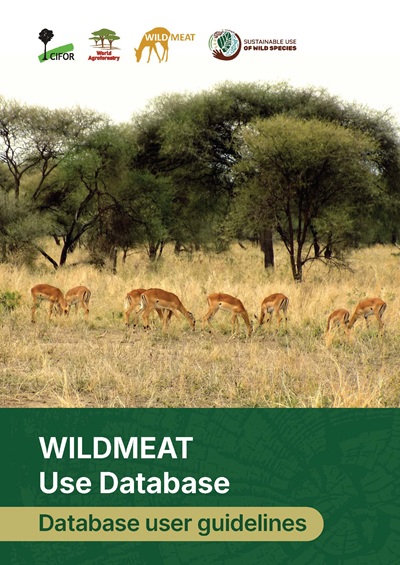

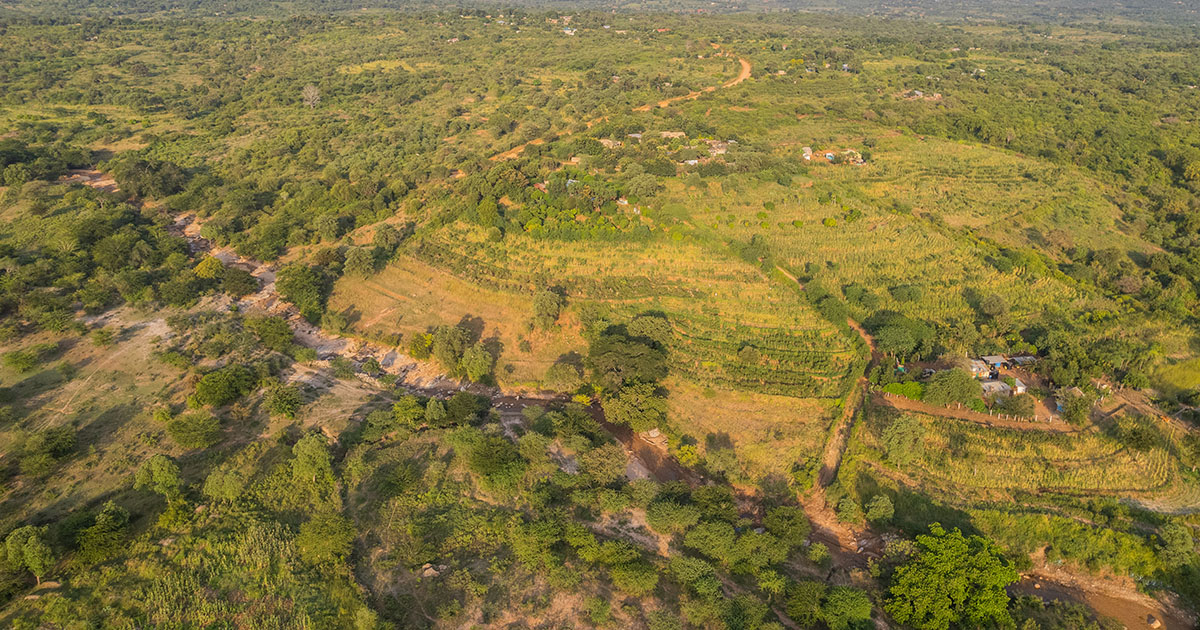





The SWM Programme in Zambia promotes a community conservancy model that supports local wildlife re-stocking breeding and management for improved health and income security. In Zambia, the Programme applies a community-based wildlife management approach to demonstrate how community led conservation can be achieved in a degraded wildlife corridor linking Kafue National Park with neighbouring countries in the Kavango Zambezi Transfrontier Conservation Area (KAZA TFCA). In this landscape, wildlife populations have declined significantly, limiting the benefits that communities can currently derive from wildlife resources. The community conservancy model focuses on supporting the recovery of wildlife populations while laying the foundation for equitable and sustainable community benefits as ecosystems recover.The SWM Programme is a major international initiative that aims to improve the conservation and sustainable use of wildlife in forest, savannah and wetland ecosystems. It is funded by the European Union with co-funding from the French Facility for Global Environment (FFEM) and the French Development Agency (AFD). Projects are being piloted and tested with governments, national partners and communities in 16 participating countries. The initiative is coordinated by a dynamic consortium of four partners, namely the Food and Agriculture Organization of the United Nations (FAO), the Center for International Forestry Research and World Agroforestry (CIFOR-ICRAF), the French Agricultural Research Centre for International Development (CIRAD) and the Wildlife Conservation Society (WCS).
This work is licensed under CC-BY 4.0
This work is licensed under CC-BY 4.0
Ekspor kutipan:
RIS (.ris)
TI  - SWM Sustainable Wildlife Management Programme - Zambia project
AU  - CIFOR-ICRAF
AU  - FAO
AU  - CIRAD
AU  - WCS
AB  - The SWM Programme in Zambia promotes a community conservancy model that supports local wildlife re-stocking breeding and management for improved health and income security. In Zambia, the Programme applies a community-based wildlife management approach to demonstrate how community led conservation can be achieved in a degraded wildlife corridor linking Kafue National Park with neighbouring countries in the Kavango Zambezi Transfrontier Conservation Area (KAZA TFCA). In this landscape, wildlife populations have declined significantly, limiting the benefits that communities can currently derive from wildlife resources. The community conservancy model focuses on supporting the recovery of wildlife populations while laying the foundation for equitable and sustainable community benefits as ecosystems recover.The SWM Programme is a major international initiative that aims to improve the conservation and sustainable use of wildlife in forest, savannah and wetland ecosystems. It is funded by the European Union with co-funding from the French Facility for Global Environment (FFEM) and the French Development Agency (AFD). Projects are being piloted and tested with governments, national partners and communities in 16 participating countries. The initiative is coordinated by a dynamic consortium of four partners, namely the Food and Agriculture Organization of the United Nations (FAO), the Center for International Forestry Research and World Agroforestry (CIFOR-ICRAF), the French Agricultural Research Centre for International Development (CIRAD) and the Wildlife Conservation Society (WCS).
PY  - 2026
PB  - FAO
PP  - Rome, Italy
UR  - https://www.cifor-icraf.org/knowledge/publication/46412/
KW  - community involvement, nature conservation, sustainability, wildlife, wildlife management
ER  -
Endnote (.ciw)
%T SWM Sustainable Wildlife Management Programme - Zambia project
%A CIFOR-ICRAF
%A FAO
%A CIRAD
%A WCS
%D 2026
%I FAO
%C Rome, Italy
%U https://www.cifor-icraf.org/knowledge/publication/46412/
%X The SWM Programme in Zambia promotes a community conservancy model that supports local wildlife re-stocking breeding and management for improved health and income security. In Zambia, the Programme applies a community-based wildlife management approach to demonstrate how community led conservation can be achieved in a degraded wildlife corridor linking Kafue National Park with neighbouring countries in the Kavango Zambezi Transfrontier Conservation Area (KAZA TFCA). In this landscape, wildlife populations have declined significantly, limiting the benefits that communities can currently derive from wildlife resources. The community conservancy model focuses on supporting the recovery of wildlife populations while laying the foundation for equitable and sustainable community benefits as ecosystems recover.The SWM Programme is a major international initiative that aims to improve the conservation and sustainable use of wildlife in forest, savannah and wetland ecosystems. It is funded by the European Union with co-funding from the French Facility for Global Environment (FFEM) and the French Development Agency (AFD). Projects are being piloted and tested with governments, national partners and communities in 16 participating countries. The initiative is coordinated by a dynamic consortium of four partners, namely the Food and Agriculture Organization of the United Nations (FAO), the Center for International Forestry Research and World Agroforestry (CIFOR-ICRAF), the French Agricultural Research Centre for International Development (CIRAD) and the Wildlife Conservation Society (WCS).
%K community involvement
%K nature conservation
%K sustainability
%K wildlife
%K wildlife management
Publisher
FAO: Rome, Italy
Tahun publikasi
2026
Penulis
CIFOR-ICRAF; FAO; CIRAD; WCS
Bahasa
English
Kata kunci
community involvement, nature conservation, sustainability, wildlife, wildlife management
Geografis
Zambia