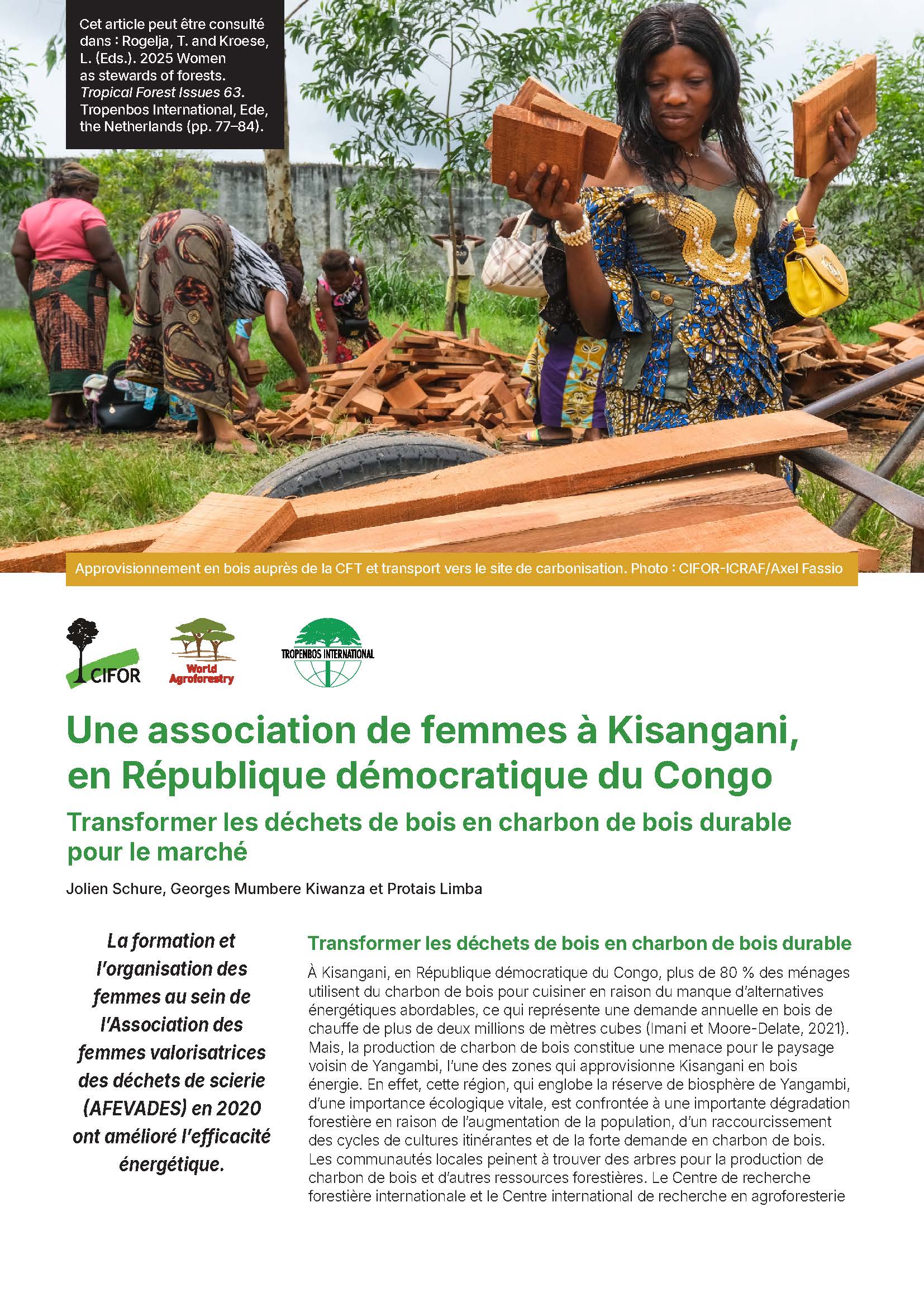












The use of woodfuel to meet the demand for energy has regularly reappeared on both European and African political agendas over the last 50 years. In the 1980s, it no longer seemed necessary or even desirable to use wood to meet energy demand. But in the last decade, energy specialists, economists, industrialists, and politicians have begun to (re)consider woodfuel as a sector worthy of interest given the rising fuel prices, fuel scarcity, and increasing awareness of climatic change. At present, the hopes, the debates, and the progresses surrounding uses of woodfuel are very different in northern and southern countries, but the trends and challenges appear to converge. In this paper, we argue that woodfuel has the potential to fulfill the increased energy demand and to play a sustainable role in the energy sector. But anxieties and lock-ins remain. Many forestry specialists and environmentalists are putting up ideological resistance. Others question the capacity of existing forests to meet this increased demand in a sustainable way. At the very least, a trend toward industrialization and privatization of the woodfuel sector would have major implications for ownership and forest management. However, despite concerns surrounding woodfuel, we argue that the extent of the energy demand to be met and the pressure from new private industrial players will oblige the forestry sector to broaden its position. It will have to consider the possibility of entering a new transformative era that not only includes woodfuel but also has implications for forest management, rights of access, justice, and sustainability

DOI:
https://doi.org/10.1002/wene.115Skor altmetrik:
Jumlah Kutipan Dimensi:
Ekspor kutipan:
RIS (.ris)
TI  - Woodfuel in a global change context
AU  - Gazull, L
AU  - Gautier, D.
AB  - The use of woodfuel to meet the demand for energy has regularly reappeared on both European and African political agendas over the last 50 years. In the 1980s, it no longer seemed necessary or even desirable to use wood to meet energy demand. But in the last decade, energy specialists, economists, industrialists, and politicians have begun to (re)consider woodfuel as a sector worthy of interest given the rising fuel prices, fuel scarcity, and increasing awareness of climatic change. At present, the hopes, the debates, and the progresses surrounding uses of woodfuel are very different in northern and southern countries, but the trends and challenges appear to converge. In this paper, we argue that woodfuel has the potential to fulfill the increased energy demand and to play a sustainable role in the energy sector. But anxieties and lock-ins remain. Many forestry specialists and environmentalists are putting up ideological resistance. Others question the capacity of existing forests to meet this increased demand in a sustainable way. At the very least, a trend toward industrialization and privatization of the woodfuel sector would have major implications for ownership and forest management. However, despite concerns surrounding woodfuel, we argue that the extent of the energy demand to be met and the pressure from new private industrial players will oblige the forestry sector to broaden its position. It will have to consider the possibility of entering a new transformative era that not only includes woodfuel but also has implications for forest management, rights of access, justice, and sustainability
PY  - 2015
UR  - https://www.cifor-icraf.org/knowledge/publication/4467/
DO  - https://doi.org/10.1002/wene.115
KW  - bioenergy, energy sources
ER  -
Endnote (.ciw)
%T Woodfuel in a global change context
%A Gazull, L
%A Gautier, D.
%D 2015
%U https://www.cifor-icraf.org/knowledge/publication/4467/
%R https://doi.org/10.1002/wene.115
%X The use of woodfuel to meet the demand for energy has regularly reappeared on both European and African political agendas over the last 50 years. In the 1980s, it no longer seemed necessary or even desirable to use wood to meet energy demand. But in the last decade, energy specialists, economists, industrialists, and politicians have begun to (re)consider woodfuel as a sector worthy of interest given the rising fuel prices, fuel scarcity, and increasing awareness of climatic change. At present, the hopes, the debates, and the progresses surrounding uses of woodfuel are very different in northern and southern countries, but the trends and challenges appear to converge. In this paper, we argue that woodfuel has the potential to fulfill the increased energy demand and to play a sustainable role in the energy sector. But anxieties and lock-ins remain. Many forestry specialists and environmentalists are putting up ideological resistance. Others question the capacity of existing forests to meet this increased demand in a sustainable way. At the very least, a trend toward industrialization and privatization of the woodfuel sector would have major implications for ownership and forest management. However, despite concerns surrounding woodfuel, we argue that the extent of the energy demand to be met and the pressure from new private industrial players will oblige the forestry sector to broaden its position. It will have to consider the possibility of entering a new transformative era that not only includes woodfuel but also has implications for forest management, rights of access, justice, and sustainability
%K bioenergy
%K energy sources
Tahun publikasi
2015
ISSN
2041-8396
Penulis
Bahasa
English
Kata kunci
bioenergy, energy sources
Source
Wiley Interdisciplinary Reviews: Energy and Environment. 4(2): 156-170