

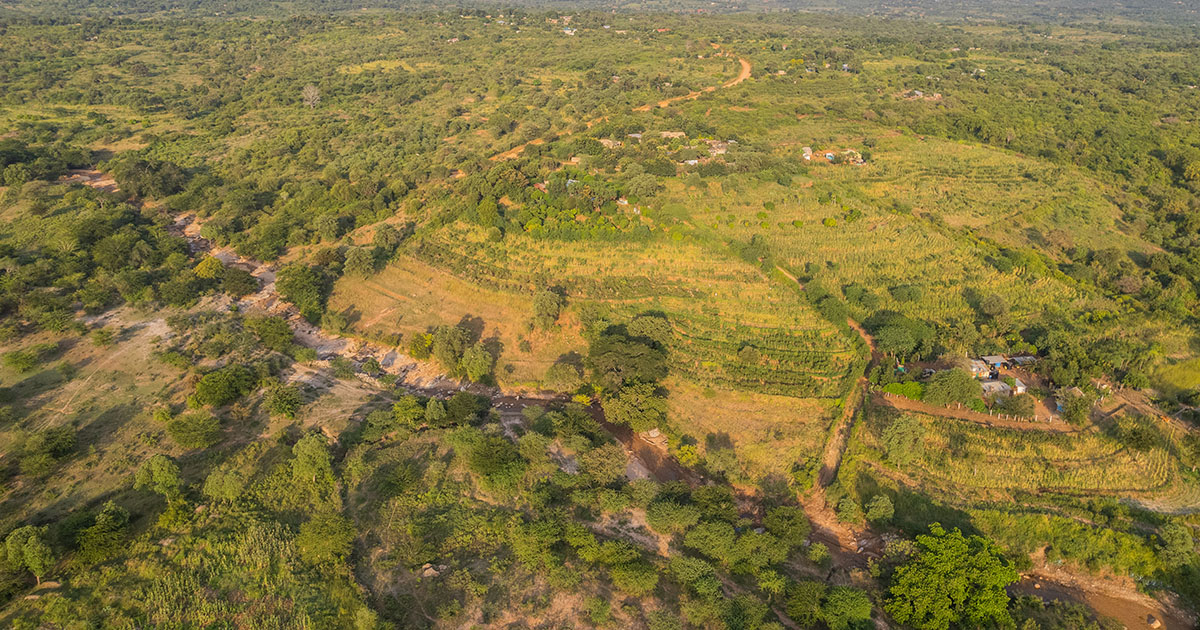








Smallholder family farms dominate Europe's rural landscapes and account for over 90% of the continent's agricultural holdings. Thus, they shape rural areas and have a significant impact on landscapes. We review recent literature in order to improve the understanding of what drives their decisions and thereby support the design of mechanisms to support sustainable landscapes. Looking at economic performance, emerging opportunities, and social relevance, our analysis identifies considerable heterogeneity across regions in land use, subsidy allocation, access to markets, and diversification potential. Economic viability remains precarious for most of these farms, especially where market infrastructure is limited and regulations are more stringent. Many attempt to overcome limited economies of scale through diversification strategies that integrate agritourism, food processing or a more mixed farming system. Public support remains vital for these farms and subsidies (e.g. through the EU Common Agricultural Policy (CAP)) currently sustain this critical part of the rural landscape. These findings further underscore the critical role the CAP and other subsidy schemes play in how rural landscapes might evolve in the future and which avenues can be pursued in order to harmonise social and environmental goals. Maintaining and advancing vibrant rural spaces requires context-sensitive approaches and a clear recognition of family farmers and their economic and social status. Future research can support this process by providing a more comprehensive picture of the decision making space of farmers and combining economic and social aspects.
This work is licensed under © SAGE Publications

This work is licensed under © SAGE Publications
DOI:
https://doi.org/10.1177/00307270261422235Score Altmetric:
Dimensions Nombre de citations:
Exporter la citation:
RIS (.ris)
TI  - How are Europe's small and family farmers doing? A literature review of economic and social factors
AU  - Bauer, J.N.
AU  - Jüngert, V.
AU  - Gassner, A.
AU  - Harris, D.
AU  - Mausch, K.
AB  - Smallholder family farms dominate Europe's rural landscapes and account for over 90% of the continent's agricultural holdings. Thus, they shape rural areas and have a significant impact on landscapes. We review recent literature in order to improve the understanding of what drives their decisions and thereby support the design of mechanisms to support sustainable landscapes. Looking at economic performance, emerging opportunities, and social relevance, our analysis identifies considerable heterogeneity across regions in land use, subsidy allocation, access to markets, and diversification potential. Economic viability remains precarious for most of these farms, especially where market infrastructure is limited and regulations are more stringent. Many attempt to overcome limited economies of scale through diversification strategies that integrate agritourism, food processing or a more mixed farming system. Public support remains vital for these farms and subsidies (e.g. through the EU Common Agricultural Policy (CAP)) currently sustain this critical part of the rural landscape. These findings further underscore the critical role the CAP and other subsidy schemes play in how rural landscapes might evolve in the future and which avenues can be pursued in order to harmonise social and environmental goals. Maintaining and advancing vibrant rural spaces requires context-sensitive approaches and a clear recognition of family farmers and their economic and social status. Future research can support this process by providing a more comprehensive picture of the decision making space of farmers and combining economic and social aspects.
PY  - 2026
UR  - https://www.cifor-icraf.org/knowledge/publication/46363/
DO  - https://doi.org/10.1177/00307270261422235
KW  - agricultural sector, diversification, economic aspects, food production, landscape, market access, mixed farming, rural areas, smallholders, social aspects, socioeconomic development, sustainable agriculture
ER  -
Endnote (.ciw)
%T How are Europe's small and family farmers doing? A literature review of economic and social factors
%A Bauer, J.N.
%A Jüngert, V.
%A Gassner, A.
%A Harris, D.
%A Mausch, K.
%D 2026
%U https://www.cifor-icraf.org/knowledge/publication/46363/
%R https://doi.org/10.1177/00307270261422235
%X Smallholder family farms dominate Europe's rural landscapes and account for over 90% of the continent's agricultural holdings. Thus, they shape rural areas and have a significant impact on landscapes. We review recent literature in order to improve the understanding of what drives their decisions and thereby support the design of mechanisms to support sustainable landscapes. Looking at economic performance, emerging opportunities, and social relevance, our analysis identifies considerable heterogeneity across regions in land use, subsidy allocation, access to markets, and diversification potential. Economic viability remains precarious for most of these farms, especially where market infrastructure is limited and regulations are more stringent. Many attempt to overcome limited economies of scale through diversification strategies that integrate agritourism, food processing or a more mixed farming system. Public support remains vital for these farms and subsidies (e.g. through the EU Common Agricultural Policy (CAP)) currently sustain this critical part of the rural landscape. These findings further underscore the critical role the CAP and other subsidy schemes play in how rural landscapes might evolve in the future and which avenues can be pursued in order to harmonise social and environmental goals. Maintaining and advancing vibrant rural spaces requires context-sensitive approaches and a clear recognition of family farmers and their economic and social status. Future research can support this process by providing a more comprehensive picture of the decision making space of farmers and combining economic and social aspects.
%K agricultural sector
%K diversification
%K economic aspects
%K food production
%K landscape
%K market access
%K mixed farming
%K rural areas
%K smallholders
%K social aspects
%K socioeconomic development
%K sustainable agriculture
Année de publication
2026
ISSN
0030-7270
Auteurs
Bauer, J.N.; Jüngert, V.; Gassner, A.; Harris, D.; Mausch, K.
Langue
English
Mots clés
agricultural sector, diversification, economic aspects, food production, landscape, market access, mixed farming, rural areas, smallholders, social aspects, socioeconomic development, sustainable agriculture
Source
Outlook on Agriculture. :