

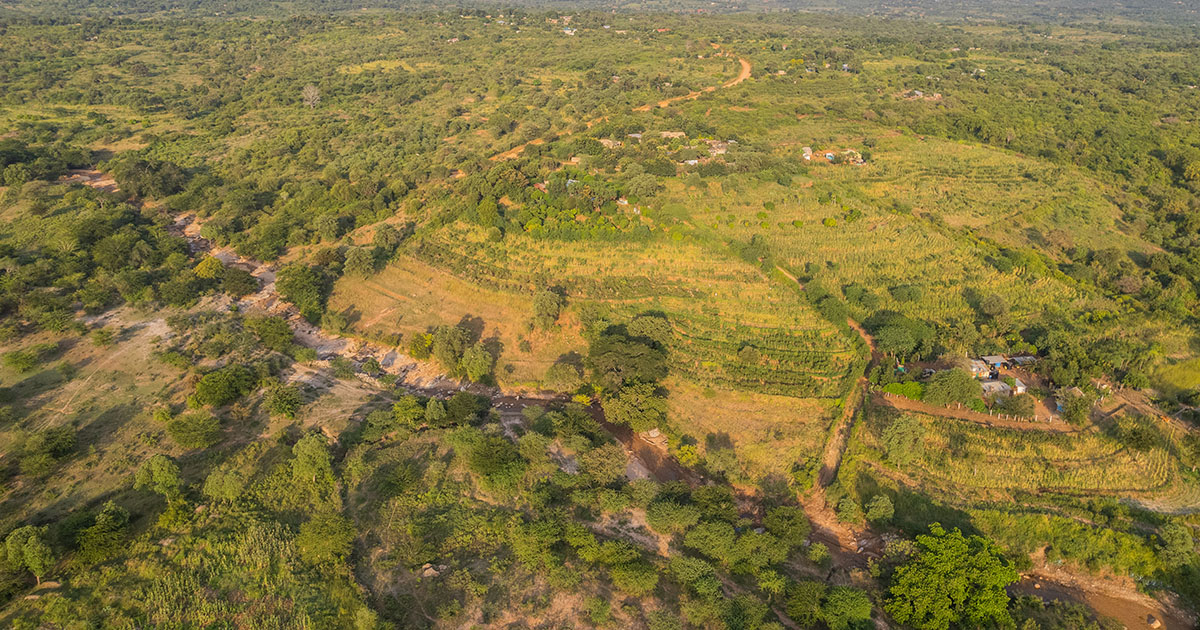







Farmer Managed Natural Regeneration (FMNR) is a low-cost, adaptable agroforestry practice that enhances land restoration by promoting systematic integration of naturally regenerating trees within farming systems through tree selection and management. Despite its increasing adoption in sub-Saharan Africa, comparative evidence across land uses remains limited. This study empirically compares tree and woody regeneration density, species richness, and composition between silvo-arable (maize cultivation) and silvo-pastoral (grazing) FMNR systems in semi-arid Kenya. Sixty-three plots were established across these two land uses, within which a total of 1409 trees and 505 woody regeneration individuals were recorded. Tree density was higher in silvo-pastoral FMNR systems (558/ha) than in silvo-arable systems (150/ha), though the difference was not statistically significant. In contrast, woody regeneration density was significantly greater in silvo-arable systems (2450/ha vs. 727/ha). Rarefied species richness of trees was the same in silvo-arable FMNR and silvo-pastoral FMNR systems, while richness of regeneration was either significantly higher than the tree community, like in silvo-arable systems, or significantly lower than the tree community, like in silvo-pastoral systems. Non-metric multidimensional scaling showed that silvo-pastoral FMNR systems exhibited similar species composition between trees and regeneration, whereas silvo-arable FMNR systems displayed greater variability in tree composition across fields, reflecting less variable preferences by farmers. Given that regeneration represents future tree communities, reduced regeneration diversity in silvo-pastoral systems may constrain long-term species richness. These findings suggest that silvo-arable and silvo-pastoral FMNR systems follow distinct restoration pathways, with implications for biodiversity conservation, livelihoods, and the scaling of FMNR as a restoration practice.
This work is licensed under CC-BY 4.0

This work is licensed under CC-BY 4.0
DOI:
https://doi.org/10.1002/ldr.70605Score Altmetric:
Dimensions Nombre de citations:
Exporter la citation:
RIS (.ris)
TI  - Vegetation Structure and Diversity Under Farmer Managed Natural Regeneration: A Comparison of Silvo-Arable and Silvo-Pastoral Systems in Kenya
AU  - Ojuok, I.A.
AU  - Lohbeck, M.
AU  - Stellmacher, T.
AU  - Aynekulu Betemariam, E.
AU  - Rinaudo, T.
AU  - Borgemeister, C.
AB  - Farmer Managed Natural Regeneration (FMNR) is a low-cost, adaptable agroforestry practice that enhances land restoration by promoting systematic integration of naturally regenerating trees within farming systems through tree selection and management. Despite its increasing adoption in sub-Saharan Africa, comparative evidence across land uses remains limited. This study empirically compares tree and woody regeneration density, species richness, and composition between silvo-arable (maize cultivation) and silvo-pastoral (grazing) FMNR systems in semi-arid Kenya. Sixty-three plots were established across these two land uses, within which a total of 1409 trees and 505 woody regeneration individuals were recorded. Tree density was higher in silvo-pastoral FMNR systems (558/ha) than in silvo-arable systems (150/ha), though the difference was not statistically significant. In contrast, woody regeneration density was significantly greater in silvo-arable systems (2450/ha vs. 727/ha). Rarefied species richness of trees was the same in silvo-arable FMNR and silvo-pastoral FMNR systems, while richness of regeneration was either significantly higher than the tree community, like in silvo-arable systems, or significantly lower than the tree community, like in silvo-pastoral systems. Non-metric multidimensional scaling showed that silvo-pastoral FMNR systems exhibited similar species composition between trees and regeneration, whereas silvo-arable FMNR systems displayed greater variability in tree composition across fields, reflecting less variable preferences by farmers. Given that regeneration represents future tree communities, reduced regeneration diversity in silvo-pastoral systems may constrain long-term species richness. These findings suggest that silvo-arable and silvo-pastoral FMNR systems follow distinct restoration pathways, with implications for biodiversity conservation, livelihoods, and the scaling of FMNR as a restoration practice.
PY  - 2026
UR  - https://www.cifor-icraf.org/knowledge/publication/46551/
DO  - https://doi.org/10.1002/ldr.70605
KW  - agroforestry, biodiversity conservation, farmers, livelihoods, natural regeneration, restoration, silvopastoral systems, species richness, tree regeneration
ER  -
Endnote (.ciw)
%T Vegetation Structure and Diversity Under Farmer Managed Natural Regeneration: A Comparison of Silvo-Arable and Silvo-Pastoral Systems in Kenya
%A Ojuok, I.A.
%A Lohbeck, M.
%A Stellmacher, T.
%A Aynekulu Betemariam, E.
%A Rinaudo, T.
%A Borgemeister, C.
%D 2026
%U https://www.cifor-icraf.org/knowledge/publication/46551/
%R https://doi.org/10.1002/ldr.70605
%X Farmer Managed Natural Regeneration (FMNR) is a low-cost, adaptable agroforestry practice that enhances land restoration by promoting systematic integration of naturally regenerating trees within farming systems through tree selection and management. Despite its increasing adoption in sub-Saharan Africa, comparative evidence across land uses remains limited. This study empirically compares tree and woody regeneration density, species richness, and composition between silvo-arable (maize cultivation) and silvo-pastoral (grazing) FMNR systems in semi-arid Kenya. Sixty-three plots were established across these two land uses, within which a total of 1409 trees and 505 woody regeneration individuals were recorded. Tree density was higher in silvo-pastoral FMNR systems (558/ha) than in silvo-arable systems (150/ha), though the difference was not statistically significant. In contrast, woody regeneration density was significantly greater in silvo-arable systems (2450/ha vs. 727/ha). Rarefied species richness of trees was the same in silvo-arable FMNR and silvo-pastoral FMNR systems, while richness of regeneration was either significantly higher than the tree community, like in silvo-arable systems, or significantly lower than the tree community, like in silvo-pastoral systems. Non-metric multidimensional scaling showed that silvo-pastoral FMNR systems exhibited similar species composition between trees and regeneration, whereas silvo-arable FMNR systems displayed greater variability in tree composition across fields, reflecting less variable preferences by farmers. Given that regeneration represents future tree communities, reduced regeneration diversity in silvo-pastoral systems may constrain long-term species richness. These findings suggest that silvo-arable and silvo-pastoral FMNR systems follow distinct restoration pathways, with implications for biodiversity conservation, livelihoods, and the scaling of FMNR as a restoration practice.
%K agroforestry
%K biodiversity conservation
%K farmers
%K livelihoods
%K natural regeneration
%K restoration
%K silvopastoral systems
%K species richness
%K tree regeneration
Année de publication
2026
ISSN
1085-3278
Auteurs
Ojuok, I.A.; Lohbeck, M.; Stellmacher, T.; Aynekulu Betemariam, E.; Rinaudo, T.; Borgemeister, C.
Langue
English
Mots clés
agroforestry, biodiversity conservation, farmers, livelihoods, natural regeneration, restoration, silvopastoral systems, species richness, tree regeneration
Source
Land Degradation and Development. :
Géographique
Kenya