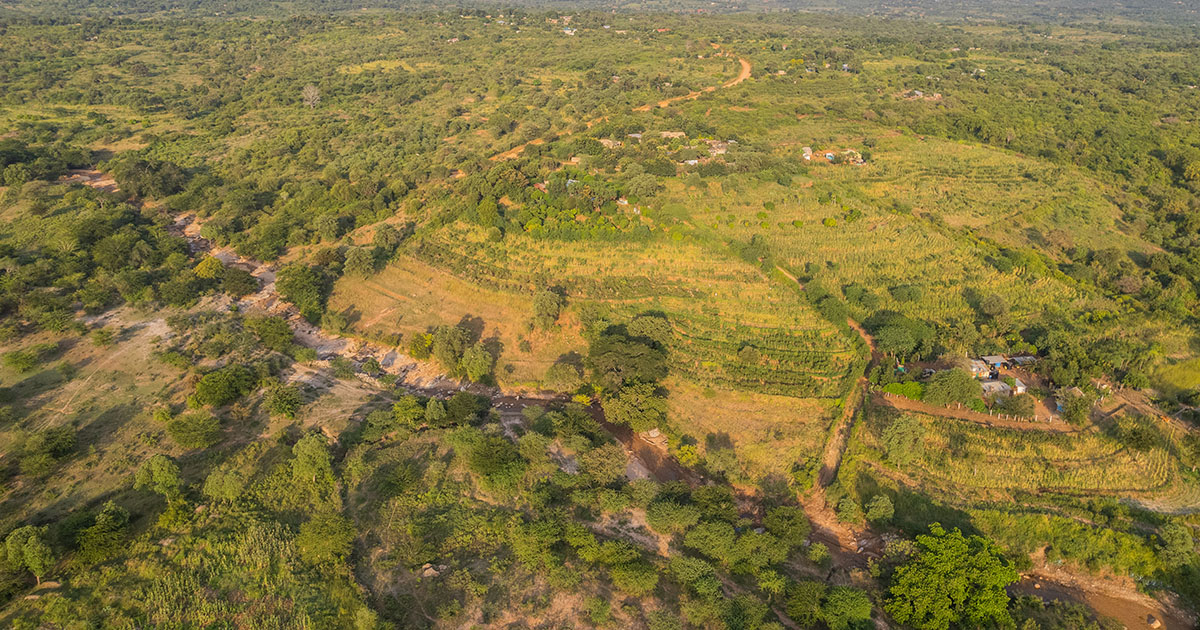
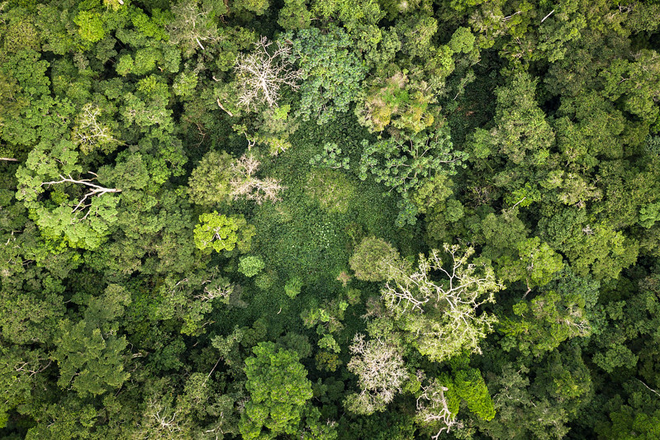
This dataset contains spatially explicit typologies (“archetypes”) of tropical moist forest (TMF) state and change from 2000–2021 across the global tropics. It is derived from the 30 m resolution Tropical Moist Forest (TMF) dataset (Vancutsem et al. 2021) and includes metrics on forest cover, deforestation, degradation, deforestation risk (based on agricultural suitability and accessibility), dominant post-deforestation land use, and hotspot classifications. The dataset supports the classification of landscapes into archetypes such as Intact Forest Areas, Stable Forest Mosaics, Stabilized Transition Areas, Chronic Deforestation Areas, Accelerating Deforestation Areas, Gradual Deforestation Areas, and Fragmented Forest Remnants.
Fichiers de l'ensemble de données
This file reports the total area and percentage distribution of landscape archetype classes in the Amazon for the period 2000–2021. Each row corresponds to one archetype class identified by a numeric class code (value). The area column provides the total area assigned to that class, and Perc provides the percentage share relative to the total analyzed landscape area. The file summarizes the final typology classification and contains aggregated statistics rather than spatially explicit grid-cell records.
This file reports the total area and percentage distribution of dominant post-deforestation land-use categories in Amazon. Each row corresponds to a land-use class code (value) representing the primary land cover following forest loss. The area column indicates total converted area, and Perc indicates the percentage share relative to total deforested area. The file provides aggregated land-use transition statistics.
This file reports the area distribution of deforestation hotspot categories in Amazon for 2000–2021. Hotspot classes distinguish inactive/gradual, old, active, and emerging deforestation fronts based on temporal dynamics. Each row corresponds to a hotspot class code (value), with total area and percentage share of national landscape area. The dataset provides aggregated hotspot statistics.
This file provides aggregated area statistics for deforestation risk classes in Amazon. Risk categories are derived from agricultural suitability and accessibility indicators. Each row corresponds to a risk class code (value), with total area and percentage share of the analyzed region. The dataset reflects modeled structural risk and does not represent observed deforestation events.
This file provides aggregated area statistics for severity typology classes in Amazon. Severity classes combine baseline forest cover (2000) and cumulative deforestation between 2001 and 2021. Each row represents a severity class code (value), with associated total area and percentage share of the analyzed region. The dataset supports assessment of deforestation intensity patterns at national scale.
Terms of use