






During the last two decades, all countries in Central Africa adopted new laws for the management of their forests. Two major frameworks contributed to the drafting of those laws. On the one side, the ideas synthetized by the 1992 Earth Summit in Rio, such as a more responsible forest management, new roles for rural communities in the management of forested landscapes, and a more equitable redistribution of the benefits accrued from the exploitation of the forest. On the other, the structural adjustment plans that all countries in Central Africa had to enact as a consequence of the economic crisis that hit in the 1980s. The plans pushed all countries to look for desperately needed economic resources, and in the respective forestry sectors, this resulted in the creation of new fiscal schemes that applied to clearly demarcated, large-scale forest management units, generally leased to internationally owned, export-oriented, logging companies. In the process, smaller-scale forestry activities, such as those conducted by individual or small enterprises, normally with chainsaws in areas not demarcated for large-scale harvesting, fell below the radar of policies and laws that remained focused on increasing State revenues. As a consequence, such activities developed and grew in the informal economy, largely unregulated for, only to be "rediscovered" by the State in the 2000s, when national and international pressures mounted to fight illegal logging and timber trade. This paper examines the evolution and the characteristics of the informal timber sectors in the countries of Central Africa, with a focus on the potential impacts that "formalisation" efforts that may exert on rural communities and chainsaw millers' livelihoods and environment. CIFOR Scientists Paolo Cerutti Richard Eba'a Atyi, Guillaume Lescuyer along with Edouard Essiane and Raphael Tsanga presented on 5 June at the panel discussion "Formalisation of access and trade in land and natural resources: Inter‐sectoral lesson sharing from and for forestry, mining, fisheries, and land tenure" at the 2013 IASC conference held on Mount Fuji in Japan. For more information, please click here: http://www.cifor.org/events/upcoming-events/iasc.html
You can play the slide directly on slideshare. Please click
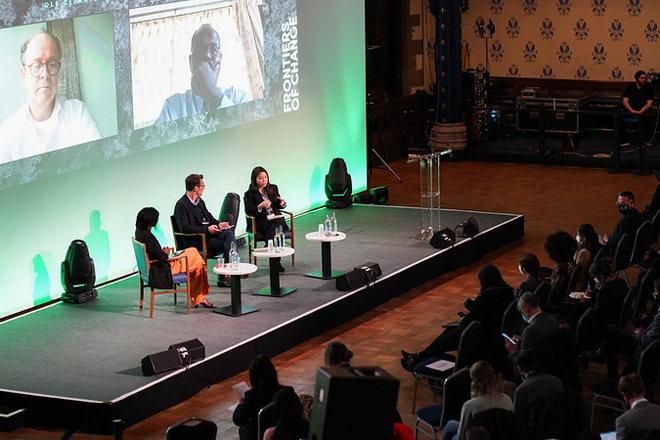
Explore eventos futuros e passados em todo o mundo e online, sejam hospedados pelo CIFOR-ICRAF ou com a participação de nossos pesquisadores.

Découvrez les évènements passés et à venir dans le monde entier et en ligne, qu’ils soient organisés par le CIFOR-ICRAF ou auxquels participent nos chercheurs.
Jelajahi acara-acara mendatang dan yang telah lalu di lintas global dan daring, baik itu diselenggarakan oleh CIFOR-ICRAF atau dihadiri para peneliti kami.
Explore eventos futuros y pasados organizados por CIFOR-ICRAF o con la participación de nuestros investigadores.
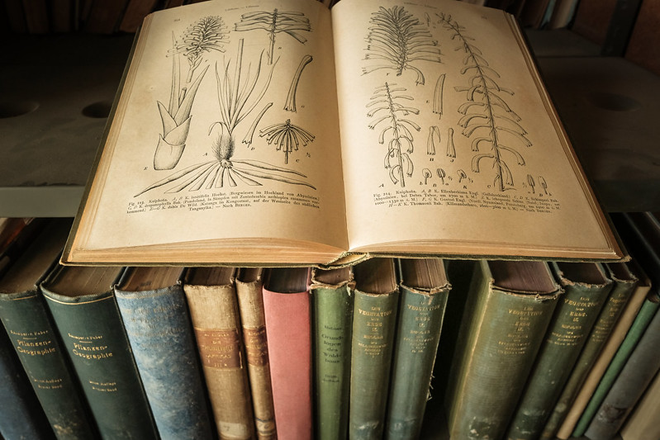
CIFOR-ICRAF publie chaque année plus de 750 publications sur l’agroforesterie, les forêts et le changement climatique, la restauration des paysages, les droits, la politique forestière et bien d’autres sujets encore, et ce dans plusieurs langues. .
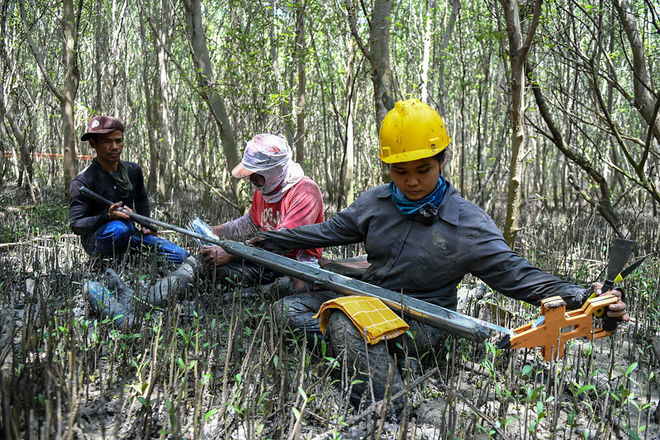
CIFOR-ICRAF a un impact fondé sur la science. Nous menons des recherches innovantes, renforçons les capacités de nos partenaires et engageons activement le dialogue avec toutes les parties prenantes, en apportant les dernières connaissances sur les forêts, les arbres, les paysages et les populations à la prise de décision au niveau mondial.
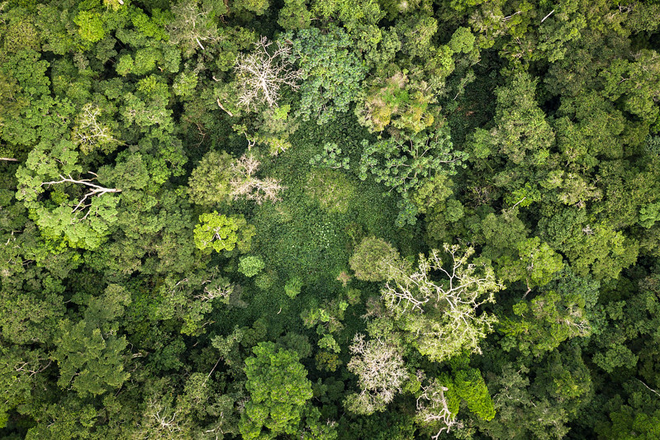
CIFOR-ICRAF s’attaque aux défis et aux opportunités locales tout en apportant des solutions aux problèmes mondiaux concernant les forêts, les paysages, les populations et la planète.
Nous fournissons des preuves et des solutions concrètes pour transformer l’utilisation des terres et la production alimentaire : conserver et restaurer les écosystèmes, répondre aux crises mondiales du climat, de la malnutrition, de la biodiversité et de la désertification. En bref, nous améliorons la vie des populations.

