

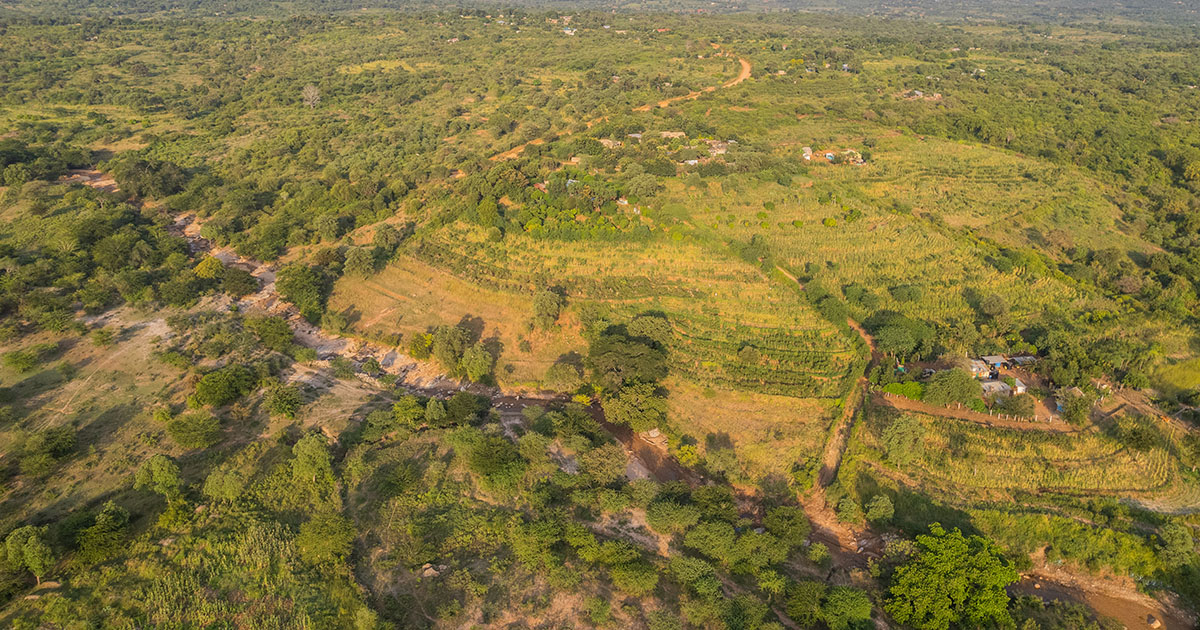





This study was conducted to identify major livestock production constraints and improved forage production efforts in the Damot Gale district. Four representative kebeles, two associated with our NGO project and two from nonproject outreach activities, were selected. Forty farmers from each kebele were randomly chosen for the purpose of individual interviews using a semistructured questionnaire. Data collected were analyzed using SPSS (version 20) and Excel. The topmost livestock production constraint was feed shortage where a larger proportion of farmers (75.6%) suffered from the problem with higher ( ≤ 0.01) severity in nonproject intervention areas. Of these, 38.6% were challenged for a period of three months while another 61.4% suffered for about four months. Purchasing grass (31.4%) and concentrate (33.5%) and feeding enset (Ensete ventricosum) leaf (21.49%) were the most commonly adopted coping mechanisms to alleviate feed shortages during the dry season, while using purchased grass and enset leaf was the main coping strategy in nonproject intervention ( ≤ 0.01) areas. The majority of households (90.75%) participate in improved forage production regardless of farm size. Desho grass (Pennisetum pedicellatum) (71.38%) and elephant grass (Pennisetum purpureum) (42.63%) are the most common improved forages in both study areas. These forages are produced for the purpose of two or more functions (feed, cash, and preventing erosion) that vary ( ≤ 0.01) among intervention status. Major niche locations adopted for improved forage production include farm land, soil and water conservation structures, and perimeter fencing. Greatest constraints on improved forage production were seed/material shortage followed by land shortage and lack of awareness. Project intervention ( ≤ 0.01), tropical livestock unit (TLU) holding ( ≤ 0.01), and forage seed/planting material access ( < 0.05) were identified as factors (among others) having significant relationship with improved forage development. Strong extension services and efficient input delivery for farmers are vital to support profitable livestock production and resource utilization.
This work is licensed under CC-BY 4.0

This work is licensed under CC-BY 4.0
DOI:
https://doi.org/10.1155/2021/5553659Score Altmetric:
Dimensions Nombre de citations:
Exporter la citation:
RIS (.ris)
TI  - Livestock production challenges and improved forage production efforts in the Damot Gale District of Wolaita Zone, Ethiopia
AU  - Mengistu, S.
AU  - Nurfeta, A.
AU  - Tolera, A.
AU  - Bezabih, M.
AU  - Adie, A.
AU  - Wolde-meskel, E.
AU  - Zenebe, M.
AB  - This study was conducted to identify major livestock production constraints and improved forage production efforts in the Damot Gale district. Four representative kebeles, two associated with our NGO project and two from nonproject outreach activities, were selected. Forty farmers from each kebele were randomly chosen for the purpose of individual interviews using a semistructured questionnaire. Data collected were analyzed using SPSS (version 20) and Excel. The topmost livestock production constraint was feed shortage where a larger proportion of farmers (75.6%) suffered from the problem with higher ( ≤ 0.01) severity in nonproject intervention areas. Of these, 38.6% were challenged for a period of three months while another 61.4% suffered for about four months. Purchasing grass (31.4%) and concentrate (33.5%) and feeding enset (Ensete ventricosum) leaf (21.49%) were the most commonly adopted coping mechanisms to alleviate feed shortages during the dry season, while using purchased grass and enset leaf was the main coping strategy in nonproject intervention ( ≤ 0.01) areas. The majority of households (90.75%) participate in improved forage production regardless of farm size. Desho grass (Pennisetum pedicellatum) (71.38%) and elephant grass (Pennisetum purpureum) (42.63%) are the most common improved forages in both study areas. These forages are produced for the purpose of two or more functions (feed, cash, and preventing erosion) that vary ( ≤ 0.01) among intervention status. Major niche locations adopted for improved forage production include farm land, soil and water conservation structures, and perimeter fencing. Greatest constraints on improved forage production were seed/material shortage followed by land shortage and lack of awareness. Project intervention ( ≤ 0.01), tropical livestock unit (TLU) holding ( ≤ 0.01), and forage seed/planting material access (
PY  - 2021
UR  - https://www.cifor-icraf.org/knowledge/publication/23077/
DO  - https://doi.org/10.1155/2021/5553659
KW  - animal feeding, animal production, farming systems, forage, livestock
ER  -
Endnote (.ciw)
%T Livestock production challenges and improved forage production efforts in the Damot Gale District of Wolaita Zone, Ethiopia
%A Mengistu, S.
%A Nurfeta, A.
%A Tolera, A.
%A Bezabih, M.
%A Adie, A.
%A Wolde-meskel, E.
%A Zenebe, M.
%D 2021
%U https://www.cifor-icraf.org/knowledge/publication/23077/
%R https://doi.org/10.1155/2021/5553659
%X This study was conducted to identify major livestock production constraints and improved forage production efforts in the Damot Gale district. Four representative kebeles, two associated with our NGO project and two from nonproject outreach activities, were selected. Forty farmers from each kebele were randomly chosen for the purpose of individual interviews using a semistructured questionnaire. Data collected were analyzed using SPSS (version 20) and Excel. The topmost livestock production constraint was feed shortage where a larger proportion of farmers (75.6%) suffered from the problem with higher ( ≤ 0.01) severity in nonproject intervention areas. Of these, 38.6% were challenged for a period of three months while another 61.4% suffered for about four months. Purchasing grass (31.4%) and concentrate (33.5%) and feeding enset (Ensete ventricosum) leaf (21.49%) were the most commonly adopted coping mechanisms to alleviate feed shortages during the dry season, while using purchased grass and enset leaf was the main coping strategy in nonproject intervention ( ≤ 0.01) areas. The majority of households (90.75%) participate in improved forage production regardless of farm size. Desho grass (Pennisetum pedicellatum) (71.38%) and elephant grass (Pennisetum purpureum) (42.63%) are the most common improved forages in both study areas. These forages are produced for the purpose of two or more functions (feed, cash, and preventing erosion) that vary ( ≤ 0.01) among intervention status. Major niche locations adopted for improved forage production include farm land, soil and water conservation structures, and perimeter fencing. Greatest constraints on improved forage production were seed/material shortage followed by land shortage and lack of awareness. Project intervention ( ≤ 0.01), tropical livestock unit (TLU) holding ( ≤ 0.01), and forage seed/planting material access (
%K animal feeding
%K animal production
%K farming systems
%K forage
%K livestock
Année de publication
2021
ISSN
2314-7539
Auteurs
Mengistu, S.; Nurfeta, A.; Tolera, A.; Bezabih, M.; Adie, A.; Wolde-meskel, E.; Zenebe, M.
Langue
English
Mots clés
animal feeding, animal production, farming systems, forage, livestock
Source
Advances in Agriculture. 2021: 5553659
Géographique
Ethiopia