

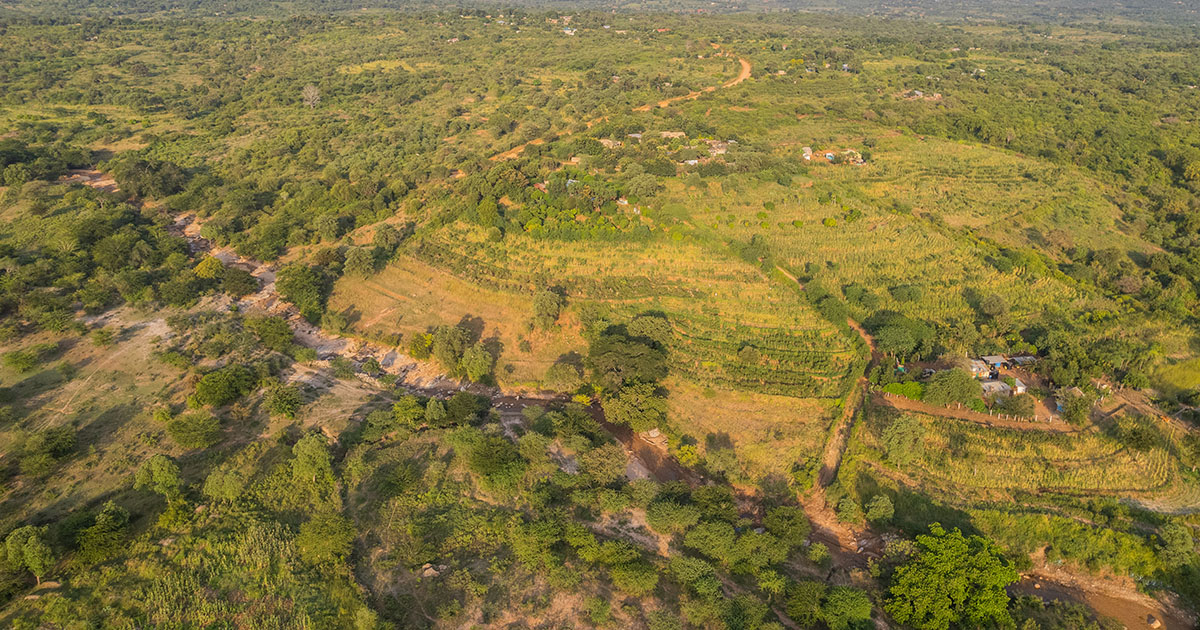





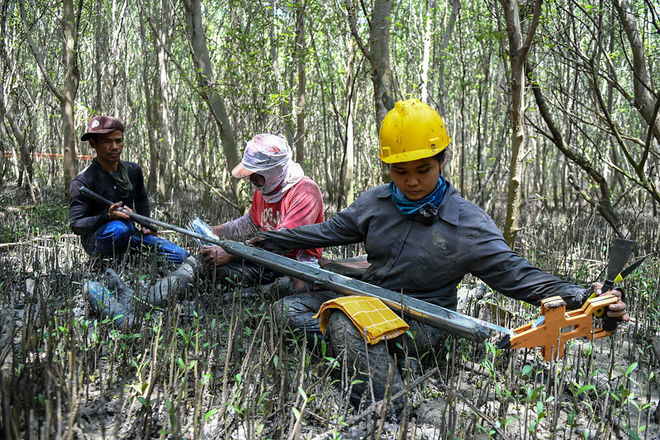




This chapter begins with a description of Participatory Forest Management (PFM) in Malawi and its legislation and related projects – laying out the similarities between the legislation’s ‘standards and guidelines’ and adaptive collaborative management (ACM). The first author was the lead researcher in the Center for International Forestry Research’s original ACM work in Malawi and has been a consistent advisor to the Government of Malawi. The authors then provide a summary of each of the numerous studies undertaken to assess the efficacy and value of the approach there. Building on these findings, they examine the intended outcomes of PFM, from the standpoints of livelihoods, strengthened forestry institutions, community participation in forest management and ecological health. They summarize by recounting eight lessons that have been learned in the process; and conclude with enthusiasm for the ACM/PFM approach, in recognition that more could still be done to improve it.
This work is licensed under CC-BY 4.0

Download:

This work is licensed under CC-BY 4.0
DOI:
https://doi.org/10.4324/9781003325932-15Score Altmetric:
Dimensions Nombre de citations:
Exporter la citation:
RIS (.ris)
TI  - An assessment of Participatory Forest Management inspired by adaptive collaborative management in Malawi
AU  - Kamoto, J.F.M.
AU  - Missanjo, E.
AU  - Djenontin, I.N.S.
AB  - This chapter begins with a description of Participatory Forest Management (PFM) in Malawi and its legislation and related projects – laying out the similarities between the legislation’s ‘standards and guidelines’ and adaptive collaborative management (ACM). The first author was the lead researcher in the Center for International Forestry Research’s original ACM work in Malawi and has been a consistent advisor to the Government of Malawi. The authors then provide a summary of each of the numerous studies undertaken to assess the efficacy and value of the approach there. Building on these findings, they examine the intended outcomes of PFM, from the standpoints of livelihoods, strengthened forestry institutions, community participation in forest management and ecological health. They summarize by recounting eight lessons that have been learned in the process; and conclude with enthusiasm for the ACM/PFM approach, in recognition that more could still be done to improve it.
PY  - 2023
PB  - Routledge
PP  - London, UK
UR  - https://www.cifor-icraf.org/knowledge/publication/8778/
DO  - https://doi.org/10.4324/9781003325932-15
KW  - community forestry, forest management, indigenous people, participation
ER  -
Endnote (.ciw)
%T An assessment of Participatory Forest Management inspired by adaptive collaborative management in Malawi
%A Kamoto, J.F.M.
%A Missanjo, E.
%A Djenontin, I.N.S.
%D 2023
%I Routledge
%C London, UK
%U https://www.cifor-icraf.org/knowledge/publication/8778/
%R https://doi.org/10.4324/9781003325932-15
%X This chapter begins with a description of Participatory Forest Management (PFM) in Malawi and its legislation and related projects – laying out the similarities between the legislation’s ‘standards and guidelines’ and adaptive collaborative management (ACM). The first author was the lead researcher in the Center for International Forestry Research’s original ACM work in Malawi and has been a consistent advisor to the Government of Malawi. The authors then provide a summary of each of the numerous studies undertaken to assess the efficacy and value of the approach there. Building on these findings, they examine the intended outcomes of PFM, from the standpoints of livelihoods, strengthened forestry institutions, community participation in forest management and ecological health. They summarize by recounting eight lessons that have been learned in the process; and conclude with enthusiasm for the ACM/PFM approach, in recognition that more could still be done to improve it.
%K community forestry
%K forest management
%K indigenous people
%K participation
Année de publication
2023
ISBN
978-10-0-332593-2
Auteurs
Kamoto, J.F.M.; Missanjo, E.; Djenontin, I.N.S.
Langue
English
Mots clés
community forestry, forest management, indigenous people, participation
Source
Responding to Environmental Issues through Adaptive Collaborative Management: From Forest Communities to Global Actors. Routledge: London, UKGéographique
Malawi