

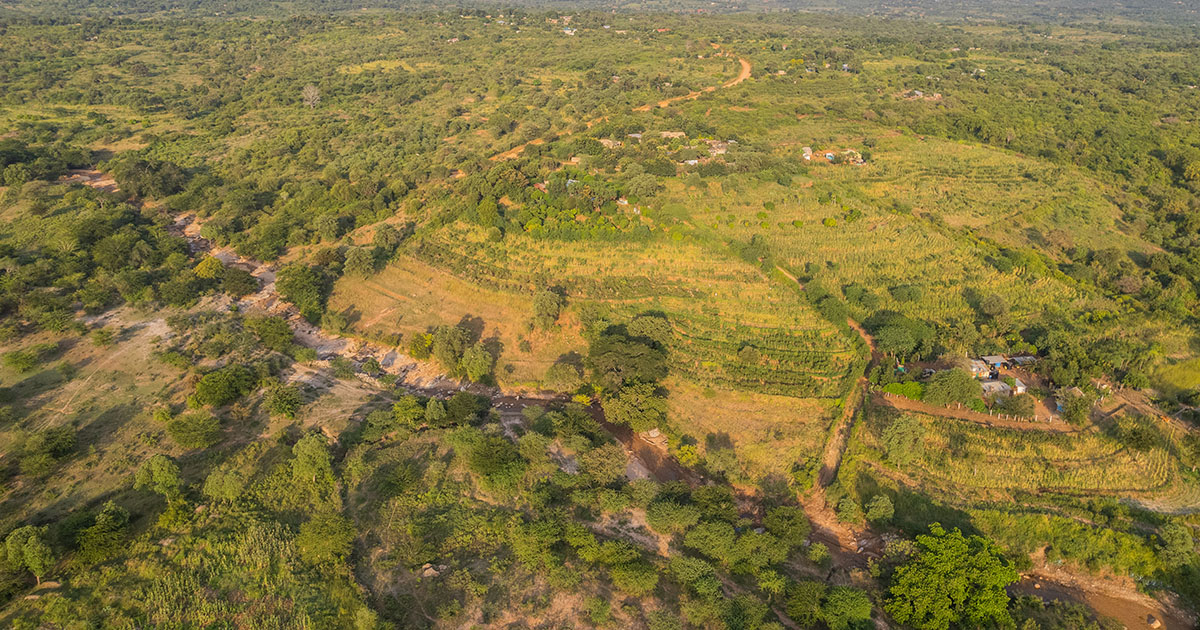





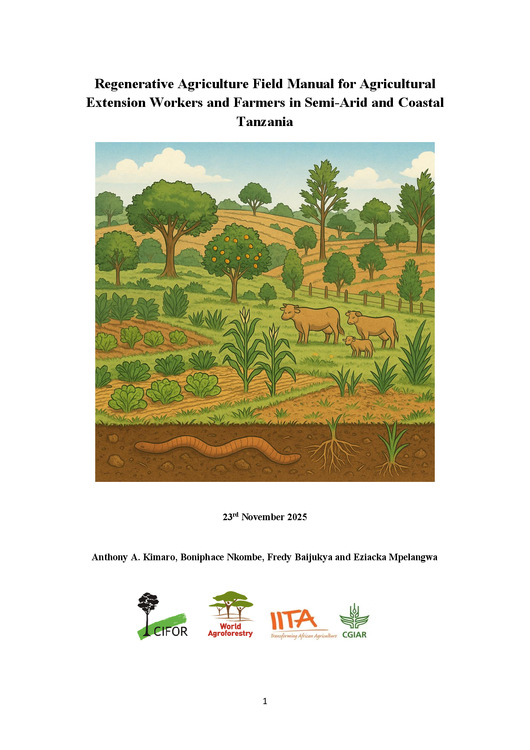


This field manual is a practical resource designed to guide the implementation of regenerative agriculture in Tanzania’s semiarid and coastal zones. Developed through participatory assessments, validated field practices, and research by ICRAF, IITA, and partners, it aims to restore degraded farmland and landscapes while enhancing climate resilience, agrobiodiversity, and productivity.
Organized into user-friendly modules, the manual blends theory with practical steps, visual tools, and checklists. Each module covers technology descriptions, site selection, input requirements, management protocols, and monitoring tips. The manual equips field staff, extension workers, and community facilitators with the technical knowledge and skills to design and implement context-specific regenerative technology packages.
This work is licensed under CC-BY 4.0
Organized into user-friendly modules, the manual blends theory with practical steps, visual tools, and checklists. Each module covers technology descriptions, site selection, input requirements, management protocols, and monitoring tips. The manual equips field staff, extension workers, and community facilitators with the technical knowledge and skills to design and implement context-specific regenerative technology packages.
This work is licensed under CC-BY 4.0
Exporter la citation:
RIS (.ris)
TI  - Regenerative agriculture field manual for agricultural extension workers and farmers in Semi-Arid and Coastal Tanzania
AU  - Kimaro, A.A.
AU  - Nkombe, B.
AU  - Baijukya, F.
AU  - Mpelangwa, E.
AB  - This field manual is a practical resource designed to guide the implementation of regenerative agriculture in Tanzania’s semiarid and coastal zones. Developed through participatory assessments, validated field practices, and research by ICRAF, IITA, and partners, it aims to restore degraded farmland and landscapes while enhancing climate resilience, agrobiodiversity, and productivity.
Organized into user-friendly modules, the manual blends theory with practical steps, visual tools, and checklists. Each module covers technology descriptions, site selection, input requirements, management protocols, and monitoring tips. The manual equips field staff, extension workers, and community facilitators with the technical knowledge and skills to design and implement context-specific regenerative technology packages.
PY  - 2025
PB  - IITA
PP  - Ibadan, Nigeria
UR  - https://www.cifor-icraf.org/knowledge/publication/46383/
KW  - agrobiodiversity, agroforestry, coastal areas, farmer participation, land degradation, land management, regenerative agriculture, semiarid zones, soil conservation, water conservation
ER  -
Endnote (.ciw)
%T Regenerative agriculture field manual for agricultural extension workers and farmers in Semi-Arid and Coastal Tanzania
%A Kimaro, A.A.
%A Nkombe, B.
%A Baijukya, F.
%A Mpelangwa, E.
%D 2025
%I IITA
%C Ibadan, Nigeria
%U https://www.cifor-icraf.org/knowledge/publication/46383/
%X This field manual is a practical resource designed to guide the implementation of regenerative agriculture in Tanzania’s semiarid and coastal zones. Developed through participatory assessments, validated field practices, and research by ICRAF, IITA, and partners, it aims to restore degraded farmland and landscapes while enhancing climate resilience, agrobiodiversity, and productivity.
Organized into user-friendly modules, the manual blends theory with practical steps, visual tools, and checklists. Each module covers technology descriptions, site selection, input requirements, management protocols, and monitoring tips. The manual equips field staff, extension workers, and community facilitators with the technical knowledge and skills to design and implement context-specific regenerative technology packages.
%K agrobiodiversity
%K agroforestry
%K coastal areas
%K farmer participation
%K land degradation
%K land management
%K regenerative agriculture
%K semiarid zones
%K soil conservation
%K water conservation
Publisher
IITA: Ibadan, Nigeria
Année de publication
2025
Auteurs
Kimaro, A.A.; Nkombe, B.; Baijukya, F.; Mpelangwa, E.
Langue
English
Mots clés
agrobiodiversity, agroforestry, coastal areas, farmer participation, land degradation, land management, regenerative agriculture, semiarid zones, soil conservation, water conservation
Géographique
Tanzania