





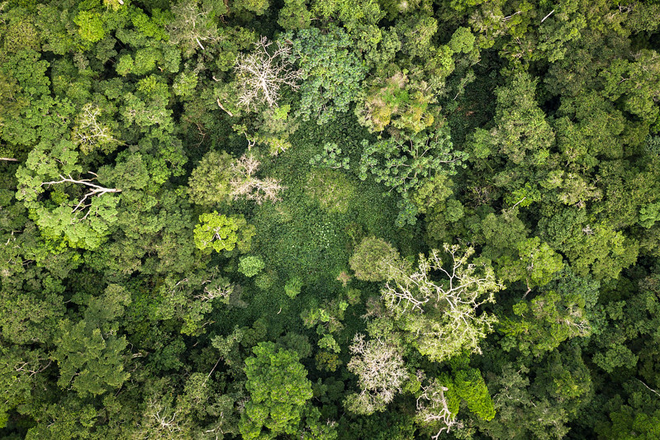



This report, “Forest landscape restoration and tenure security in Madagascar,” is a scoping study prepared within the research-action project “Forest landscape restoration for improved livelihoods: secure tenure to catalyze community action in Madagascar and Cameroon”, financed by the German Federal Ministry for Economic Cooperation and Development (BMZ).
This report pursues two main objectives: provide FLR practitioners and decision makers with an overview of the socioecological, governance, and tenure context shaping FLR in Madagascar; and distil key lessons learned from restoration and tenure initiatives to date, culminating in design principles for tenure-responsive and socially inclusive FLR.
Our analysis suggests that Madagascar has a solid foundation for scaling tenure-responsive FLR: high biodiversity and restoration potential; a national FLR strategy; a diversity of local institutions; and a growing portfolio of projects that link restoration with tenure and livelihoods. However, major challenges include persistent tenure insecurity in some areas and overlapping claims between state and communities; uneven and sometimes contradictory land law reforms; limited geographic coverage of FLR and land tenure security initiatives; structural rural poverty; and political and governance volatility.
We propose design principles for tenure-responsive and socially inclusive FLR. These principles centre around several key ideas: recognize and strengthen legitimate customary and statutory rights; work through and with locally legitimate governance institutions; tailor FLR strategies to different landscape types (including grasslands and pastoral systems); integrate livelihood support and equity considerations; and treat carbon finance and PES as tools to complement rights-based and participatory restoration rather than to replace them.
This work is licensed under CC-BY 4.0

This report pursues two main objectives: provide FLR practitioners and decision makers with an overview of the socioecological, governance, and tenure context shaping FLR in Madagascar; and distil key lessons learned from restoration and tenure initiatives to date, culminating in design principles for tenure-responsive and socially inclusive FLR.
Our analysis suggests that Madagascar has a solid foundation for scaling tenure-responsive FLR: high biodiversity and restoration potential; a national FLR strategy; a diversity of local institutions; and a growing portfolio of projects that link restoration with tenure and livelihoods. However, major challenges include persistent tenure insecurity in some areas and overlapping claims between state and communities; uneven and sometimes contradictory land law reforms; limited geographic coverage of FLR and land tenure security initiatives; structural rural poverty; and political and governance volatility.
We propose design principles for tenure-responsive and socially inclusive FLR. These principles centre around several key ideas: recognize and strengthen legitimate customary and statutory rights; work through and with locally legitimate governance institutions; tailor FLR strategies to different landscape types (including grasslands and pastoral systems); integrate livelihood support and equity considerations; and treat carbon finance and PES as tools to complement rights-based and participatory restoration rather than to replace them.
This work is licensed under CC-BY 4.0
DOI:
https://doi.org/10.17528/cifor-icraf/009420Score Altmetric:
Dimensions Nombre de citations:
Exporter la citation:
RIS (.ris)
TI  - Forest landscape restoration and tenure security in Madagascar
AU  - McLain, R.
AU  - Reidl, J.
AU  - Ramanampy, R.T.
AU  - Andrefaheja, M.T.
AU  - Nomenjanahary, F.
AU  - Ranjatson, P.
AU  - Larson, A.M.
AB  - This report, “Forest landscape restoration and tenure security in Madagascar,” is a scoping study prepared within the research-action project “Forest landscape restoration for improved livelihoods: secure tenure to catalyze community action in Madagascar and Cameroon”, financed by the German Federal Ministry for Economic Cooperation and Development (BMZ).
This report pursues two main objectives: provide FLR practitioners and decision makers with an overview of the socioecological, governance, and tenure context shaping FLR in Madagascar; and distil key lessons learned from restoration and tenure initiatives to date, culminating in design principles for tenure-responsive and socially inclusive FLR.
Our analysis suggests that Madagascar has a solid foundation for scaling tenure-responsive FLR: high biodiversity and restoration potential; a national FLR strategy; a diversity of local institutions; and a growing portfolio of projects that link restoration with tenure and livelihoods. However, major challenges include persistent tenure insecurity in some areas and overlapping claims between state and communities; uneven and sometimes contradictory land law reforms; limited geographic coverage of FLR and land tenure security initiatives; structural rural poverty; and political and governance volatility.
We propose design principles for tenure-responsive and socially inclusive FLR. These principles centre around several key ideas: recognize and strengthen legitimate customary and statutory rights; work through and with locally legitimate governance institutions; tailor FLR strategies to different landscape types (including grasslands and pastoral systems); integrate livelihood support and equity considerations; and treat carbon finance and PES as tools to complement rights-based and participatory restoration rather than to replace them.
PY  - 2026
PB  - CIFOR-ICRAF
PP  - Bogor, Indonesia and Nairobi, Kenya
UR  - https://www.cifor-icraf.org/knowledge/publication/9420/
DO  - https://doi.org/10.17528/cifor-icraf/009420
KW  - community involvement, customary rights, ecosystem services, governance, land reform, land tenure, landscape, law, livelihoods, participatory approaches, poverty, restoration, rural communities
ER  -
Endnote (.ciw)
%T Forest landscape restoration and tenure security in Madagascar
%A McLain, R.
%A Reidl, J.
%A Ramanampy, R.T.
%A Andrefaheja, M.T.
%A Nomenjanahary, F.
%A Ranjatson, P.
%A Larson, A.M.
%D 2026
%I CIFOR-ICRAF
%C Bogor, Indonesia and Nairobi, Kenya
%U https://www.cifor-icraf.org/knowledge/publication/9420/
%R https://doi.org/10.17528/cifor-icraf/009420
%X This report, “Forest landscape restoration and tenure security in Madagascar,” is a scoping study prepared within the research-action project “Forest landscape restoration for improved livelihoods: secure tenure to catalyze community action in Madagascar and Cameroon”, financed by the German Federal Ministry for Economic Cooperation and Development (BMZ).
This report pursues two main objectives: provide FLR practitioners and decision makers with an overview of the socioecological, governance, and tenure context shaping FLR in Madagascar; and distil key lessons learned from restoration and tenure initiatives to date, culminating in design principles for tenure-responsive and socially inclusive FLR.
Our analysis suggests that Madagascar has a solid foundation for scaling tenure-responsive FLR: high biodiversity and restoration potential; a national FLR strategy; a diversity of local institutions; and a growing portfolio of projects that link restoration with tenure and livelihoods. However, major challenges include persistent tenure insecurity in some areas and overlapping claims between state and communities; uneven and sometimes contradictory land law reforms; limited geographic coverage of FLR and land tenure security initiatives; structural rural poverty; and political and governance volatility.
We propose design principles for tenure-responsive and socially inclusive FLR. These principles centre around several key ideas: recognize and strengthen legitimate customary and statutory rights; work through and with locally legitimate governance institutions; tailor FLR strategies to different landscape types (including grasslands and pastoral systems); integrate livelihood support and equity considerations; and treat carbon finance and PES as tools to complement rights-based and participatory restoration rather than to replace them.
%K community involvement
%K customary rights
%K ecosystem services
%K governance
%K land reform
%K land tenure
%K landscape
%K law
%K livelihoods
%K participatory approaches
%K poverty
%K restoration
%K rural communities
Publisher
CIFOR-ICRAF: Bogor, Indonesia and Nairobi, Kenya
Année de publication
2026
Auteurs
McLain, R.; Reidl, J.; Ramanampy, R.T.; Andrefaheja, M.T.; Nomenjanahary, F.; Ranjatson, P.; Larson, A.M.
Langue
English
Mots clés
community involvement, customary rights, ecosystem services, governance, land reform, land tenure, landscape, law, livelihoods, participatory approaches, poverty, restoration, rural communities
Géographique
Madagascar