




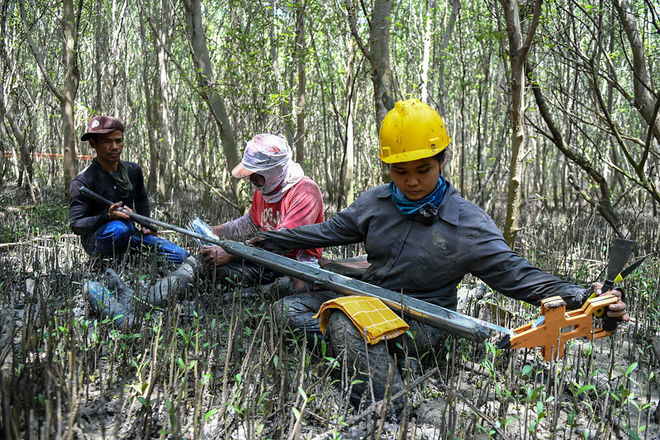
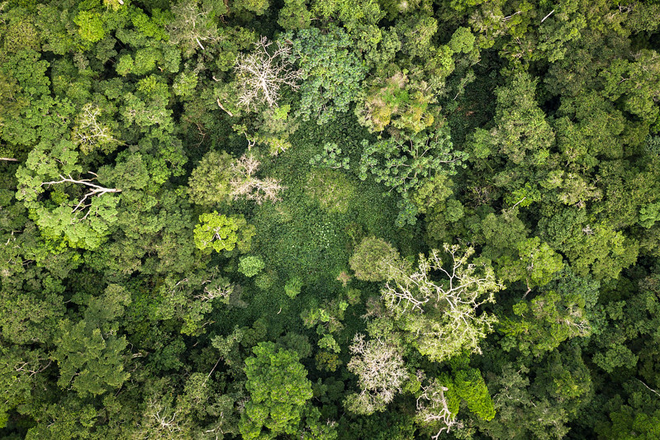



The Ngovayang Massif of southern Cameroon is a range of small hills near the Atlantic coast, in the Lower Guinea floristic region. This region is known to harbor forests with high levels of biodiversity and endemism, but this Massif is botanically poorly known. We assessed tree species diversity, floristic composition and level of endemism of the Ngovayang forest, comparing it with other sites in Central Africa. Five 1-ha permanent plots within old-growth lowland forests of the Ngovayang Massif were censused. A total of 2,658 individuals with dbh = 10 cm were recorded, belonging to 293 species, 170 genera and 60 families. The mean number of stems was 532 ± 75 stems ha-1. Taking into account other data available, the list of vascular plants known in the Massif reaches a total of 450 species. We found 47 species of high conservation value, including Cameroon endemics and other rare and threatened species. Species richness and endemism are comparable to those of the richest known sites in Central African forests. The forests of Ngovayang were found to be particularly rich in Fabaceae-Caesalpinioideae. Topographic heterogeneity, high precipitation and atmospheric humidity owing to the proximity of the ocean, and permanence of a forest cover during past geological times probably all contribute to explaining the Massif's high tree diversity and endemism. This study highlights the botanical importance of the poorly studied Ngovayang forest within the Lower Guinea region, justifying efforts for improved assessment of this value and for the development of suitable national conservation strategies

DOI:
https://doi.org/10.1007/s10531-011-0095-zScore Altmetric:
Dimensions Nombre de citations:
Exporter la citation:
RIS (.ris)
TI  - Tree diversity and conservation value of Ngovanyang's lowland forests, Cameroon
AU  - Gonmadje, C.F.
AU  - Doumenge, C.
AU  - McKey, D.
AU  - Tchouto, G.
AU  - Sunderland, T.C.H.
AU  - Balinga, M.
AU  - Sonke, B.
AB  - The Ngovayang Massif of southern Cameroon is a range of small hills near the Atlantic coast, in the Lower Guinea floristic region. This region is known to harbor forests with high levels of biodiversity and endemism, but this Massif is botanically poorly known. We assessed tree species diversity, floristic composition and level of endemism of the Ngovayang forest, comparing it with other sites in Central Africa. Five 1-ha permanent plots within old-growth lowland forests of the Ngovayang Massif were censused. A total of 2,658 individuals with dbh = 10 cm were recorded, belonging to 293 species, 170 genera and 60 families. The mean number of stems was 532 ± 75 stems ha-1. Taking into account other data available, the list of vascular plants known in the Massif reaches a total of 450 species. We found 47 species of high conservation value, including Cameroon endemics and other rare and threatened species. Species richness and endemism are comparable to those of the richest known sites in Central African forests. The forests of Ngovayang were found to be particularly rich in Fabaceae-Caesalpinioideae. Topographic heterogeneity, high precipitation and atmospheric humidity owing to the proximity of the ocean, and permanence of a forest cover during past geological times probably all contribute to explaining the Massif's high tree diversity and endemism. This study highlights the botanical importance of the poorly studied Ngovayang forest within the Lower Guinea region, justifying efforts for improved assessment of this value and for the development of suitable national conservation strategies
PY  - 2011
UR  - https://www.cifor-icraf.org/knowledge/publication/3578/
DO  - https://doi.org/10.1007/s10531-011-0095-z
KW  - conservation, diversity, forests, lowland areas, trees
ER  -
Endnote (.ciw)
%T Tree diversity and conservation value of Ngovanyang's lowland forests, Cameroon
%A Gonmadje, C.F.
%A Doumenge, C.
%A McKey, D.
%A Tchouto, G.
%A Sunderland, T.C.H.
%A Balinga, M.
%A Sonke, B.
%D 2011
%U https://www.cifor-icraf.org/knowledge/publication/3578/
%R https://doi.org/10.1007/s10531-011-0095-z
%X The Ngovayang Massif of southern Cameroon is a range of small hills near the Atlantic coast, in the Lower Guinea floristic region. This region is known to harbor forests with high levels of biodiversity and endemism, but this Massif is botanically poorly known. We assessed tree species diversity, floristic composition and level of endemism of the Ngovayang forest, comparing it with other sites in Central Africa. Five 1-ha permanent plots within old-growth lowland forests of the Ngovayang Massif were censused. A total of 2,658 individuals with dbh = 10 cm were recorded, belonging to 293 species, 170 genera and 60 families. The mean number of stems was 532 ± 75 stems ha-1. Taking into account other data available, the list of vascular plants known in the Massif reaches a total of 450 species. We found 47 species of high conservation value, including Cameroon endemics and other rare and threatened species. Species richness and endemism are comparable to those of the richest known sites in Central African forests. The forests of Ngovayang were found to be particularly rich in Fabaceae-Caesalpinioideae. Topographic heterogeneity, high precipitation and atmospheric humidity owing to the proximity of the ocean, and permanence of a forest cover during past geological times probably all contribute to explaining the Massif's high tree diversity and endemism. This study highlights the botanical importance of the poorly studied Ngovayang forest within the Lower Guinea region, justifying efforts for improved assessment of this value and for the development of suitable national conservation strategies
%K conservation
%K diversity
%K forests
%K lowland areas
%K trees
Année de publication
2011
ISSN
0960-3115
Auteurs
Gonmadje, C.F.; Doumenge, C.; McKey, D.; Tchouto, G.; Sunderland, T.C.H.; Balinga, M.; Sonke, B.
Langue
English
Mots clés
conservation, diversity, forests, lowland areas, trees
Source
Biodiversity and Conservation. 20(12): 2627-2648
Géographique
Cameroon