




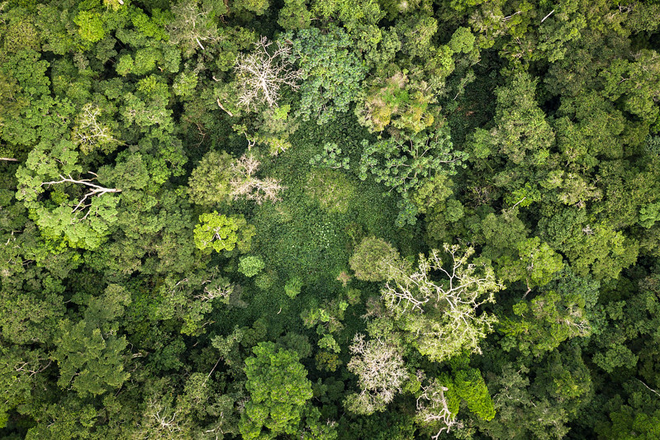



The hunting of wild animals for their meat has been a crucial activity in the evolution of humans. It continues to be an essential source of food and a generator of income for millions of Indigenous and rural communities worldwide. Conservationists rightly fear that excessive hunting of many animal species will cause their demise, as has already happened throughout the Anthropocene. Many species of large mammals and birds have been decimated or annihilated due to overhunting by humans. If such pressures continue, many other species will meet the same fate. Equally, if the use of wildlife resources is to continue by those who depend on it, sustainable practices must be implemented. These communities need to remain or become custodians of the wildlife resources within their lands, for their own well-being as well as for biodiversity in general. This title is also available via Open Access on Cambridge Core.
This work is licensed under CC-BY 4.0

Download:

This work is licensed under CC-BY 4.0
DOI:
https://doi.org/10.1017/9781316338704Score Altmetric:
Dimensions Nombre de citations:
Exporter la citation:
RIS (.ris)
TI  - Hunting Wildlife in the Tropics and Subtropics
AU  - Fa, J.E.
AU  - Funk, S.M.
AU  - Nasi, R.
AB  - The hunting of wild animals for their meat has been a crucial activity in the evolution of humans. It continues to be an essential source of food and a generator of income for millions of Indigenous and rural communities worldwide. Conservationists rightly fear that excessive hunting of many animal species will cause their demise, as has already happened throughout the Anthropocene. Many species of large mammals and birds have been decimated or annihilated due to overhunting by humans. If such pressures continue, many other species will meet the same fate. Equally, if the use of wildlife resources is to continue by those who depend on it, sustainable practices must be implemented. These communities need to remain or become custodians of the wildlife resources within their lands, for their own well-being as well as for biodiversity in general. This title is also available via Open Access on Cambridge Core.
PY  - 2022
PB  - Cambridge University Press
PP  - Cambridge, UK
UR  - https://www.cifor-icraf.org/knowledge/publication/8683/
DO  - https://doi.org/10.1017/9781316338704
KW  - human activies, hunting, indigenous people, livelihoods, rural community, sustainability, wild animals, wildlife conservation, zoonotic diseases
ER  -
Endnote (.ciw)
%T Hunting Wildlife in the Tropics and Subtropics
%A Fa, J.E.
%A Funk, S.M.
%A Nasi, R.
%D 2022
%I Cambridge University Press
%C Cambridge, UK
%U https://www.cifor-icraf.org/knowledge/publication/8683/
%R https://doi.org/10.1017/9781316338704
%X The hunting of wild animals for their meat has been a crucial activity in the evolution of humans. It continues to be an essential source of food and a generator of income for millions of Indigenous and rural communities worldwide. Conservationists rightly fear that excessive hunting of many animal species will cause their demise, as has already happened throughout the Anthropocene. Many species of large mammals and birds have been decimated or annihilated due to overhunting by humans. If such pressures continue, many other species will meet the same fate. Equally, if the use of wildlife resources is to continue by those who depend on it, sustainable practices must be implemented. These communities need to remain or become custodians of the wildlife resources within their lands, for their own well-being as well as for biodiversity in general. This title is also available via Open Access on Cambridge Core.
%K human activies
%K hunting
%K indigenous people
%K livelihoods
%K rural community
%K sustainability
%K wild animals
%K wildlife conservation
%K zoonotic diseases
Publisher
Cambridge University Press: Cambridge, UK
Année de publication
2022
ISBN
978-1-107-11757-0
Auteurs
Fa, J.E.; Funk, S.M.; Nasi, R.
Langue
English
Mots clés
human activies, hunting, indigenous people, livelihoods, rural community, sustainability, wild animals, wildlife conservation, zoonotic diseases