

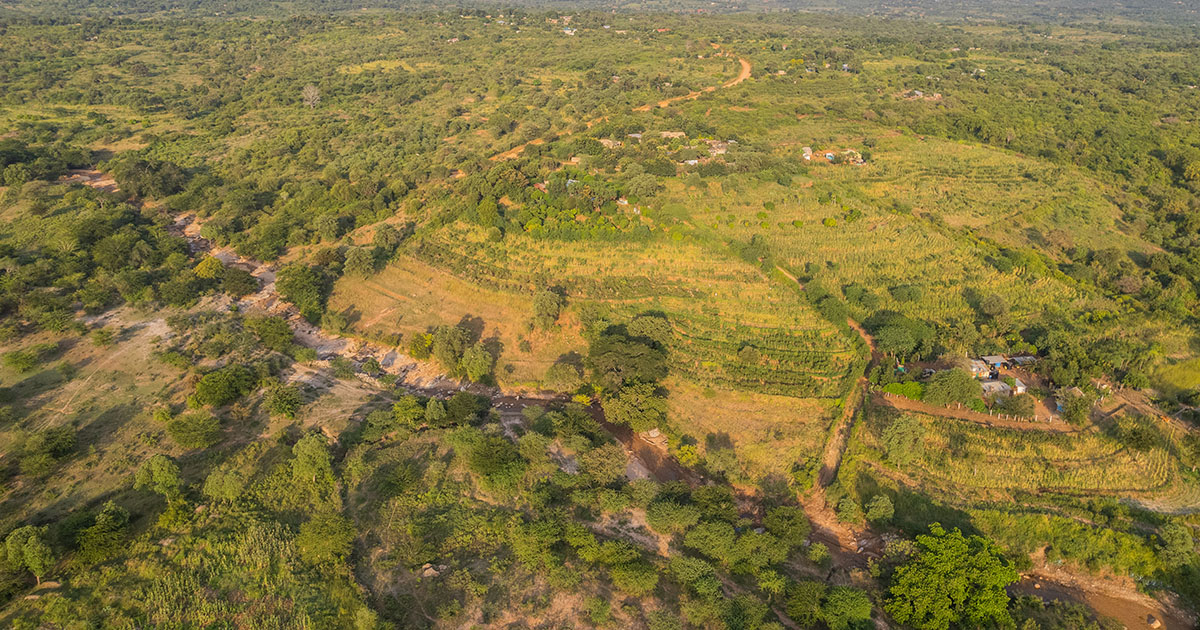
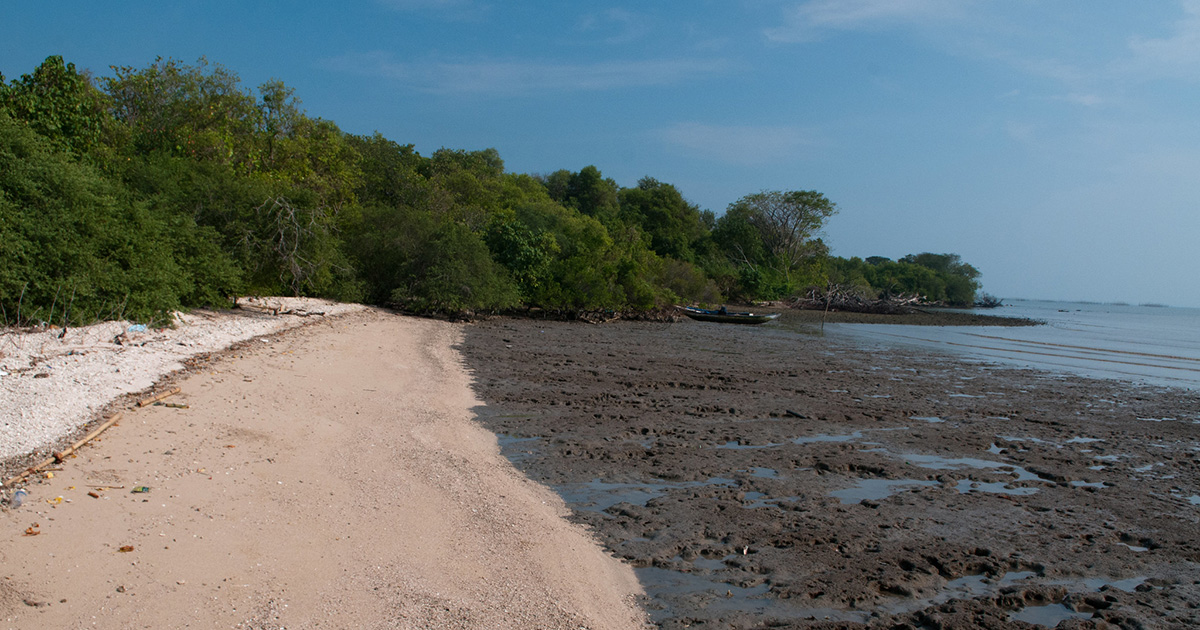





Tropical peatlands store copious amounts of carbon (C) and play a critical role in the global C cycle. However, this C store is vulnerable to natural and anthropogenic disturbances, leading these ecosystems to become weaker C sinks or even net C sources. Variabilities in water table (WT) greatly influence the magnitude of greenhouse gas flux in these biomes. Despite its importance in C cycling, observations of the spatiotemporal dynamics of tropical peatland WT are limited in spatial extent and length. Here, we use in situ WT measurements from tropical peatlands in Indonesia, Malaysia, and Peru to evaluate the satellite-based Optical Trapezoid Model (OPTRAM). The model uses the pixel distribution in the shortwave infrared transformed reflectance and normalized difference vegetation index (NDVI) space to calculate indices that are then compared against in situ WT data. 30-m resolution Landsat 7 and Landsat 8 images were utilized for model parameterization. We found OPTRAM to best capture tropical peatland WT dynamics in minimally forested and non-forested areas (low to intermediate NDVI) (0.7 < R < 1) using the “best pixel” approach (the pixel with the highest Pearson-R correlation value). In areas with relatively higher NDVI, OPTRAM index did not correlate with WT (average R of −0.04 to 0.24), likely due to trees being less sensitive to WT fluctuations. OPTRAM shows potential for reliably estimating tropical peatland WT without the need for direct measurements, which is challenging due to site remoteness and harsh conditions.
This work is licensed under CC-BY 4.0

This work is licensed under CC-BY 4.0
DOI:
https://doi.org/10.1029/2024JG008116Score Altmetric:
Dimensions Nombre de citations:
Exporter la citation:
RIS (.ris)
TI  - Tropical Peatland Water Table Estimations From Space
AU  - Koupaei-Abyazani, N.
AU  - Burdun, I.
AU  - Desai, A.R.
AU  - Hergoualc'h, K.
AU  - Hirano, T.
AU  - Melling, L.
AU  - Swails, E.
AU  - Tang, A.C.I.
AU  - Wong, G.X.
AB  - Tropical peatlands store copious amounts of carbon (C) and play a critical role in the global C cycle. However, this C store is vulnerable to natural and anthropogenic disturbances, leading these ecosystems to become weaker C sinks or even net C sources. Variabilities in water table (WT) greatly influence the magnitude of greenhouse gas flux in these biomes. Despite its importance in C cycling, observations of the spatiotemporal dynamics of tropical peatland WT are limited in spatial extent and length. Here, we use in situ WT measurements from tropical peatlands in Indonesia, Malaysia, and Peru to evaluate the satellite-based Optical Trapezoid Model (OPTRAM). The model uses the pixel distribution in the shortwave infrared transformed reflectance and normalized difference vegetation index (NDVI) space to calculate indices that are then compared against in situ WT data. 30-m resolution Landsat 7 and Landsat 8 images were utilized for model parameterization. We found OPTRAM to best capture tropical peatland WT dynamics in minimally forested and non-forested areas (low to intermediate NDVI) (0.7 < R < 1) using the “best pixel” approach (the pixel with the highest Pearson-R correlation value). In areas with relatively higher NDVI, OPTRAM index did not correlate with WT (average R of −0.04 to 0.24), likely due to trees being less sensitive to WT fluctuations. OPTRAM shows potential for reliably estimating tropical peatland WT without the need for direct measurements, which is challenging due to site remoteness and harsh conditions.
PY  - 2024
UR  - https://www.cifor-icraf.org/knowledge/publication/9219/
DO  - https://doi.org/10.1029/2024JG008116
KW  - emissions, greenhouse gases, peatlands, satellite imagery, simulation models, tropics, water table
ER  -
Endnote (.ciw)
%T Tropical Peatland Water Table Estimations From Space
%A Koupaei-Abyazani, N.
%A Burdun, I.
%A Desai, A.R.
%A Hergoualc'h, K.
%A Hirano, T.
%A Melling, L.
%A Swails, E.
%A Tang, A.C.I.
%A Wong, G.X.
%D 2024
%U https://www.cifor-icraf.org/knowledge/publication/9219/
%R https://doi.org/10.1029/2024JG008116
%X Tropical peatlands store copious amounts of carbon (C) and play a critical role in the global C cycle. However, this C store is vulnerable to natural and anthropogenic disturbances, leading these ecosystems to become weaker C sinks or even net C sources. Variabilities in water table (WT) greatly influence the magnitude of greenhouse gas flux in these biomes. Despite its importance in C cycling, observations of the spatiotemporal dynamics of tropical peatland WT are limited in spatial extent and length. Here, we use in situ WT measurements from tropical peatlands in Indonesia, Malaysia, and Peru to evaluate the satellite-based Optical Trapezoid Model (OPTRAM). The model uses the pixel distribution in the shortwave infrared transformed reflectance and normalized difference vegetation index (NDVI) space to calculate indices that are then compared against in situ WT data. 30-m resolution Landsat 7 and Landsat 8 images were utilized for model parameterization. We found OPTRAM to best capture tropical peatland WT dynamics in minimally forested and non-forested areas (low to intermediate NDVI) (0.7 < R < 1) using the “best pixel” approach (the pixel with the highest Pearson-R correlation value). In areas with relatively higher NDVI, OPTRAM index did not correlate with WT (average R of −0.04 to 0.24), likely due to trees being less sensitive to WT fluctuations. OPTRAM shows potential for reliably estimating tropical peatland WT without the need for direct measurements, which is challenging due to site remoteness and harsh conditions.
%K emissions
%K greenhouse gases
%K peatlands
%K satellite imagery
%K simulation models
%K tropics
%K water table
Année de publication
2024
ISSN
2169-8953
Auteurs
Koupaei-Abyazani, N.; Burdun, I.; Desai, A.R.; Hergoualc'h, K.; Hirano, T.; Melling, L.; Swails, E.; Tang, A.C.I.; Wong, G.X.
Langue
English
Mots clés
emissions, greenhouse gases, peatlands, satellite imagery, simulation models, tropics, water table
Source
Journal of Geophysical Research: Biogeosciences. 129(6): e2024JG008116
Géographique
Indonesia, Malaysia, Peru