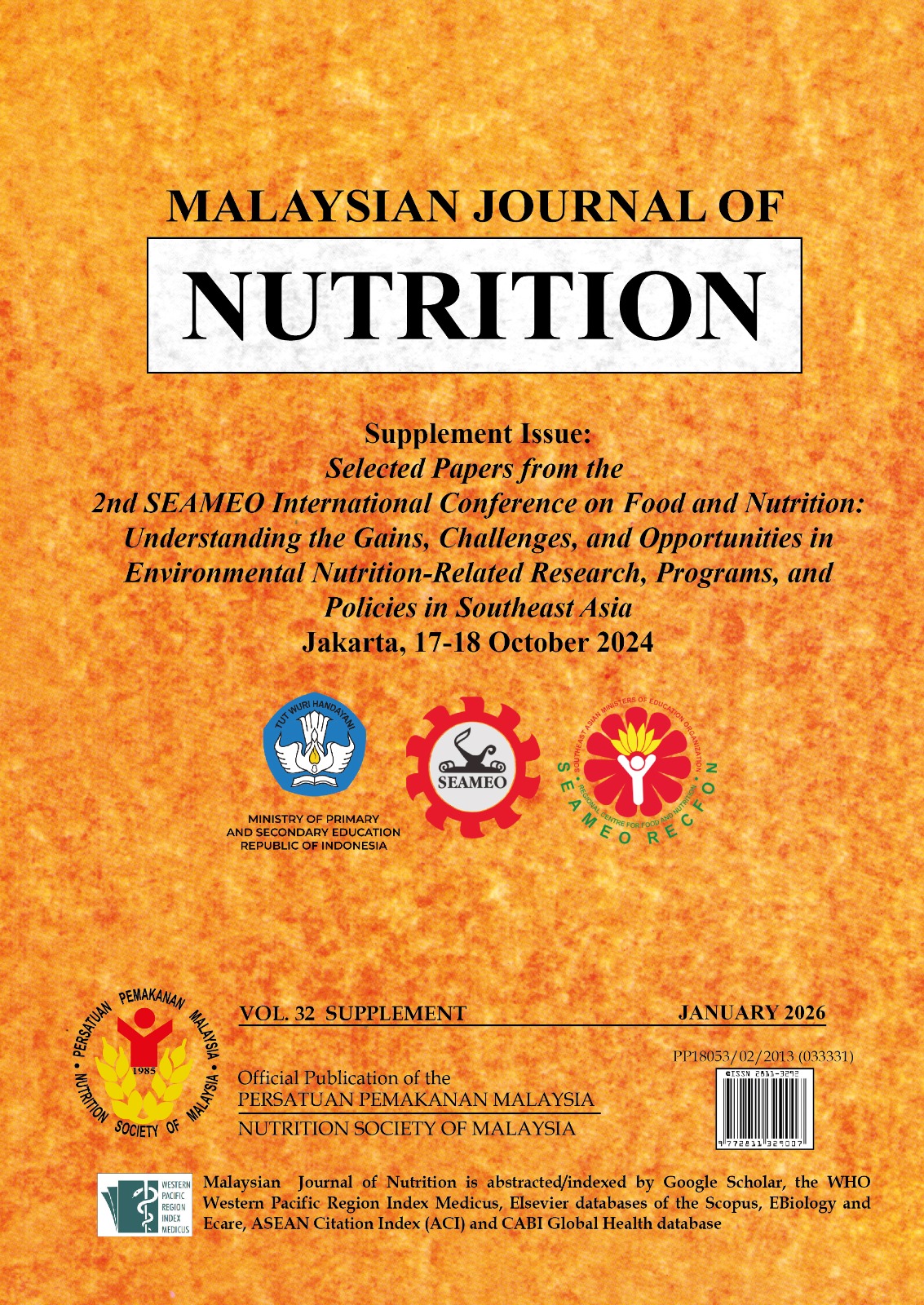








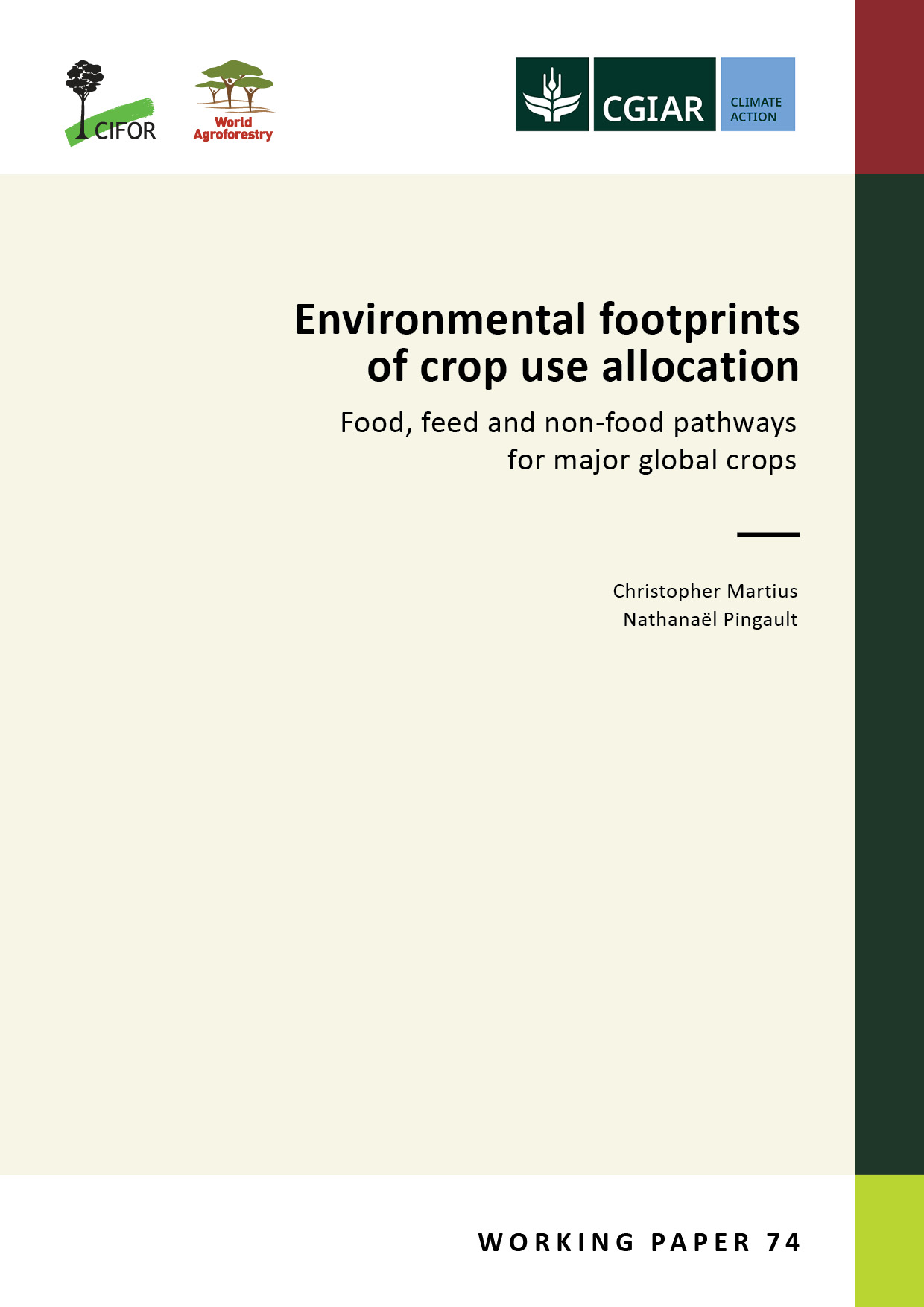


Food systems are essential for human food security and nutrition. They are also the source of roughly one third of global anthropogenic greenhouse gas emissions, making them a central topic for climate mitigation. Focusing on five crops that dominate global agriculture—wheat, maize, rice, soybean and barley––, the study analyzes how their allocation across food, feed, bioenergy and other industrial (non-food) uses affects land, carbon and water footprints. Together, these crops occupy more than half of the world’s arable land and form the backbone of food supply and bio-based economic activities. Drawing on FAOSTAT data and harmonized environmental footprint global datasets, the paper documents current crop-specific production and allocation patterns across different uses and their impacts on sustainability outcomes. It shows how these patterns differ across crops and demonstrates that environmental outcomes depend not only on how crops are produced but also on how they are allocated among competing uses. The analysis then explores four illustrative scenarios: closing yield gaps; reducing food loss and waste; shifting dietary patterns away from high animal-source consumption; and promoting second-generation biofuels. These scenarios allow the identification of significant leverage points for reducing land, carbon and water footprints. Overall, the study shows that crop allocation decisions are a critical yet often overlooked factor in food-system sustainability. By linking environmental footprints to crop uses, it offers a framework for identifying policy priorities and guiding transitions toward more resource-efficient and resilient food systems.
This work is licensed under CC-BY 4.0

This work is licensed under CC-BY 4.0
DOI:
https://doi.org/10.17528/cifor-icraf/009456Score Altmetric:
Dimensions Nombre de citations:
Exporter la citation:
RIS (.ris)
TI  - Environmental footprints of crop use allocation: Food, feed and non-food pathways for major global crops
AU  - Martius, C.
AU  - Pingault, M.
AB  - Food systems are essential for human food security and nutrition. They are also the source of roughly one third of global anthropogenic greenhouse gas emissions, making them a central topic for climate mitigation. Focusing on five crops that dominate global agriculture—wheat, maize, rice, soybean and barley––, the study analyzes how their allocation across food, feed, bioenergy and other industrial (non-food) uses affects land, carbon and water footprints. Together, these crops occupy more than half of the world’s arable land and form the backbone of food supply and bio-based economic activities. Drawing on FAOSTAT data and harmonized environmental footprint global datasets, the paper documents current crop-specific production and allocation patterns across different uses and their impacts on sustainability outcomes. It shows how these patterns differ across crops and demonstrates that environmental outcomes depend not only on how crops are produced but also on how they are allocated among competing uses. The analysis then explores four illustrative scenarios: closing yield gaps; reducing food loss and waste; shifting dietary patterns away from high animal-source consumption; and promoting second-generation biofuels. These scenarios allow the identification of significant leverage points for reducing land, carbon and water footprints. Overall, the study shows that crop allocation decisions are a critical yet often overlooked factor in food-system sustainability. By linking environmental footprints to crop uses, it offers a framework for identifying policy priorities and guiding transitions toward more resource-efficient and resilient food systems.
PY  - 2026
PB  - CIFOR-ICRAF
PP  - Bogor, Indonesia and Nairobi, Kenya
UR  - https://www.cifor-icraf.org/knowledge/publication/9456/
DO  - https://doi.org/10.17528/cifor-icraf/009456
KW  - barley, biofuels, climate change mitigation, crops, food security, food systems, greenhouse gas emissions, land use, maize, nutrition, rice, soybeans, wheat
ER  -
Endnote (.ciw)
%T Environmental footprints of crop use allocation: Food, feed and non-food pathways for major global crops
%A Martius, C.
%A Pingault, M.
%D 2026
%I CIFOR-ICRAF
%C Bogor, Indonesia and Nairobi, Kenya
%U https://www.cifor-icraf.org/knowledge/publication/9456/
%R https://doi.org/10.17528/cifor-icraf/009456
%X Food systems are essential for human food security and nutrition. They are also the source of roughly one third of global anthropogenic greenhouse gas emissions, making them a central topic for climate mitigation. Focusing on five crops that dominate global agriculture—wheat, maize, rice, soybean and barley––, the study analyzes how their allocation across food, feed, bioenergy and other industrial (non-food) uses affects land, carbon and water footprints. Together, these crops occupy more than half of the world’s arable land and form the backbone of food supply and bio-based economic activities. Drawing on FAOSTAT data and harmonized environmental footprint global datasets, the paper documents current crop-specific production and allocation patterns across different uses and their impacts on sustainability outcomes. It shows how these patterns differ across crops and demonstrates that environmental outcomes depend not only on how crops are produced but also on how they are allocated among competing uses. The analysis then explores four illustrative scenarios: closing yield gaps; reducing food loss and waste; shifting dietary patterns away from high animal-source consumption; and promoting second-generation biofuels. These scenarios allow the identification of significant leverage points for reducing land, carbon and water footprints. Overall, the study shows that crop allocation decisions are a critical yet often overlooked factor in food-system sustainability. By linking environmental footprints to crop uses, it offers a framework for identifying policy priorities and guiding transitions toward more resource-efficient and resilient food systems.
%K barley
%K biofuels
%K climate change mitigation
%K crops
%K food security
%K food systems
%K greenhouse gas emissions
%K land use
%K maize
%K nutrition
%K rice
%K soybeans
%K wheat
Publisher
CIFOR-ICRAF: Bogor, Indonesia and Nairobi, Kenya
Année de publication
2026
Auteurs
Langue
English
Mots clés
barley, biofuels, climate change mitigation, crops, food security, food systems, greenhouse gas emissions, land use, maize, nutrition, rice, soybeans, wheat