






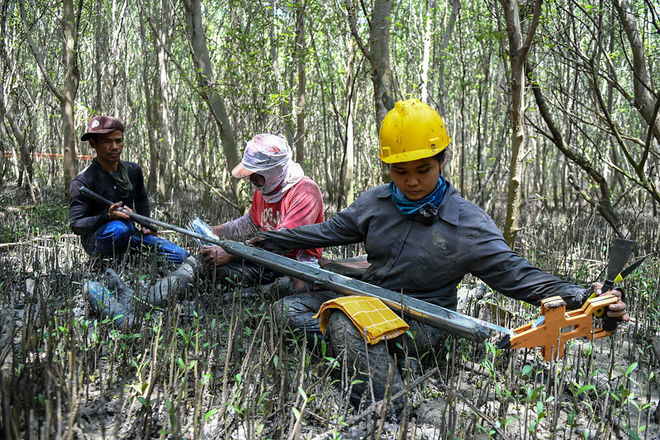
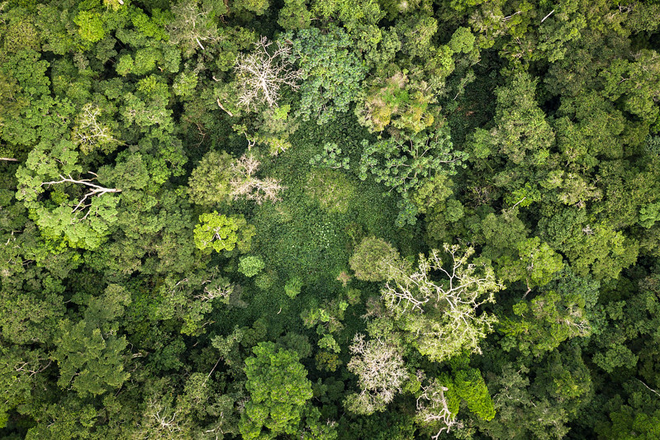



The impacts of monoculture establishment on tropical ecosystems and biodiversity have been the subject of extensive studies, yet the impact on the relationship between soil, plant root, and organism has received limited attention. We sought to assess changes in soil-root-organism interactions resulting from tropical forest conversion to monocultures. Using data from forests and multiple tree and oil palm plantations in Indonesia, we found that the conversion of forests to monocultures impacted soil ecology through direct and indirect effects on soil physicochemical properties, root exudates, and soil organisms. Land management practices and plant physiology influenced soil physicochemical properties across land use types. While root exudates of primary metabolites associated with plant growth were strongly related to soil physicochemical properties, both soil physicochemical properties and the underlying ecological differences between forests and monocultures play important roles in determining secondary metabolite exudates responsible for plant-plant interface, including competition and defence against pathogens. This demonstrates that secondary metabolites evolve through a complex mechanism involving both physical processes and interactions with other plants. Despite having superior primary and secondary metabolites responsible for competition, monoculture plantations had weaker defensive metabolites for pathogen suppression than forests. Furthermore, monocultures had a significantly higher proportion of fungi in their soil microbial profiles than forests. A weakened defence system, combined with elevated fungal presence, can increase monocultures' susceptibility to disease. Our results underscore the critical role of diverse ecosystems in ensuring ecological stability, emphasising the necessity for enhanced diversity in monocultures, whether through agroforestry or intercropping, for long-term soil health.
This work is licensed under CC-BY 4.0

This work is licensed under CC-BY 4.0
DOI:
https://doi.org/10.1016/j.apsoil.2025.106253Score Altmetric:
Dimensions Nombre de citations:
Exporter la citation:
RIS (.ris)
TI  - Changes in soil-root-organism interactions following tropical forest conversion to tree and oil palm plantations
AU  - Widyati, E.
AU  - Sadino
AU  - Budiharta, S.
AU  - Akbar, A.
AU  - Susilo, A.
AU  - Kurniawan, A.
AU  - Sadili, A.
AU  - Prameswari, D.
AU  - Mirmanto, E.
AU  - Hadi, E.E.W.
AU  - Siregar, M.
AU  - Wardani, M.
AU  - Yuniarti, N.
AU  - Mindawati, N.
AU  - Pasaribu, P.H.P.
AU  - Irianto, R.S.B.
AU  - Nisaa, R.M.
AU  - Hartatik, S.E.
AU  - Suharti, S.
AU  - Sutiyono
AU  - Kalima, T.
AU  - Sari, U.K.
AU  - Darwiati, W.
AU  - Herningtyas, W.
AU  - Baral, H.
AU  - Paradelo, M.
AU  - Santika, T.
AB  - The impacts of monoculture establishment on tropical ecosystems and biodiversity have been the subject of extensive studies, yet the impact on the relationship between soil, plant root, and organism has received limited attention. We sought to assess changes in soil-root-organism interactions resulting from tropical forest conversion to monocultures. Using data from forests and multiple tree and oil palm plantations in Indonesia, we found that the conversion of forests to monocultures impacted soil ecology through direct and indirect effects on soil physicochemical properties, root exudates, and soil organisms. Land management practices and plant physiology influenced soil physicochemical properties across land use types. While root exudates of primary metabolites associated with plant growth were strongly related to soil physicochemical properties, both soil physicochemical properties and the underlying ecological differences between forests and monocultures play important roles in determining secondary metabolite exudates responsible for plant-plant interface, including competition and defence against pathogens. This demonstrates that secondary metabolites evolve through a complex mechanism involving both physical processes and interactions with other plants. Despite having superior primary and secondary metabolites responsible for competition, monoculture plantations had weaker defensive metabolites for pathogen suppression than forests. Furthermore, monocultures had a significantly higher proportion of fungi in their soil microbial profiles than forests. A weakened defence system, combined with elevated fungal presence, can increase monocultures' susceptibility to disease. Our results underscore the critical role of diverse ecosystems in ensuring ecological stability, emphasising the necessity for enhanced diversity in monocultures, whether through agroforestry or intercropping, for long-term soil health.
PY  - 2025
UR  - https://www.cifor-icraf.org/knowledge/publication/46302/
DO  - https://doi.org/10.1016/j.apsoil.2025.106253
KW  - agroforestry, fungal diseases, intercropping, monoculture, pathogens, root exudates, soil analysis, soil chemicophysical properties, soil health, tropical forests
ER  -
Endnote (.ciw)
%T Changes in soil-root-organism interactions following tropical forest conversion to tree and oil palm plantations
%A Widyati, E.
%A Sadino
%A Budiharta, S.
%A Akbar, A.
%A Susilo, A.
%A Kurniawan, A.
%A Sadili, A.
%A Prameswari, D.
%A Mirmanto, E.
%A Hadi, E.E.W.
%A Siregar, M.
%A Wardani, M.
%A Yuniarti, N.
%A Mindawati, N.
%A Pasaribu, P.H.P.
%A Irianto, R.S.B.
%A Nisaa, R.M.
%A Hartatik, S.E.
%A Suharti, S.
%A Sutiyono
%A Kalima, T.
%A Sari, U.K.
%A Darwiati, W.
%A Herningtyas, W.
%A Baral, H.
%A Paradelo, M.
%A Santika, T.
%D 2025
%U https://www.cifor-icraf.org/knowledge/publication/46302/
%R https://doi.org/10.1016/j.apsoil.2025.106253
%X The impacts of monoculture establishment on tropical ecosystems and biodiversity have been the subject of extensive studies, yet the impact on the relationship between soil, plant root, and organism has received limited attention. We sought to assess changes in soil-root-organism interactions resulting from tropical forest conversion to monocultures. Using data from forests and multiple tree and oil palm plantations in Indonesia, we found that the conversion of forests to monocultures impacted soil ecology through direct and indirect effects on soil physicochemical properties, root exudates, and soil organisms. Land management practices and plant physiology influenced soil physicochemical properties across land use types. While root exudates of primary metabolites associated with plant growth were strongly related to soil physicochemical properties, both soil physicochemical properties and the underlying ecological differences between forests and monocultures play important roles in determining secondary metabolite exudates responsible for plant-plant interface, including competition and defence against pathogens. This demonstrates that secondary metabolites evolve through a complex mechanism involving both physical processes and interactions with other plants. Despite having superior primary and secondary metabolites responsible for competition, monoculture plantations had weaker defensive metabolites for pathogen suppression than forests. Furthermore, monocultures had a significantly higher proportion of fungi in their soil microbial profiles than forests. A weakened defence system, combined with elevated fungal presence, can increase monocultures' susceptibility to disease. Our results underscore the critical role of diverse ecosystems in ensuring ecological stability, emphasising the necessity for enhanced diversity in monocultures, whether through agroforestry or intercropping, for long-term soil health.
%K agroforestry
%K fungal diseases
%K intercropping
%K monoculture
%K pathogens
%K root exudates
%K soil analysis
%K soil chemicophysical properties
%K soil health
%K tropical forests
Année de publication
2025
ISSN
0929-1393
Auteurs
Widyati, E.; Sadino; Budiharta, S.; Akbar, A.; Susilo, A.; Kurniawan, A.; Sadili, A.; Prameswari, D.; Mirmanto, E.; Hadi, E.E.W.; Siregar, M.; Wardani, M.; Yuniarti, N.; Mindawati, N.; Pasaribu, P.H.P.; Irianto, R.S.B.; Nisaa, R.M.; Hartatik, S.E.; Suharti, S.; Sutiyono; Kalima, T.; Sari, U.K.; Darwiati, W.; Herningtyas, W.; Baral, H.; Paradelo, M.; Santika, T.
Langue
English
Mots clés
agroforestry, fungal diseases, intercropping, monoculture, pathogens, root exudates, soil analysis, soil chemicophysical properties, soil health, tropical forests
Source
Applied Soil Ecology. 213: 106253
Géographique
Indonesia