

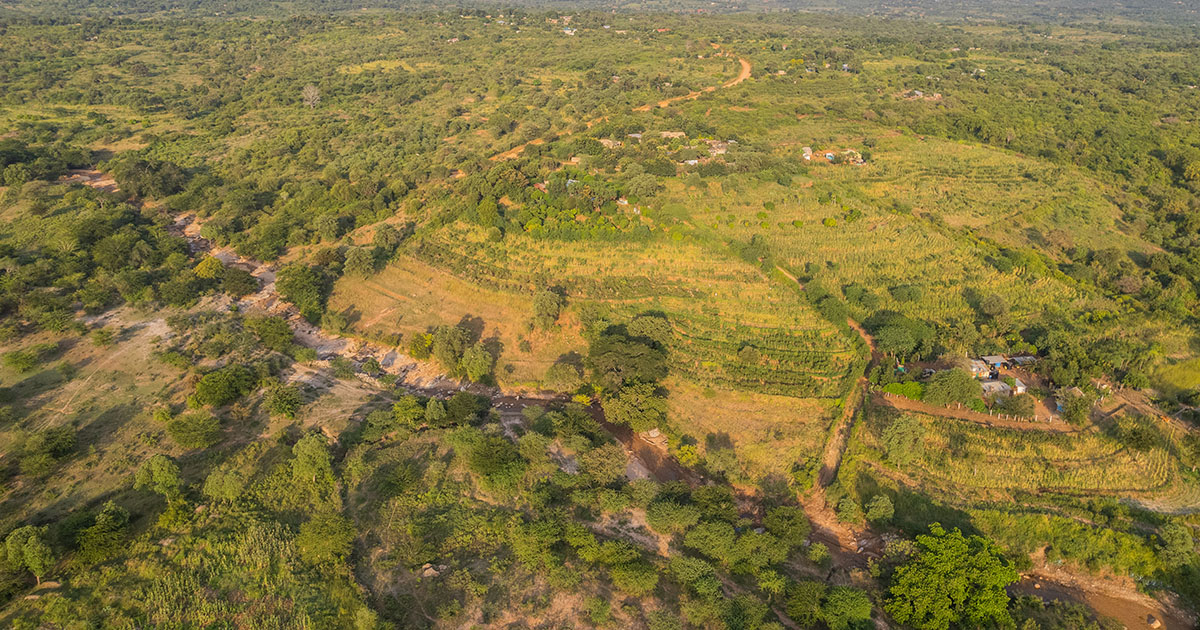





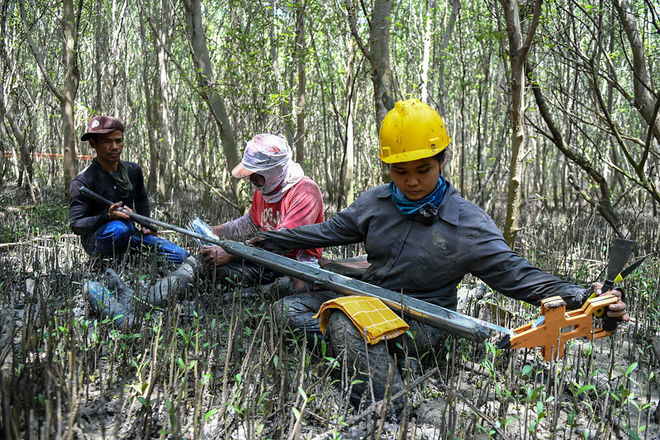
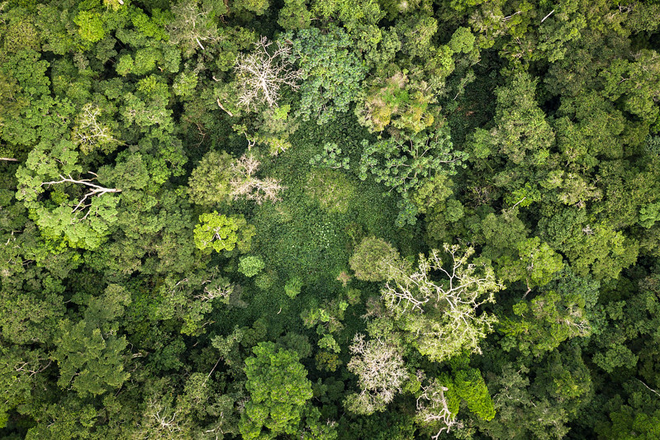

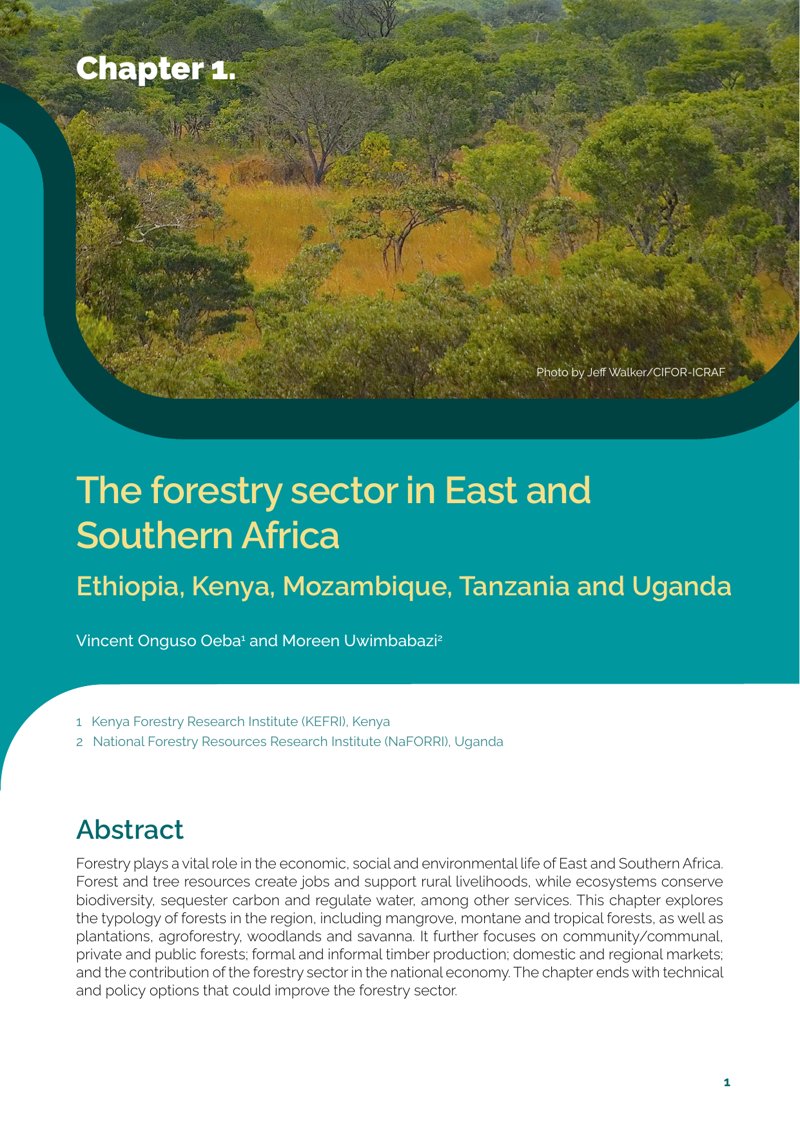


Forestry plays a vital role in the economic, social and environmental life of East and Southern Africa. Forest and tree resources create jobs and support rural livelihoods, while ecosystems conserve biodiversity, sequester carbon and regulate water, among other services. This chapter explores the typology of forests in the region, including mangrove, montane and tropical forests, as well as plantations, agroforestry, woodlands and savanna. It further focuses on community/communal, private and public forests; formal and informal timber production; domestic and regional markets; and the contribution of the forestry sector in the national economy. The chapter ends with technical and policy options that could improve the forestry sector.
This work is licensed under CC-BY 4.0
This work is licensed under CC-BY 4.0
Exporter la citation:
RIS (.ris)
TI  - The forestry sector in East and Southern Africa: Ethiopia, Kenya, Mozambique, Tanzania and Uganda
AU  - Onguso Oeba, V.
AU  - Uwimbabazi, M.
AB  - Forestry plays a vital role in the economic, social and environmental life of East and Southern Africa. Forest and tree resources create jobs and support rural livelihoods, while ecosystems conserve biodiversity, sequester carbon and regulate water, among other services. This chapter explores the typology of forests in the region, including mangrove, montane and tropical forests, as well as plantations, agroforestry, woodlands and savanna. It further focuses on community/communal, private and public forests; formal and informal timber production; domestic and regional markets; and the contribution of the forestry sector in the national economy. The chapter ends with technical and policy options that could improve the forestry sector.
PY  - 2026
PB  - CIFOR-ICRAF
PP  - Bogor, Indonesia and Nairobi, Kenya
UR  - https://www.cifor-icraf.org/knowledge/publication/46401/
KW  - agroforestry, carbon sequestration, community forestry, forestry, mangroves, mountain areas, timber production, typology
ER  -
Endnote (.ciw)
%T The forestry sector in East and Southern Africa: Ethiopia, Kenya, Mozambique, Tanzania and Uganda
%A Onguso Oeba, V.
%A Uwimbabazi, M.
%D 2026
%I CIFOR-ICRAF
%C Bogor, Indonesia and Nairobi, Kenya
%U https://www.cifor-icraf.org/knowledge/publication/46401/
%X Forestry plays a vital role in the economic, social and environmental life of East and Southern Africa. Forest and tree resources create jobs and support rural livelihoods, while ecosystems conserve biodiversity, sequester carbon and regulate water, among other services. This chapter explores the typology of forests in the region, including mangrove, montane and tropical forests, as well as plantations, agroforestry, woodlands and savanna. It further focuses on community/communal, private and public forests; formal and informal timber production; domestic and regional markets; and the contribution of the forestry sector in the national economy. The chapter ends with technical and policy options that could improve the forestry sector.
%K agroforestry
%K carbon sequestration
%K community forestry
%K forestry
%K mangroves
%K mountain areas
%K timber production
%K typology
Année de publication
2026
Auteurs
Onguso Oeba, V.; Uwimbabazi, M.
Langue
English
Mots clés
agroforestry, carbon sequestration, community forestry, forestry, mangroves, mountain areas, timber production, typology
Source
State of the Forests 2025: The Forests of the East and Southern Africa. CIFOR-ICRAF: Bogor, Indonesia and Nairobi, KenyaGéographique
Ethiopia, Kenya, Mozambique, Tanzania, Uganda