
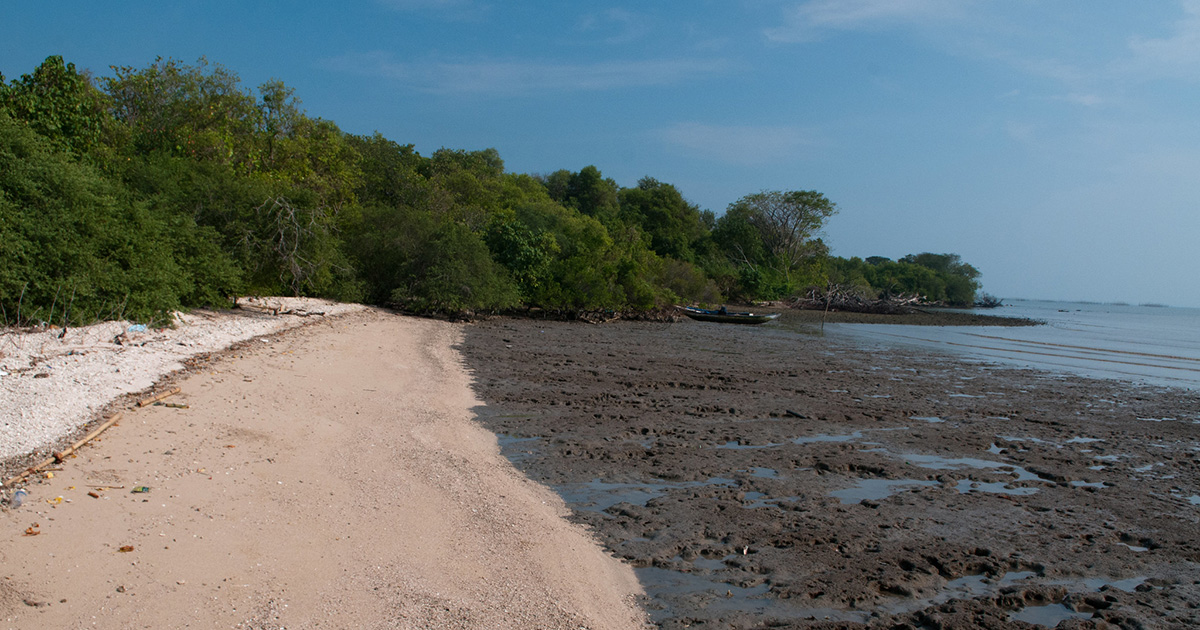





Mangroves of the Warm Temperate Southwestern Atlantic is a regional ecosystem subgroup (level 4 unit of the IUCN Global Ecosystem Typology). It includes the marine ecoregions of Rio Grande and Southeastern Brazil. The mapped extent of mangroves in 2020 was 709.5 km2, representing 0.5% of the global mangrove area. The biota is characterized by three species of true mangroves, Rhizophora mangle, Laguncularia racemosa and Avicennia schaueriana. The mangroves are associated with estuaries, coastal lagoons and bays, and the lagoons of barrier islands. This province marks the southernmost latitude for mangroves in South America. Seasonal factors may interact to limit the poleward dispersal of mangrove species. Primary influences include the year-round, northward-directed longshore drift and the high frequency of cold fronts and chilling events during winter. Additionally, seasonal upwelling of cold waters in spring and summer may impact the viability of propagules.
This work is licensed under CC BY-NC-ND 4.0

This work is licensed under CC BY-NC-ND 4.0
DOI:
https://doi.org/10.32942/X2TH07Score Altmetric:
Dimensions Nombre de citations:
Exporter la citation:
RIS (.ris)
TI  - IUCN Red List of Ecosystems, Mangroves of the Warm Temperate Southwestern Atlantic
AU  - Ximenes, A.C.
AU  - Cunha-Lignon, M.
AU  - Soares, M.L.G.
AU  - Reis-Neto, A.
AU  - Conti, L.A.
AU  - Tognella, M.M.P.
AU  - Suárez, E.L.
AB  - Mangroves of the Warm Temperate Southwestern Atlantic is a regional ecosystem subgroup (level 4 unit of the IUCN Global Ecosystem Typology). It includes the marine ecoregions of Rio Grande and Southeastern Brazil. The mapped extent of mangroves in 2020 was 709.5 km2, representing 0.5% of the global mangrove area. The biota is characterized by three species of true mangroves, Rhizophora mangle, Laguncularia racemosa and Avicennia schaueriana. The mangroves are associated with estuaries, coastal lagoons and bays, and the lagoons of barrier islands. This province marks the southernmost latitude for mangroves in South America. Seasonal factors may interact to limit the poleward dispersal of mangrove species. Primary influences include the year-round, northward-directed longshore drift and the high frequency of cold fronts and chilling events during winter. Additionally, seasonal upwelling of cold waters in spring and summer may impact the viability of propagules.
PY  - 2025
UR  - https://www.cifor-icraf.org/knowledge/publication/44667/
DO  - https://doi.org/10.32942/X2TH07
KW  - conservation, ecosystem management, ecosystems, fauna, mangroves
ER  -
Endnote (.ciw)
%T IUCN Red List of Ecosystems, Mangroves of the Warm Temperate Southwestern Atlantic
%A Ximenes, A.C.
%A Cunha-Lignon, M.
%A Soares, M.L.G.
%A Reis-Neto, A.
%A Conti, L.A.
%A Tognella, M.M.P.
%A Suárez, E.L.
%D 2025
%U https://www.cifor-icraf.org/knowledge/publication/44667/
%R https://doi.org/10.32942/X2TH07
%X Mangroves of the Warm Temperate Southwestern Atlantic is a regional ecosystem subgroup (level 4 unit of the IUCN Global Ecosystem Typology). It includes the marine ecoregions of Rio Grande and Southeastern Brazil. The mapped extent of mangroves in 2020 was 709.5 km2, representing 0.5% of the global mangrove area. The biota is characterized by three species of true mangroves, Rhizophora mangle, Laguncularia racemosa and Avicennia schaueriana. The mangroves are associated with estuaries, coastal lagoons and bays, and the lagoons of barrier islands. This province marks the southernmost latitude for mangroves in South America. Seasonal factors may interact to limit the poleward dispersal of mangrove species. Primary influences include the year-round, northward-directed longshore drift and the high frequency of cold fronts and chilling events during winter. Additionally, seasonal upwelling of cold waters in spring and summer may impact the viability of propagules.
%K conservation
%K ecosystem management
%K ecosystems
%K fauna
%K mangroves
Année de publication
2025
Auteurs
Ximenes, A.C.; Cunha-Lignon, M.; Soares, M.L.G.; Reis-Neto, A.; Conti, L.A.; Tognella, M.M.P.; Suárez, E.L.
Langue
English
Mots clés
conservation, ecosystem management, ecosystems, fauna, mangroves
Source
EcoEvoRxiv. :
Géographique
Brazil