






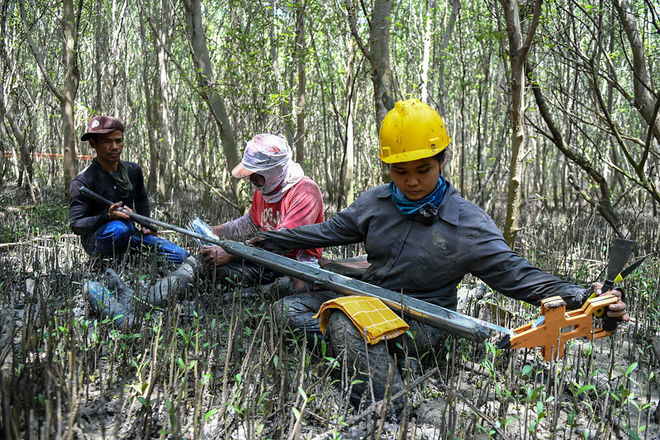
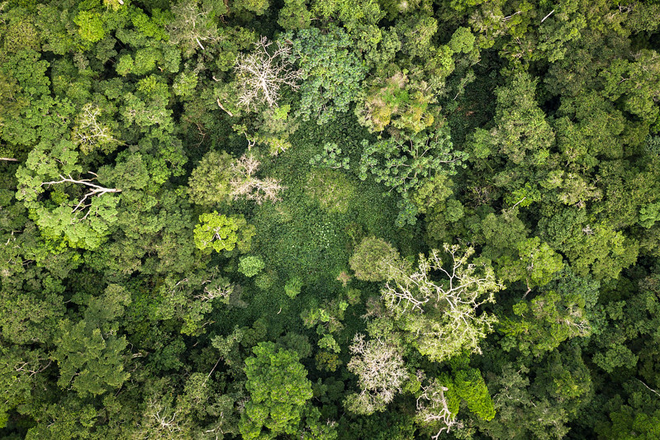



The Biodiversity-Climate-Society (BCS) Nexus highlights the need to integrate ecological, social, and climate dimensions to address complex global challenges. This study introduces a methodological framework using the Participatory System Dynamics Model (PSDM) to map and analyze the BCS Nexus in Rondônia’s forest-based value chains. By incorporating local knowledge, ecosystem services, and value chain impacts, the model reveals how forest degradation threatens Indigenous livelihoods and ecosystem stability. The participatory approach fostered dialogue among stakeholders, identified leverage points for transformative change, and emphasized the importance of inclusive, multi-scale governance to reconcile conservation and development goals.
This work is licensed under CC-BY 4.0

This work is licensed under CC-BY 4.0
DOI:
https://doi.org/10.1016/j.scitotenv.2025.179893Score Altmetric:
Dimensions Nombre de citations:
Exporter la citation:
RIS (.ris)
TI  - Biodiversity-Climate-Society Nexus assessment through Participatory System Dynamics Model. The case study of Amazon forest-based value chain
AU  - Santoro, S.
AU  - Pagano, A.
AU  - Francesconi, W.
AU  - Mello, D.
AU  - Giordano, R.
AB  - The Biodiversity-Climate-Society (BCS) Nexus highlights the need to integrate ecological, social, and climate dimensions to address complex global challenges. This study introduces a methodological framework using the Participatory System Dynamics Model (PSDM) to map and analyze the BCS Nexus in Rondônia’s forest-based value chains. By incorporating local knowledge, ecosystem services, and value chain impacts, the model reveals how forest degradation threatens Indigenous livelihoods and ecosystem stability. The participatory approach fostered dialogue among stakeholders, identified leverage points for transformative change, and emphasized the importance of inclusive, multi-scale governance to reconcile conservation and development goals.
PY  - 2025
UR  - https://www.cifor-icraf.org/knowledge/publication/44720/
DO  - https://doi.org/10.1016/j.scitotenv.2025.179893
KW  - biodiversity, climate change, ecosystem services, forest management, indigenous knowledge, participatory modeling, sustainable development, system dynamics, value chains
ER  -
Endnote (.ciw)
%T Biodiversity-Climate-Society Nexus assessment through Participatory System Dynamics Model. The case study of Amazon forest-based value chain
%A Santoro, S.
%A Pagano, A.
%A Francesconi, W.
%A Mello, D.
%A Giordano, R.
%D 2025
%U https://www.cifor-icraf.org/knowledge/publication/44720/
%R https://doi.org/10.1016/j.scitotenv.2025.179893
%X The Biodiversity-Climate-Society (BCS) Nexus highlights the need to integrate ecological, social, and climate dimensions to address complex global challenges. This study introduces a methodological framework using the Participatory System Dynamics Model (PSDM) to map and analyze the BCS Nexus in Rondônia’s forest-based value chains. By incorporating local knowledge, ecosystem services, and value chain impacts, the model reveals how forest degradation threatens Indigenous livelihoods and ecosystem stability. The participatory approach fostered dialogue among stakeholders, identified leverage points for transformative change, and emphasized the importance of inclusive, multi-scale governance to reconcile conservation and development goals.
%K biodiversity
%K climate change
%K ecosystem services
%K forest management
%K indigenous knowledge
%K participatory modeling
%K sustainable development
%K system dynamics
%K value chains
Année de publication
2025
ISSN
0048-9697
Auteurs
Santoro, S.; Pagano, A.; Francesconi, W.; Mello, D.; Giordano, R.
Langue
English
Mots clés
biodiversity, climate change, ecosystem services, forest management, indigenous knowledge, participatory modeling, sustainable development, system dynamics, value chains
Source
Science of the Total Environment. 991: 179893