

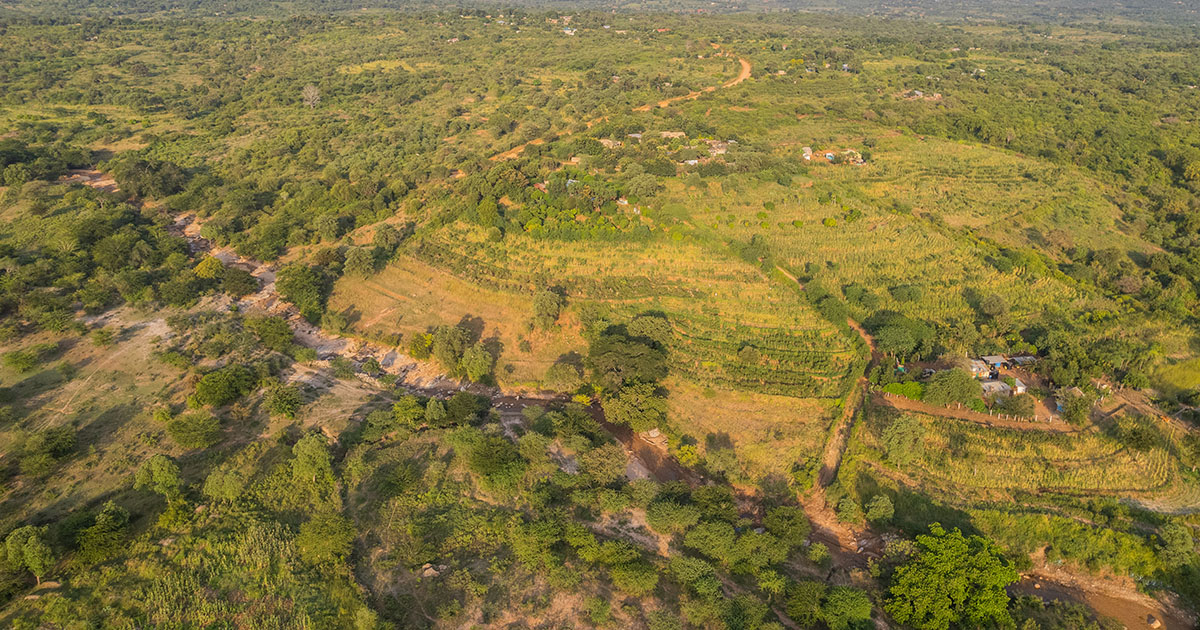




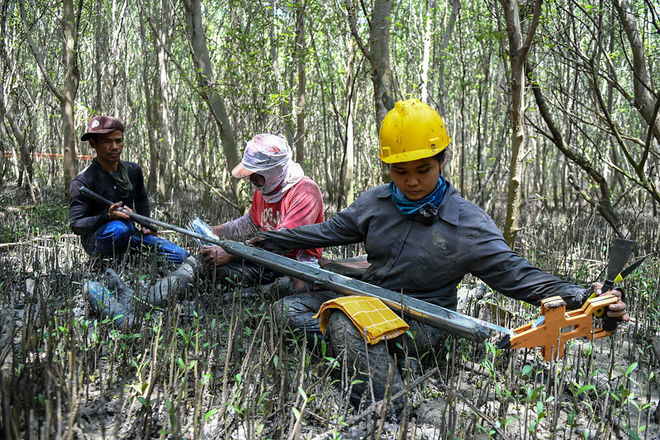



Traditional agroforestry systems (TAFS) in Tanzania—Alalili, Ngitili, and Faidherbia parkland—play a critical role in biodiversity conservation, rural livelihoods, and climate change mitigation. This study quantified their carbon sequestration potential using field data from 48 plots. Results showed significant variation in total carbon stocks, with Faidherbia parkland storing the most (151.91 Mg C ha⁻¹) due to large-diameter trees, while Ngitili stored the least (17.96 Mg C ha⁻¹) despite higher stem density. These findings highlight TAFS as valuable nature-based carbon sinks and support their integration into climate strategies such as REDD+ and carbon farming. Strengthening TAFS can yield co-benefits for carbon storage, ecosystem services, and sustainable development.

DOI:
https://doi.org/10.1007/s10457-025-01241-5Score Altmetric:
Dimensions Nombre de citations:
Exporter la citation:
RIS (.ris)
TI  - Are traditional agroforestry systems nature-based carbon sinks? Empirical evidence from Tanzania
AU  - Andrew, S.M.
AU  - Mpelangwa, E.M.
AU  - Kimaro, A.A.
AB  - Traditional agroforestry systems (TAFS) in Tanzania—Alalili, Ngitili, and Faidherbia parkland—play a critical role in biodiversity conservation, rural livelihoods, and climate change mitigation. This study quantified their carbon sequestration potential using field data from 48 plots. Results showed significant variation in total carbon stocks, with Faidherbia parkland storing the most (151.91 Mg C ha⁻¹) due to large-diameter trees, while Ngitili stored the least (17.96 Mg C ha⁻¹) despite higher stem density. These findings highlight TAFS as valuable nature-based carbon sinks and support their integration into climate strategies such as REDD+ and carbon farming. Strengthening TAFS can yield co-benefits for carbon storage, ecosystem services, and sustainable development.
PY  - 2025
UR  - https://www.cifor-icraf.org/knowledge/publication/44721/
DO  - https://doi.org/10.1007/s10457-025-01241-5
KW  - agroforestry, biomass, carbon sequestration, climate change mitigation, ecosystem services, forest ecosystems, land management, redd-plus, rural livelihoods, traditional knowledge
ER  -
Endnote (.ciw)
%T Are traditional agroforestry systems nature-based carbon sinks? Empirical evidence from Tanzania
%A Andrew, S.M.
%A Mpelangwa, E.M.
%A Kimaro, A.A.
%D 2025
%U https://www.cifor-icraf.org/knowledge/publication/44721/
%R https://doi.org/10.1007/s10457-025-01241-5
%X Traditional agroforestry systems (TAFS) in Tanzania—Alalili, Ngitili, and Faidherbia parkland—play a critical role in biodiversity conservation, rural livelihoods, and climate change mitigation. This study quantified their carbon sequestration potential using field data from 48 plots. Results showed significant variation in total carbon stocks, with Faidherbia parkland storing the most (151.91 Mg C ha⁻¹) due to large-diameter trees, while Ngitili stored the least (17.96 Mg C ha⁻¹) despite higher stem density. These findings highlight TAFS as valuable nature-based carbon sinks and support their integration into climate strategies such as REDD+ and carbon farming. Strengthening TAFS can yield co-benefits for carbon storage, ecosystem services, and sustainable development.
%K agroforestry
%K biomass
%K carbon sequestration
%K climate change mitigation
%K ecosystem services
%K forest ecosystems
%K land management
%K redd-plus
%K rural livelihoods
%K traditional knowledge
Année de publication
2025
ISSN
0167-4366
Auteurs
Andrew, S.M.; Mpelangwa, E.M.; Kimaro, A.A.
Langue
English
Mots clés
agroforestry, biomass, carbon sequestration, climate change mitigation, ecosystem services, forest ecosystems, land management, redd-plus, rural livelihoods, traditional knowledge
Source
Agroforestry Systems. 99(6): 145
Géographique
Tanzania