







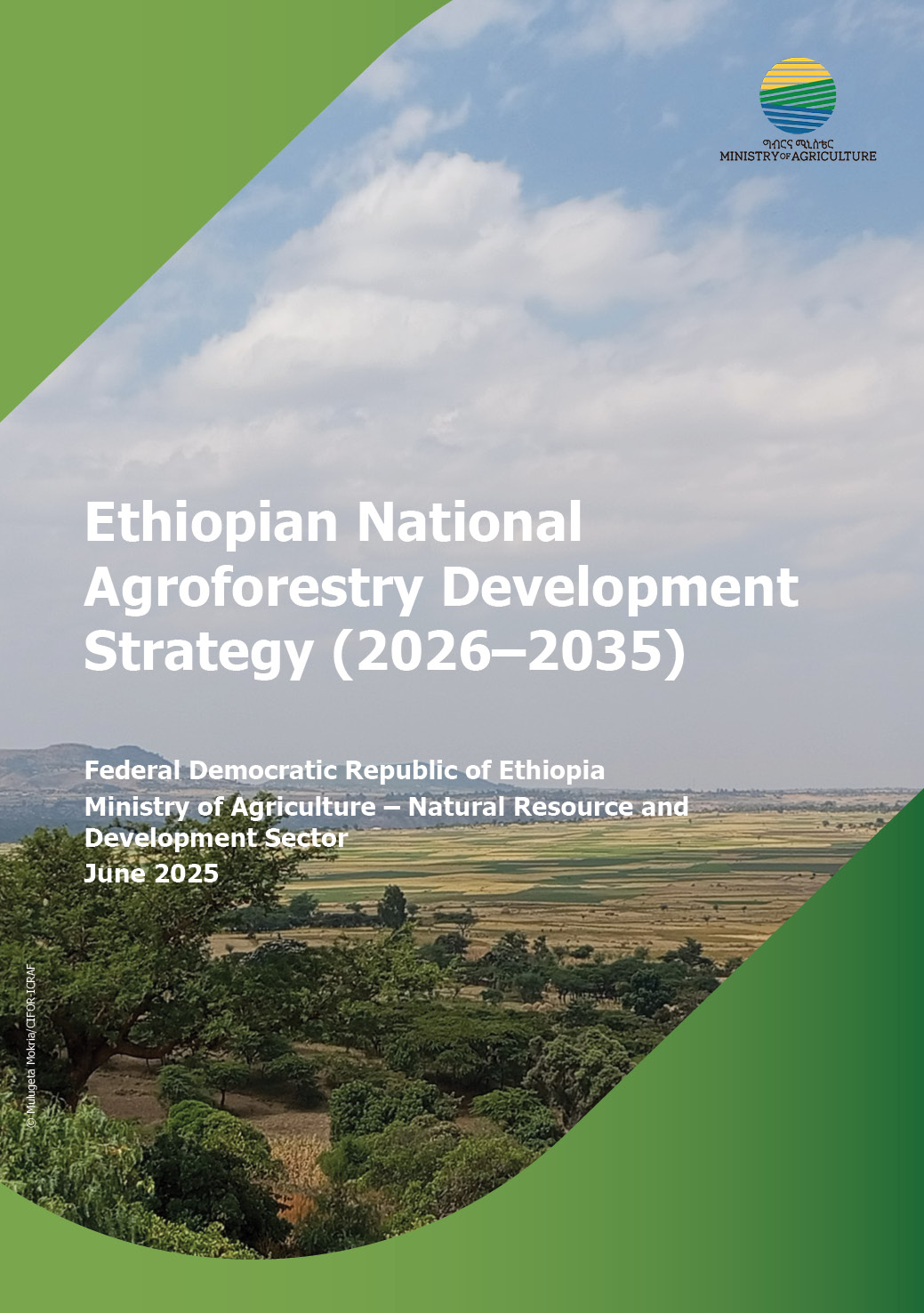


Ethiopia faces severe land degradation, threatening food security, livelihoods, and economic stability. In response, the National Agroforestry Strategy (2026–2035) outlines a comprehensive framework to mainstream agroforestry as a core land-use system across all regions. By integrating food, feed, fiber, and renewable energy production with ecological functions, the strategy aims to restore landscapes, enhance resilience to climate change, and generate sustainable income. Built on a value chain approach and aligned with research, education, and traditional practices, it provides clear goals and interventions to strengthen governance, reduce poverty, and build a climate-resilient green economy.
This work is licensed under CC-BY 4.0
This work is licensed under CC-BY 4.0
Exporter la citation:
RIS (.ris)
TI  - Ethiopian National Agroforestry Development Strategy (2026–2035)
AU  - Wolde-meskel, E.
AU  - Teso, S.
AU  - Bourne, M.
AU  - Hagazi, N.
AU  - Tadesse, T.
AU  - Mokria, M.
AU  - Gebrekirstos, A.
AU  - Mesfin, A.
AU  - Rube, N.
AU  - Mekonen, F.
AU  - Mekuria, G.
AU  - Getachew, B.
AU  - Haile, M.
AU  - Asfaw, Z.
AB  - Ethiopia faces severe land degradation, threatening food security, livelihoods, and economic stability. In response, the National Agroforestry Strategy (2026–2035) outlines a comprehensive framework to mainstream agroforestry as a core land-use system across all regions. By integrating food, feed, fiber, and renewable energy production with ecological functions, the strategy aims to restore landscapes, enhance resilience to climate change, and generate sustainable income. Built on a value chain approach and aligned with research, education, and traditional practices, it provides clear goals and interventions to strengthen governance, reduce poverty, and build a climate-resilient green economy.
PY  - 2025
PB  - Ministry of Agriculture, Federal Democratic Republic of Ethiopia and CIFOR-ICRAF
PP  - Addis Ababa, Ethiopia
UR  - https://www.cifor-icraf.org/knowledge/publication/46226/
KW  - agricultural production, agroforestry, agroforestry system, climate change adaptation, deforestation, energy generation, food security, land degradation, land management, livelihoods, natural resources management, poverty, renewable energy, soil erosion, value chains
ER  -
Endnote (.ciw)
%T Ethiopian National Agroforestry Development Strategy (2026–2035)
%A Wolde-meskel, E.
%A Teso, S.
%A Bourne, M.
%A Hagazi, N.
%A Tadesse, T.
%A Mokria, M.
%A Gebrekirstos, A.
%A Mesfin, A.
%A Rube, N.
%A Mekonen, F.
%A Mekuria, G.
%A Getachew, B.
%A Haile, M.
%A Asfaw, Z.
%D 2025
%I Ministry of Agriculture, Federal Democratic Republic of Ethiopia and CIFOR-ICRAF
%C Addis Ababa, Ethiopia
%U https://www.cifor-icraf.org/knowledge/publication/46226/
%X Ethiopia faces severe land degradation, threatening food security, livelihoods, and economic stability. In response, the National Agroforestry Strategy (2026–2035) outlines a comprehensive framework to mainstream agroforestry as a core land-use system across all regions. By integrating food, feed, fiber, and renewable energy production with ecological functions, the strategy aims to restore landscapes, enhance resilience to climate change, and generate sustainable income. Built on a value chain approach and aligned with research, education, and traditional practices, it provides clear goals and interventions to strengthen governance, reduce poverty, and build a climate-resilient green economy.
%K agricultural production
%K agroforestry
%K agroforestry system
%K climate change adaptation
%K deforestation
%K energy generation
%K food security
%K land degradation
%K land management
%K livelihoods
%K natural resources management
%K poverty
%K renewable energy
%K soil erosion
%K value chains
Publisher
Ministry of Agriculture, Federal Democratic Republic of Ethiopia and CIFOR-ICRAF: Addis Ababa, Ethiopia
Année de publication
2025
ISBN
978-9966-108-94-4
Auteurs
Wolde-meskel, E.; Teso, S.; Bourne, M.; Hagazi, N.; Tadesse, T.; Mokria, M.; Gebrekirstos, A.; Mesfin, A.; Rube, N.; Mekonen, F.; Mekuria, G.; Getachew, B.; Haile, M.; Asfaw, Z.
Langue
English
Mots clés
agricultural production, agroforestry, agroforestry system, climate change adaptation, deforestation, energy generation, food security, land degradation, land management, livelihoods, natural resources management, poverty, renewable energy, soil erosion, value chains
Géographique
Ethiopia