

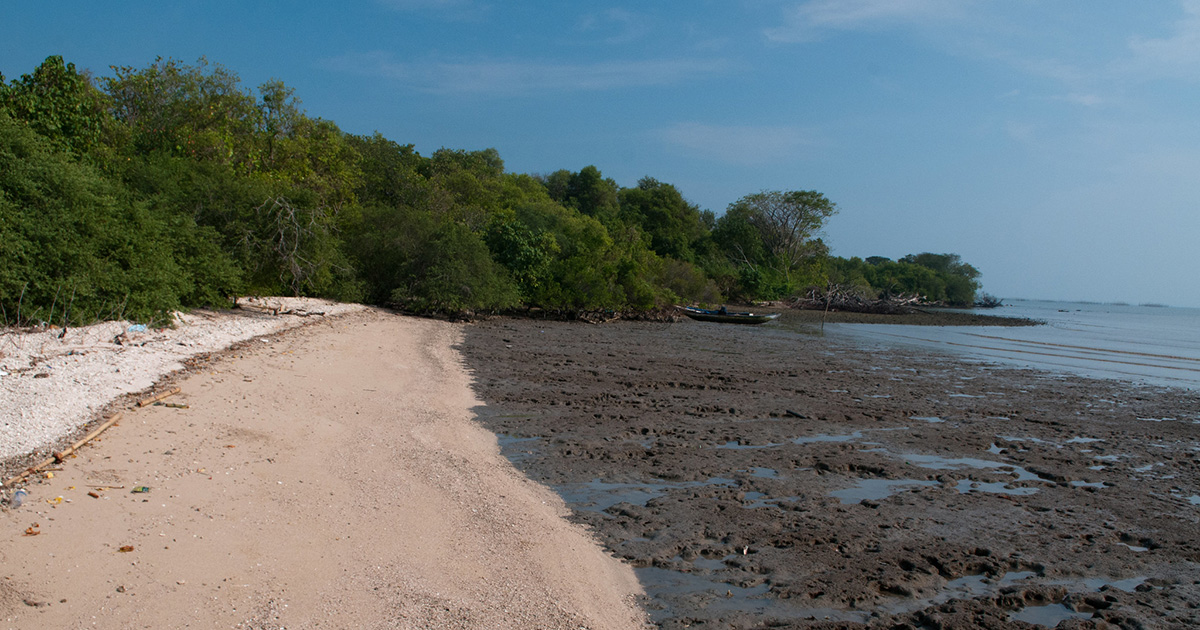




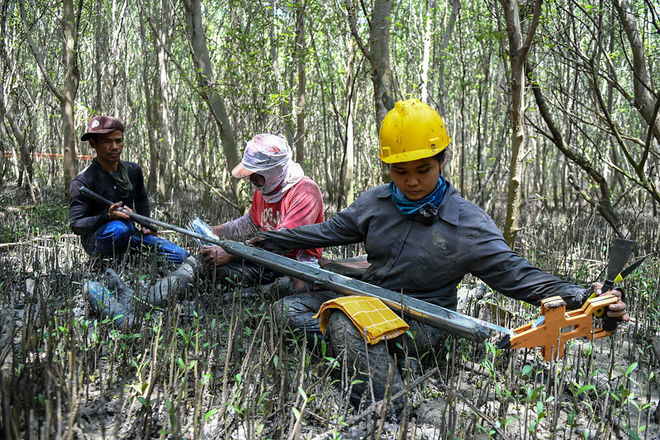
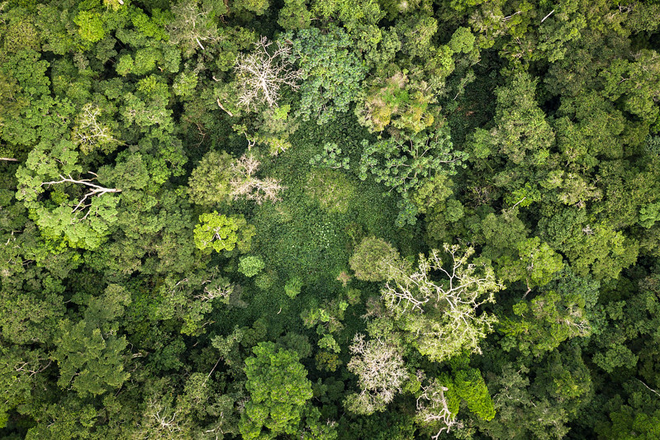




Tropical forests store about half of the global forest aboveground carbon (AGC)1, yet extensive areas are affected by disturbances, such as deforestation from agricultural expansion2,3 and degradation from fires4, selective logging5, and edge effects6,7. Over time, disturbed forests can recover, gradually restoring carbon stocks and ecological functions8. However, how recovery rates vary with disturbance size, type and location remains poorly quantified. Here we use a bookkeeping approach with spatially explicit vegetation recovery curves to quantify AGC dynamics in disturbed tropical forests during 1990–2020. We find that disturbed tropical dry forests remained carbon neutral, whereas disturbed tropical humid forests experienced a net AGC loss of 15.6 ± 3.7 PgC, primarily driven by small but persistent deforestation clearings. Despite affecting only about 5% of the disturbed area, these small-size (less than 2 ha) deforestation events accounted for about 56% of carbon losses, owing to persistent land-use conversion without forest regrowth. By contrast, large fire-induced carbon losses were offset by the long-term post-fire recovery. Over time, deforestation expanded into humid forests with higher carbon stock density, intensifying AGC losses per unit area. These findings highlight the disproportionate impact of small clearings on tropical carbon losses, suggesting the need to curb land-use changes and protect young and recovering forests.
This work is licensed under © Springer Nature. All rights reserved.

This work is licensed under © Springer Nature. All rights reserved.
DOI:
https://doi.org/10.1038/s41586-025-09870-7Score Altmetric:
Dimensions Nombre de citations:
Exporter la citation:
RIS (.ris)
TI  - Small persistent humid forest clearings drive tropical forest biomass losses
AU  - Xu, Y.
AU  - Ciais, P.
AU  - Santoro, M.
AU  - Bourgoin, C.
AU  - Ritter, F.
AU  - Pellissier-Tanon, A.
AU  - Feng, Y.
AU  - Zhou, C.
AU  - He, G.
AU  - Heinrich, V.
AU  - Besnard, S.
AU  - Robinson, N.
AU  - Cook-Patton, S.C.
AU  - Chave, J.
AU  - Aragao, L.E.O.C.
AU  - Ometto, J.P.
AU  - Bowring, S.P.K.
AU  - Fayad, I.
AU  - Zhu, L.
AU  - Su, Y.
AU  - Wigneron, J.-P.
AU  - Li, W.
AB  - Tropical forests store about half of the global forest aboveground carbon (AGC)1, yet extensive areas are affected by disturbances, such as deforestation from agricultural expansion2,3 and degradation from fires4, selective logging5, and edge effects6,7. Over time, disturbed forests can recover, gradually restoring carbon stocks and ecological functions8. However, how recovery rates vary with disturbance size, type and location remains poorly quantified. Here we use a bookkeeping approach with spatially explicit vegetation recovery curves to quantify AGC dynamics in disturbed tropical forests during 1990–2020. We find that disturbed tropical dry forests remained carbon neutral, whereas disturbed tropical humid forests experienced a net AGC loss of 15.6 ± 3.7 PgC, primarily driven by small but persistent deforestation clearings. Despite affecting only about 5% of the disturbed area, these small-size (less than 2 ha) deforestation events accounted for about 56% of carbon losses, owing to persistent land-use conversion without forest regrowth. By contrast, large fire-induced carbon losses were offset by the long-term post-fire recovery. Over time, deforestation expanded into humid forests with higher carbon stock density, intensifying AGC losses per unit area. These findings highlight the disproportionate impact of small clearings on tropical carbon losses, suggesting the need to curb land-use changes and protect young and recovering forests.
PY  - 2026
UR  - https://www.cifor-icraf.org/knowledge/publication/46344/
DO  - https://doi.org/10.1038/s41586-025-09870-7
KW  - biomass, deforestation, degradation, dry forests, environmental protection, forest management, land use change, quantitative analysis, rain forests, tropical forests, vegetation
ER  -
Endnote (.ciw)
%T Small persistent humid forest clearings drive tropical forest biomass losses
%A Xu, Y.
%A Ciais, P.
%A Santoro, M.
%A Bourgoin, C.
%A Ritter, F.
%A Pellissier-Tanon, A.
%A Feng, Y.
%A Zhou, C.
%A He, G.
%A Heinrich, V.
%A Besnard, S.
%A Robinson, N.
%A Cook-Patton, S.C.
%A Chave, J.
%A Aragao, L.E.O.C.
%A Ometto, J.P.
%A Bowring, S.P.K.
%A Fayad, I.
%A Zhu, L.
%A Su, Y.
%A Wigneron, J.-P.
%A Li, W.
%D 2026
%U https://www.cifor-icraf.org/knowledge/publication/46344/
%R https://doi.org/10.1038/s41586-025-09870-7
%X Tropical forests store about half of the global forest aboveground carbon (AGC)1, yet extensive areas are affected by disturbances, such as deforestation from agricultural expansion2,3 and degradation from fires4, selective logging5, and edge effects6,7. Over time, disturbed forests can recover, gradually restoring carbon stocks and ecological functions8. However, how recovery rates vary with disturbance size, type and location remains poorly quantified. Here we use a bookkeeping approach with spatially explicit vegetation recovery curves to quantify AGC dynamics in disturbed tropical forests during 1990–2020. We find that disturbed tropical dry forests remained carbon neutral, whereas disturbed tropical humid forests experienced a net AGC loss of 15.6 ± 3.7 PgC, primarily driven by small but persistent deforestation clearings. Despite affecting only about 5% of the disturbed area, these small-size (less than 2 ha) deforestation events accounted for about 56% of carbon losses, owing to persistent land-use conversion without forest regrowth. By contrast, large fire-induced carbon losses were offset by the long-term post-fire recovery. Over time, deforestation expanded into humid forests with higher carbon stock density, intensifying AGC losses per unit area. These findings highlight the disproportionate impact of small clearings on tropical carbon losses, suggesting the need to curb land-use changes and protect young and recovering forests.
%K biomass
%K deforestation
%K degradation
%K dry forests
%K environmental protection
%K forest management
%K land use change
%K quantitative analysis
%K rain forests
%K tropical forests
%K vegetation
Année de publication
2026
ISSN
0028-0836
Auteurs
Xu, Y.; Ciais, P.; Santoro, M.; Bourgoin, C.; Ritter, F.; Pellissier-Tanon, A.; Feng, Y.; Zhou, C.; He, G.; Heinrich, V.; Besnard, S.; Robinson, N.; Cook-Patton, S.C.; Chave, J.; Aragao, L.E.O.C.; Ometto, J.P.; Bowring, S.P.K.; Fayad, I.; Zhu, L.; Su, Y.; Wigneron, J.-P.; Li, W.
Langue
English
Mots clés
biomass, deforestation, degradation, dry forests, environmental protection, forest management, land use change, quantitative analysis, rain forests, tropical forests, vegetation
Source
Nature. 649(8096): 375-380